

all about srilanka
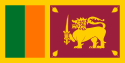

By y2ksuprio
@y2ksuprio (853)
India

October 19, 2006 12:38pm CST
Sri Lanka, officially the Democratic Socialist Republic of Sri Lanka (???? ???? in Sinhala, ?????? in Tamil; known as Ceylon before 1972) is an island nation in South Asia, located about 31 kilometres (18½ mi) off the southern coast of India. It is often popularly referred to as the Emerald Isle. It is home to more than 18 million people.
A strategic naval link between West Asia and South East Asia, Sri Lanka has been an ancient centre of Buddhist and Hindu religion and culture. Significant numbers of people also adhere to Christianity, Islam and indigenuous religions. Sinhalese people form a majority of the population, which also composes of a large Tamil population and smaller communities of Burghers, Muslims and indigenous peoples. Famous for the production and export of tea, coffee, rubber and coconuts, Sri Lanka also boasts a progressive and modern industrial economy. The natural beauty of Sri Lanka's tropical forests, beaches and landscape and rich cultural heritage make it a famous destination for tourists worldwide.
After over a thousand years of rule by independent kingdoms, Sri Lanka was colonised by Portugal and the Dutch before passing to the control of the British Empire. A nationalist political movement arose in the country in the early 20th century to obtain political independence, which was granted in 1948. Although it enjoyed a stable period of democracy and economic progress, the nation has been torn by a bloody civil war between the Sinhalese-dominated government and Tamil separatists led by the LTTE who demand an independent Tamil state in northeastern Sri Lanka. Tsunamis caused by the 2004 Indian Ocean earthquake devastated the southern part of the nation, causing the deaths and displacement of a large segment of the population
In 1972, the official name of the country was changed to "Free, Sovereign and Independent Republic of Sri Lanka" (???? ???? sri la?ka in Sinhala (whereas the island itself is referred to as ????? la?kava), ?????? ila?kai in Tamil). In 1978 it was changed to "Democratic Socialist Republic of Sri Lanka". Prior to 1972, Sri Lanka was known by a variety of names: ancient Greek geographers called it Taprobane, Arabs referred to it as Serendib, but the best known is Ceylon. "Sri Lanka" (originally Sanskrit) is translated as "venerable Lanka", "sri" meaning "venerable" and "la?ka" being the ancient name of the island as attested in the Mahabharata and the Ramayana.
[edit]
History
Paleolithic human settlements have been discovered at excavations in several cave sites in the Western Plains region and the South-western face of the Central Hills region. Anthropologists believe that some discovered burial rites and certain decorative artifacts exhibit similarities between the first inhabitants of the island and the early inhabitants of southern India. One of the first written references to the island is found in the Indian epic Ramayana, which described the emperor Ravana as monarch of the powerful kingdom of Lanka. The main written accounts of the country's history are the Buddhist chronicles of Mahavansa and Dipavamsa.
Landing of King Vijaya depicted in an Ajanta frescoThe earliest-known inhabitants of the island now known as Sri Lanka were probably the ancestors of the Wanniyala-Aetto people, also known as Veddahs and numbering roughly 3,000. Linguistic analysis has found a correlation of the Sinhalese language with the languages of the Sindh and Gujarat, although most historians believe that the Sinhala community emerged well after the assimilation of various ethnic groups. Dravidian people may have begun migrating to the island from the pre-historic period. From the ancient period date some remarkable archaeological sites including the ruins of Sigiriya, the so-called "Fortress in the Sky", and huge public works. Among the latter are large "tanks" or reservoirs, important for conserving water in a climate that alternates rainy seasons with dry times, and elaborate aqueducts, some with a slope as finely calibrated as one inch to the mile. Ancient Sri Lanka was also the first in the world to have established a dedicated hospital in Mihintale in the 4th century BCE. Ancient Sri Lanka was also the world's leading exporter of cinnamon, which was exported to Egypt as early as 1400 BCE. Sri Lanka was also the first Asian nation to have a female ruler in Queen Anula (47–42 BC)
History of Sri Lanka
series
Prehistory of Sri Lanka
Early Sri Lankan History
Kings of Sri Lanka
European Occupation of Sri Lanka
Sri Lanka Independence Struggle
Independence of Sri Lanka
Ethnic conflict in Sri Lanka
Ancient Sri Lanka was ruled by various small kingdoms that dominated different regions. The island was also infrequently invaded by South Indian kingdoms and parts of the island were ruled intermittently by the Chola dynasty, the Pandya dynasty, the Chera dynasty and the Pallava dynasty. The island was also invaded by the kingdoms of Kalinga (modern Orissa) and those from the Malay Peninsula. Buddhism arrived from India in the 3rd century BCE, brought by Bhikkhu Mahinda, who is believed to have been either the son or brother of Mauryan emperor Ashoka. Mahinda's mission won over the Sinhalese monarch Devanampiyatissa of Mihintale, who embraced the faith and propagated it throughout the Sinhalese population. The Buddhist kingdoms of Sri Lanka would maintain a large number of Buddhist schools and monasteries, and support the propagation of Buddhism into Southeast Asia.
Sri Lanka had always been an important port and trading post in the ancient world, and was increasingly frequented by merchant ships from the Middle East, Persia, Burma, Thailand, Malaysia, Indonesia and other parts of Southeast Asia. The island were known to the first European explorers of South Asia and settled by many groups of Arab and Malay merchants. A Portuguese colonial mission arrived on the island in 1505. At that point the island consisted of three kingdoms, namely Yarlpanam (Anglicised Jaffna) in the north, Kandy in the central hills and Kotte at the Western coast. The Dutch arrived in the 17th century. Although much of the island came under the domain of European powers, the interior, hilly region of the island remained independent, with its capital in Kandy. The British East India Company established control of the island in 1796, declaring it a crown colony in 1802, although the island would not be officially connected with British India. The fall of the kingdom of Kandy in 1815 unified the island under British rule.
Ancient Capitals of Sri Lanka
Tambapanni
Vijitapura
Anuradhapura
Polonnaruwa
Sigiriya
Ruhuna
Dambadeniya
Yapahuwa
Kurunegala
Dedigama
Gampola
Rayigama
Kotte
Kelaniya
Sitawaka
Kandy
Approximate extent of area under the control of the LTTE, as of December 2005European colonists established a series of tea, cinnamon, rubber, sugar, coffee and indigo plantations. The British also brought a large number of indentured workers from Tamil Nadu to work in the plantation economy. The city of Colombo was established as the administrative centre, and the British established modern schools, colleges, roads and churches that brought Western-style education and culture to the native people. Increasing grievances over the denial of civil rights, mistreatment and abuse of natives by colonial authorities gave rise to a struggle for independence in the 1930s, when the Youth Leagues opposed the "Ministers' Memorandum," which asked the colonial authority to increase the powers of the board of ministers without granting popular representation or civil freedoms. During World War II, the island served as an important Allied military base. A large segment of the British and American fleet were deployed on the island, as were tens of thousands of soldiers committed to the war against Japan in Southeast Asia.
Following the war, popular pressure for independence intensified. On February 4, 1948 the country won its independence as the Commonwealth of Ceylon. Don Stephen Senanayake became the first Prime Minister of Sri Lanka. In 1972, the country became a republic within the Commonwealth, and the name was changed to Sri Lanka. On July 21, 1960 Sirimavo Bandaranaike became the first female head of government in post-colonial Asia when she took office as prime minister. In the 1970s, political conflicts emerged between the Sinhalese and Tamil communities. The Tamil community cited extensive institutional discrimination and political disenfranchisement, and sought increased regional autonomy and affirmative action. In the 1980s, the island's long-standing peace and stability was shattered by the Tamil separatist movement led by the Liberation Tigers of Tamil Eelam, which demanded an independent state of Ealam in northeastern Sri Lanka. A 1986 peace accord brokered by India failed by 1988 when Indian peacekeepers were drawn into a direct military conflict with the LTTE while attempting to disarm the militants. Sri Lankan nationalists sought the exit of Indian troops, and by 2000 as many as 50,000 people were killed in battles between the Sri Lankan Army and the LTTE, which controls parts of the northeast. A tentative ceasefire has restored peace to the island as the government and the LTTE engage in diplomacy under the mediation of Norway. The 2004 Indian Ocean earthquake created powerful tsunamis that devastated the south and east of the island, killing and displacing close to 40,000 people.
[edit]
Geography and climate
Main article: Geography of Sri Lanka
Topographical map of Sri Lanka.The island of Sri Lanka lies in the Indian Ocean, to the southwest of the Bay of Bengal and to the southeast of the Arabian Sea. It is separated from the Indian subcontinent by the Gulf of Mannar and the Palk Strait. According to Hindu mythology, a land bridge to the Indian mainland, known as Rama's Bridge, was constructed during the time of Rama by the vanara a
1 response

