X
myLot
blacknight000
•
@blacknight000
(1397)
• Philippines
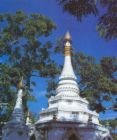
pagoda - in East and Southeast Asia, a towerlike, multistoried structure of stone, brick, or wood, usually associated with a Buddhist temple complex. The pagoda derives from the stupa of ancient India, which was a dome-shaped commemorative monument, usually erected over the remains or relics of a holy man or king. The hemispherical domed stupa of ancient India evolved into several… Buddhist temples in East and Southeast Asia usually include a towerlike, multistoried structure of stone, brick, or wood known as a pagoda. Like the stupa of ancient India, from which it derived, the pagoda is usually erected as a commemorative monument. The majority of Cambodia’s population adhere to Theravada Buddhism. Buddhists built many pagodas throughout the country to serve their religious needs. Pagodas can take a number of shapes, depending on the country of influence, but all are used as shrines, memorials, or tombs. This once-thriving city is home to thousands of pagodas, built mostly between 1044, under the reign of Anawrahta, and 1287, the year Kublai Khan launched an attack on Pagan that ended its glory. Although many of the pagodas have crumbled over time, the remains of more than 5000 can still be seen, including Ananda (center) and Thatbyinnyu (right), in the near-deserted fields of Pagan.