X
myLot
simplythanga
•
@simplythanga
(872)
• United States
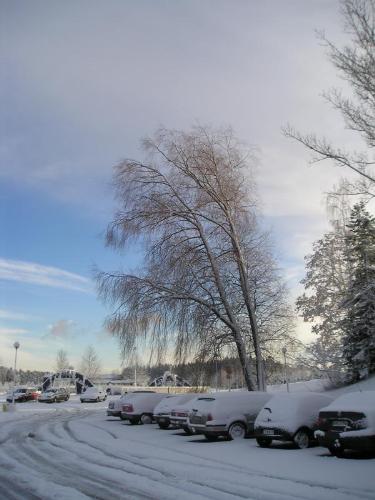
Snow in Finland - What causes winter Illumination of Earth by Sun in the northern hemisphere winterThe tilt of the earth's axis relative to its orbital plane has a dramatic effect on the weather. The popular belief that winter is caused by the Earth being farther from the Sun than in summer is not true. In fact, in the Northern Hemisphere, winter occurs when the Earth is its closest to the Sun. The earth is tilted at an angle of 23°27' (23 degrees 27 minutes) to the plane of its orbit, and this causes different latitudes on the Earth to directly face the Sun as the Earth moves through its orbit. It is this variation that primarily brings about the seasons. When it is winter in the Northern Hemisphere, the Southern Hemisphere faces the Sun more directly and thus experiences warmer temperatures than the Northern Hemisphere. During winter in either hemisphere, sunlight hits that hemisphere at an oblique angle. In regions experiencing winter, the same amount of solar radiation is spread out over a larger area (see Effect of sun angle on climate). This effect is compounded by the larger distance that the light must travel through the atmosphere, allowing the atmosphere to filter more of this already limited heat.