X
myLot
dexterlab
•
@dexterlab
(458)
•
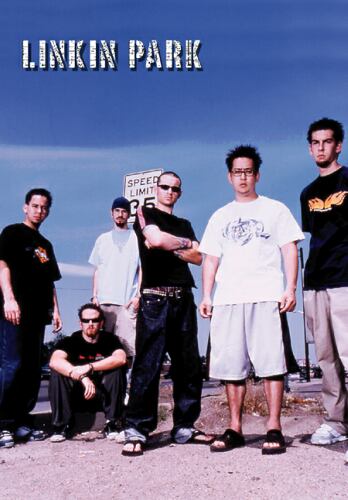
linkin park - Old-school hip-hop, traditional classic rock, and spooling electronic vibes were the initial factors behind the building of the alternative metal quintet Linkin Park. The band's Southern Californian musical roots were also an underlying basis, for drummer Rob Bourdon, guitarist Brad Delson, and MC/vocalist Mike Shinoda formed a tight friendship while still in high school. Shortly after graduation, art student and DJ Joseph Hahn hooked up with bassist Dave'Phoenix' Farrell and Shinoda for the band Xero. Hybrid Theory came later, but the band opted on the name Linkin Park when singer Chester Bennington was the last piece added to the band in 1999. Soon the band became a noticeable face at the Whisky as well as favorites in and around Los Angeles. Zomba Music's Jeff Blue was one of the few who didn't turn the band down for a contract at the turn of the millennium -- Linkin Park signed to Warner Bros. after being turned down three times in late 1999 and got to work on their debut album. Taking a piece from their past, they named the album Hybrid Theory. It was released in fall 2000 and it showcased their likes for fellow alternative acts such as the Deftones, the Roots, Aphex Twin, and Nine Inch Nails. The Dust Brothers also collaborated on the record, as well as producer Don Gilmore (Pearl Jam, Eve 6, Tracy Bonham). Singles such as'Crawling' and'One Step Closer' were massive radio hits and video favorites among the TRL crowd on MTV. Joint tours with Family Values and the Project: Revolution Tour with Cypress Hill led the band to play 324 shows in 2001. Linkin Park was in demand. Come January 2002, Hybrid Theory received three Grammy nominations, for Best Rock Album and Best New Artist. A month later, Linkin Park walked away with an award for Best Hard Rock Performance for'Crawling.' They spent the remainder of the year holed up in the studio, again working with Gilmore, recording a follow-up to their eight-times-platinum debut Hybrid Theory. Linkin Park's sophomore effort, Meteora, was released in March 2003; the first single,'Somewhere I Belong,' was an instant hit. The second annual Projekt Revolution tour got underway in spring 2003 with Linkin Park joining Mudvayne, Xzibit, and Blindside; Summer Sanitarium dates with Metallica, Limp Bizkit, Mudvayne, and the Deftones followed in July and August. Results of the latter appeared by the end of the year on Live in Texas. In late 2004, Linkin Park embarked on their most ambitious project yet: Collision Course, a collaboration with king-of-the-mountain rapper Jay-Z, which introduced the commercial world to the concept of mash-ups (remixes that sample heavily from at least two popular songs). Jay-Z also encouraged co-founder Mike Shinoda to explore the possibilities of a solo hip-hop project. He did, dubbed the project Fort Minor, and released the album The Rising Tied in 2005 with Jay-Z as executive producer. The group came back together in 2006 and began work on their next album. With Shinoda and Rick Rubin (Run-D.M.C., Red Hot Chili Peppers, Johnny Cash) sharing the production credit, Minutes to Midnight arrived in 2007.~ MacKenzie Wilson, All Music Guide Sophomore albums are famously tricky affairs. Musicians have their entire lives to pen their debut album, the theory goes, and a relatively short time to follow it up. But what if the debut in question is the biggest selling album in recent memory? And what if the music industry has Hollywood-like expectations for another instant blockbuster? That was the scenario Linkin Park faced when they entered the studio to record Meteora, the follow-up to their multi-platinum debut Hybrid Theory. That album, which Rolling Stone called'twelve songs of compact fire indivisibly blending alternative metal, hip-hop, and turntable art', has shipped 14 million units worldwide to date. It was the Number One selling album of 2001. It launched three chart-topping singles including'In The End.' And in 2002 it received a Grammy® for Best Hard Rock Performance for'Crawling,' as well as nominations for Best Rock Album and Best New Artist. After diligently pursuing their craft since the band's humble origins in Southern California circa the mid-'90s, Linkin Park now had the world's ear. To those outside the band, the pressure to follow up that success might have seemed insurmountable. But within Linkin Park, vocalists Chester Bennington and Mike Shinoda, guitarist Brad Delson, turntablist Joseph Hahn, drummer Rob Bourdon, and bassist Phoenix weren't sweating it in ways you might expect. Instead of dwelling on outside expectations, they set to work, meticulously crafting each moment of each song to their own exacting standards. The bigger picture developed accordingly.'We don't ever want to have the mindset where we need to sell 10 million albums each time out. That's ridiculous,' says Bennington.'It's a blessing to sell that many albums; it doesn't happen very often in this business--even once in your career is an achievement. Our obligation is to our fans. We're not going to get too comfortable and say it's a given that people will run out and buy our albums.''And if you know us, you know the biggest pressure came from within the band,' says Shinoda.'We just wanted to make another great album that we're proud of,' says Bourdon.'We focused on that, and worked hard to create songs we love. We're our own harshest critics.' If you doubt that, consider this: Shinoda and Bennington wrote 40 unique choruses for Meteora's poignant first single,'Somewhere I Belong,' before arriving at the best possible version.'We knew we needed to fix a couple things on that song,' says Shinoda with a shrug.'So we'd write a new chorus, record it, mix it. Then we'd listen to it the next day, and Chester and I would look at each other and say, 'I don't know... I think it could be better.' And then we'd start again from scratch. It was a lot of work. We probably wrote and scrapped our sophomore jinx album somewhere in the mix. But we took our time, remained critical, and wrote songs we knew were good. Some people might have expected us to write a weaker version of Hybrid Theory -water it down, stagnate. But that's not what we're about.'The winning results of that painstaking approach are instantly apparent on Meteora. The twelve lean tracks display immense growth from the road-honed band, while still showcasing the rare chemistry that's been in place since Bennington completed the line-up in 1999. Working once again with Hybrid Theory co-producer Don Gilmore, the album came to life in a variety of studios, including the band's beloved tour-bus facility and each member's respective home set-up. This time Linkin Park had the opportunity to experiment with a wider palette sound, and an even more diverse array of styles. They married wildly distressed samples to heavy guitars on songs such as'Somewhere I Belong.' They arranged live strings and piano for'Breaking The Habit' and'Faint.' They experimented with complex beats on songs such as'Easier To Run.' They even added a Japanese flute called a shakuhachi to the hip-hop-driven'Nobody's Listening.' Throughout, the rich textures and dynamic arrangements serve to enhance the moods created by Bennington's and Shinoda's powerful vocals - and vice versa. The synergy invites repeat listens. The guiding vision for the 18-month recording process was evoked by the album's title, Meteora. During a European tour in 2002, the band stumbled upon a travel magazine featuring destinations in Greece. On the cover, the word'Meteora' and the accompanying photo caught their eye, and subsequently fired their imaginations. Meteora is a group of six monasteries perched atop rock pinnacles rising 1500 feet above the plains of central Greece. As Bennington puts it,'they don't seem of this planet.' And it's true. (To see for yourself, rent the Bond flick For Your Eyes Only, in which Roger Moore kicks as* at one of the mountain fortresses.) The Greek word literally translates as'hovering in the air.' It's a fitting term for the otherworldly region, as well as for the album Linkin Park created with the image in mind.'We wanted to write songs that lived up to the energy that name exudes,' says Bennington.'It's really epic and beautiful. It totally embodies the sense of timelessness and expansiveness we wanted the album to have,' says Shinoda.'We've since met people who've visited Meteora,' adds Hahn.'People go there for solitude now - to find themselves. And that's what the album is about - finding yourself. Each song is about looking within and letting out emotions.'This time out, Bennington and Shinoda expanded the emotional range heard on Hybrid Theory. That album dealt with frustration, anger, fear and confusion from a younger person's perspective, according to Shinoda. The goal: catharsis. By contrast, Meteora reflects the accelerated lives the band members have led since recording their debut.'We toured the world for two years. That alone makes you step back and take a look at the bigger picture,' says Shinoda.'We've always been interested in universal feelings, and that's what we focused on with this album. But Meteora is different in the sense that we're dealing with more facets of the human condition.''It's still a very dark album, but there's definitely more optimism,' says Bennington.'We're still the same people, but now there's a light at the end of the tunnel.'On'Somewhere I Belong,' for example, the verses describe fear and confusion, but the chorus takes that crucial first step toward arriving at a solution. Bennington sings,'I want to heal. I want to feel like I'm close to something real. I want to find something I've wanted all along, somewhere I belong.'And on'Breaking The Habit,' he sings,'I don't know what's worth fighting for. Or why I have to scream. I don't know why I instigate and say what I don't mean. I don't know how I got this way. I know it's not alright. So I'm breaking the habit tonight.'Once again