X
myLot
CMTS_87
•
@CMTS_87
(1339)
• Philippines
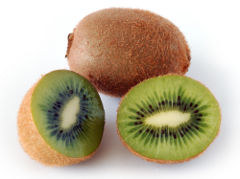
Fruits are very good for our health - Kiwi - The kiwifruit is the edible berry of a cultivar group of the woody vine Actinidia deliciosa and hybrids between this and other species in the genus Actinidia. The Actinidia is native to South of China. The most common cultivars of kiwifruit are oval, about the size of a large hen's egg (5–8 cm / 2–3 in long and 4.5–5.5 cm / 1¾–2 in diameter). It has a fibrous, dull brown-green skin and bright green or golden flesh with rows of small, black, edible seeds. The fruit has a soft texture and a unique flavour, and today is a commercial crop in several countries,mainly in New Zealand, U.S. A, Italy and Chile). Also known as the Chinese Gooseberry, the fruit was renamed for export marketing reasons in the 1950s; briefly to melonette, and then by New Zealand exporters to kiwifruit. This latter name comes from the kiwi — a flightless bird and New Zealand's national symbol, and also a colloquial name for the New Zealand people. To avoid confusion with the bird and the people, the fruit is always called 'kiwifruit' in New Zealand, Ireland and Australia. However, in other countries, kiwifruit is often referred to colloquially as 'kiwi'. Kiwifruit can be grown in most temperate climates with adequate summer heat. Where Actinidia deliciosa is not hardy, other species can be grown as substitutes. Kiwifruit is commercially grown on sturdy support structures, as it can produce several tonnes per hectare, more than the rather weak vines can support. These are generally equipped with a watering system for irrigation and frost protection in the spring. Kiwifruit vines require vigorous pruning, similar to that of grapevines. Fruit is borne on one-year-old and older canes, but production declines as each cane ages. Canes should be pruned off and replaced after their third year. Kiwifruit plants are normally dioecious, meaning that individual plants are male or female. Only female plants bear fruit, and only when pollenized by a male plant. One male pollenizer is required for each three to eight female vines. An exception is the cultivar 'Issai', a hybrid (Actinidia arguta x polygama) from Japan, which produces perfect flowers and can self-pollinate; unfortunately it lacks vigour, is less hardy than most A. arguta forms and is not a large producer. Kiwifruit is notoriously difficult to pollinate because the flowers are not very attractive to bees. Some producers blow collected pollen over the female flowers. But generally the most successful approach is saturation pollination, where the bee populations are made so large (by placing hives in the orchards) that bees are forced to use this flower because of intense competition for all flowers within flight distance.