X
myLot
prasad1961
•
@prasad1961
(5597)
• India
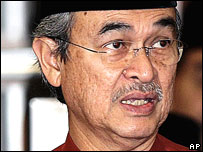
prime Minister - Malaysia - Mr Abdullah began a new, five-year term in March 2004 after his coalition government won a landslide victory in parliamentary and regional elections. Correspondents said the victory boosted his chances of pushing through reforms, including a promise to stamp out corruption. But his critics say the pace of change has been slow. In 2006 his government unveiled a multi-billion-dollar plan intended to tackle rural poverty and promote growth. Its goal is to help Malaysia achieve developed nation status by 2020. Abdullah Ahmad Badawi succeeded Mahathir Mohamad as prime minister in October 2003, when Asia's longest-serving elected leader retired after 22 years in power. He is a former deputy premier who held defence, foreign affairs and education portfolios under Dr Mahathir. On taking office he faced a strong political challenge from opposition Islamic fundamentalists and inherited the task of overseeing one of the region's most vibrant economies. In contrast to his predecessor, Mr Abdullah has been described as self-effacing. He has been called the 'Mr Nice Guy' of Malaysian politics. Mr Abdullah was born in 1939 in Penang. His father was a founding member of United Malays National Organisation (Umno), Malaysia's ruling party. After gaining a degree in Islamic studies he worked in the civil service before being elected to parliament in 1978. Malaysia has been ruled by a coalition, the National Front, since independence. Umno is the biggest grouping in the alliance, which includes Chinese and Indian parties.