X
myLot
stvasile
•
@stvasile
(7306)
• Romania
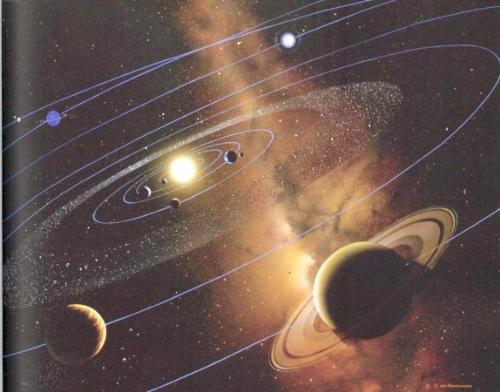
The planets of our Solar System - The process that generates a magnetic field around a planet seems, indeed, to be linked to some sort of movement that leads to electricity, but not on the outer surface of the planet, yet inside the planets. The planets that have an inner layering of diferent viscosities spinning at diferent velocities may act as a magnetic inductor. For example, The Moon does not have a magnetic field today, but minerals from its crust show magnetic orientation, which means that the satellite once had a magnetic field. Indeed, its internal layers suggest that in its geological past the moon had internal layers of different viscosity, spinning at diferent velocities, just like the Earth has today. The teluric planets may all have had a magnetic field, but only those that are still tectonically active still 'produce' magnetism. As of the gas giants I have no knowledge what the mechanism of magnetism may be.