

How not to find buried treasure

By John Welford
@indexer (4852)
Leicester, England

January 31, 2018 5:53am CST
A burgeoning hobby in the UK - and probably lots of other places - is treasure hunting with the help of a metal detector. Some important hoards have been discovered by this means, although some "detectorists" are less responsible than others, and damage has been done to archaeological sites as a result.
In recent months a BBC comedy series, "Detectorists" starring Mackenzie Crook and Toby Jones, has probably inspired more people to get themselves a detector and start searching the countryside for buried Roman and Anglo-Saxon hoards.
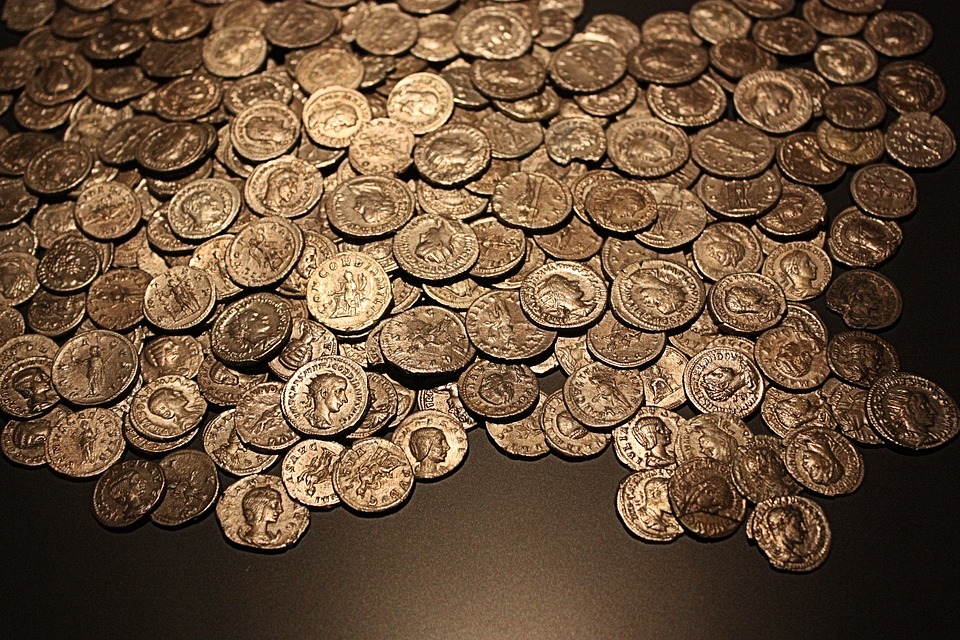
One such pair of treasure-hunters had a lucky strike in a field in Suffolk when they unearthed 54 gold coins that should have been worth a quarter of a million pounds.
However, their joy was short-lived. It turned out that the coins, although metal, were not gold. They were not even real coins, but pretend ones that had no value at all.
So how had they found their way to a field in Suffolk? You remember my reference above to the TV Series "Detectorists"? That's how the coins got there!
The field in question had been used by the BCC as a film set. Not all the coins used in a scene had been collected after the crew and actors had finished, and they were therefore still there to be found by the real detectorists.
The real irony is that the BBC team only picked up the coins they could see because they were not equipped with metal detectors!
3 people like this
3 responses

@JohnRoberts (109841)
• Los Angeles, California
31 Jan 18
That is a funny and interesting story. Imagine their disappointment! However, I have seen that it is the law in the UK that all finds must be turned over to the government and they will decide what you may keep. I know there are clubs that search fields and a limited group that search the Thames at low tide.
2 people like this

@Fleura (34925)
• United Kingdom
31 Jan 18
@JohnRoberts @topffer Any such treasure-hunters require the agreement of the landowner, of course, before they start digging up their fields! I believe that any 'ordinary' finds such as old nuts and bolts, broken tools etc. should be shared with (or at least offered to) the land-owner but anything really valuable must be declared as 'treasure trove'.
2 people like this

@topffer (42155)
• France
31 Jan 18
@Fleura Our courts are considering that there is no "treasure" when a detectorist finds something in an archeological site, as we can expect to find something in an archeological site, including "treasures". It is only if the discovery is isolated in the middle of nowhere, that they can call it "treasure" times to times.
@JohnRoberts You are right, if I remember the UK law the finds have to be declared to the state to be studied, and it is a criminal offense to not declare a find done by a metal detector. The declaration is sent to the British Museum, and the BM or local museums can decide to keep the find. If it is the case the finder will be indemnized. It is only if a find does not interest a museum that it will be turned back to the detectorist.
2 people like this
 .
. @topffer (42155)
• France
31 Jan 18
Using a metal detector on an archeological site without an authorization of the state is a crime in quite all EU countries, UK law authorizing its use as a hobby to find archeological items being an exception. In France an archeological item pertains to the owner of a field or to the state and the user of a metal detector will be also considered most of the time as a thief if he has not also an authorization of the landlord. There are however 2 or 3 old cases where courts have shared a treasure discovered by a metal detector between the landlord and the "detectorist".
For an archeologist, detectorists are a plague, and many experiments have been done to protect archeological sites by polluting the soil with various pieces of metal, usually copper or aluminium, but fake coins have also been used here and there.
This kind of series encouraging the use of a metal detector, even if your law authorizes it in your country, is damaging for archaeology and I am surprised that the producer is a public channel.
1 person likes this