

From Brahmins to Untouchables

By Judy Evans
@JudyEv (381806)
Rockingham, Australia

February 13, 2020 5:21pm CST
Relationships in Nepal
We stayed at a bed and breakfast place in Nepal and the young couple running it were very lovely people. Part of the proceeds go to support an orphanage which they also manage. We compared much information about our countries and I asked about the caste system: how it worked and how it came into being. This is what we were told. I’m not saying it’s correct and I’m not passing any judgements but this is what I was told.
The caste system was established many centuries ago (Wikipedia says 300AD-ish) by the then ruler. Each ‘caste’ had a particular purpose. Some were musicians, tinsmiths, civil servants, teachers, etc. The castes could be recognised by their surnames. At this point, he asked the surname of our hosts. When we told him, he and his wife, without any hesitation, said ‘Oh, they’re Brahmins’ which is one of the top castes. I found this quite remarkable. Later, our host confirmed that they were Brahmins. There were also two members of parliament at the wedding.
I asked about the ‘untouchables’ and whether there is still discrimination against them. I was told that, while things are improving, it is still hard for them to get jobs, and harder still for them to own a house. They have some untouchables in the school. I said that, in Australia, they could probably change their name by deed poll but that is not possible in Nepal. Coming from Australia, I found this all extremely interesting.
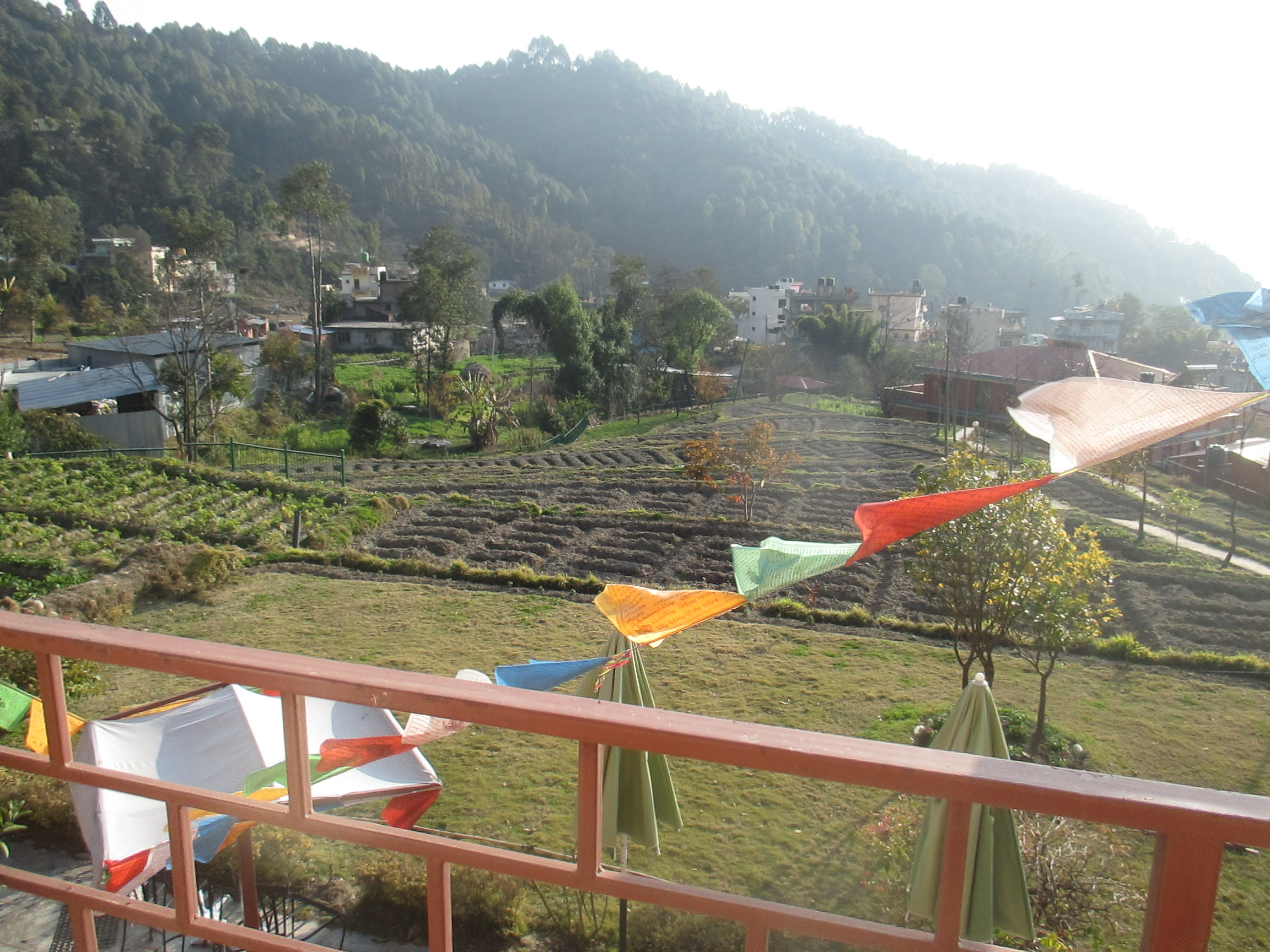
The photo is from the balcony of Laxmi’s Bed and Breakfast and shows some of the extensive vegetable gardens maintained by the orphanage.
21 people like this
21 responses

@Alexandoy (65302)
• Cainta, Philippines
13 Feb 20
It is really difficult to change the tradition that we see as wrong. Yesterday, I saw the documentary about India and their belief in the cows that they are sacred. There are vigilantes who are killing people that sell cows.
4 people like this


@ptrikha_2 (49753)
• India
14 Feb 20
@Alexandoy
Actually there were some 2-3 cases of people being killed for eating beef, by a few mad ones.
Yet some of the Western and Indian media exaggerated it.
Some of this media keeps silent when Hindus in many parts of the world, including some with India are killed, tortured or converted.
3 people like this
@Alexandoy (65302)
• Cainta, Philippines
14 Feb 20
@JudyEv I guess they drink the milk of the cow.
2 people like this

@snowy22315 (208746)
• United States
13 Feb 20
It's kind of hard to believe in this day and age such a thing exists, but some socieities have it just by another name.
4 people like this
@ptrikha_2 (49753)
• India
14 Feb 20
@snowy22315
Bitter truth. Some individuals and segments of the society do need to accept this.
2 people like this

@JudyEv (381806)
• Rockingham, Australia
14 Feb 20
The 'untouchables' are the lowest of the castes and, although things seem to be improving, they mostly face a very miserable life especially in the more primitive areas. They are considered 'impure' and cannot associate with others, under pain of severe punishment. They are found in the very lowly jobs. This is what I've read about Indians but our source seemed to think things weren't so bad in Nepal although I can't imagine anyone wanting to admit that his country meted out such horrific punishments as I read about. He said it was hard for them to get jobs other than very menial ones, and especially difficult for them to buy a house.
2 people like this

@ptrikha_2 (49753)
• India
15 Feb 20
@DianneN
In present times, the caste systems still prevail because orthodox thinking is difficult to eliminate, and political interference too.
And Nepal lags on many of the economic growth parameters like Education, even behind India, and that too adds up to the caste system practices.
3 people like this

@kobesbuddy (78833)
• East Tawas, Michigan
13 Feb 20
Wow, these are some very interesting facts about the customs in Nepal. I think possibly that the Philippines have a similar system, that they follow also. I met one young man from China, whose marriage partner had been selected for him years before. This is a tradition his family follows.
3 people like this

@hereandthere (45628)
• Philippines
14 Feb 20
no, we do not have a caste system in the philippines, but i did learn about the caste system many, many years ago either in high school or elementary school. however, what i remember was that it was in india. i didn't know that it also existed in nepal.
2 people like this
@JudyEv (381806)
• Rockingham, Australia
14 Feb 20
@hereandthere India is very close to Nepal and there are many Indians there so possibly the castes are a bit similar in each country.
2 people like this

@Butterfingers (66603)
• India
15 Feb 20
Yes these are some of the silly things still associated with our culture which still find its place.
2 people like this
@ptrikha_2 (49753)
• India
15 Feb 20
@Butterfingers
Yes indeed, and these things create social tensions and even riots.
1 person likes this
@Butterfingers (66603)
• India
16 Feb 20
@JudyEv yes Could be difficult but not impossible
1 person likes this
@ptrikha_2 (49753)
• India
14 Feb 20
Caste system has been a big divisive factor in India too.
It was meant to be a job classification system but became a hereditary one, over the ages.
Which was very bad.
And untouchables were mostly sanitation workers who even had separate wells for drinking water and using for other purposes.
After independence, it should have moved towards extinction.
But due to our votes and power greedy politicians, and the reservation policy, it has increased.
Sometimes there are inter-caste riots as well.
It could be similar in Nepal.
2 people like this
@ptrikha_2 (49753)
• India
15 Feb 20
@JudyEv
The conditions were much worse 70 to 80 years back but some atrocities still remain.
Politicians tend to exploit such discriminations.
1 person likes this

@hereandthere (45628)
• Philippines
14 Feb 20
i didn't know they also had them in nepal. why do they have those colorful flags?
2 people like this


@RasmaSandra (97912)
• Daytona Beach, Florida
14 Feb 20
Lovely gardens look like everyone does their part growing the vegetables.
2 people like this

@JohnRoberts (109841)
• Los Angeles, California
14 Feb 20
I thought the untouchables were only in India.
2 people like this

@arunima25 (93194)
• Bangalore, India
16 Feb 20
Caste divide is a shame in our culture. Though with development and progressive mindset coming in, things have improved but still traces of such practice do exist. Sadly our politicians want to keep it alive for their vote bank politics. We hope that new generation will bring it to extinction. Educated ones are getting over it but traditional mindset takes time to go.
1 person likes this
@JudyEv (381806)
• Rockingham, Australia
22 Feb 20
@arunima25 These things take a long time to change - and there are always those who have their own agendas for keeping things the way they are.
1 person likes this
@arunima25 (93194)
• Bangalore, India
21 Feb 20
@JudyEv It's a big shame in modern progressive world. I have hope that it will slowly disappear as more and more education and awareness spreads. Though it might be a long wait.
1 person likes this

@DocAndersen (54399)
• United States
14 Feb 20
traditions continue because, they have always been.
sad, but good on you for asking!
1 person likes this
@DocAndersen (54399)
• United States
15 Feb 20
@JudyEv it is an interesting issue, thanks for bringing it up
1 person likes this


@gofsey (1911)
• Madurai, India
17 Feb 20
The caste system is very structured making governance a simple affair. (In India) However, untouchability that existed is vanishing. The caste system is a hangover of the olden days. Today, we have a mingling of classes leading to mass confusion.(But, not in Nepal obviously)

 Nobody knows what is good, what is bad, and which things lead to ugly situations anymore.
One is not made a king, one is born into it.
Nobody knows what is good, what is bad, and which things lead to ugly situations anymore.
One is not made a king, one is born into it.
(In India) However, untouchability that existed is vanishing. The caste system is a hangover of the olden days. Today, we have a mingling of classes leading to mass confusion.(But, not in Nepal obviously) Nobody knows what is good, what is bad, and which things lead to ugly situations anymore.
One is not made a king, one is born into it.1 person likes this

@GooglePlus (3806)
•
23 Feb 20
Hey Judy, How are you doing!
Yes, the Caste system still followed in India, But it is no longer dependent on what one does here. It's most likely to be in what family we born in. Things changed, and Yes I agree with those, I came across many here who can tell the caste when you tell your surnames.
Now caste is seen only when you are getting married ( Arrange marriages of course ) and when you are submitting your documents for school admissions in some quota( For some caste there is reservation in schools ). I know it's funny but yes that's the truth. 
1 person likes this
@JudyEv (381806)
• Rockingham, Australia
23 Feb 20
Your comments match with what I've read about the caste system too. And that's it more like to be a problem in the more primitive areas.

@misunderstood_zombie (8765)
• United States
14 Feb 20
That is interesting, yet sad that the caste still discriminates.
1 person likes this

@a_jerobon (2317)
• Eldoret, Kenya
16 Feb 20
First, I have been mesmerized by the photo. The garden looks so beautiful and those trees behind them look awesome. Secondly, the story about the castes is interesting. I would love to visit there one day too and know more about them.
1 person likes this

