

What Does Zero Inflation Mean

By Jim Bauer
@porwest (112717)
United States

November 9, 2025 6:58am CST
There seems to be some confusion about what is meant by the term "zero inflation." It's not really a literal term to mean actual zero, but an economic term to mean "stable" or "normal" inflation.
So, when Trump, or any other president says "zero inflation" exists, it's not to say there is no inflation at all. It is just to say that inflation is happening within desired, normal expectations.
The Fed's desired rate that they shoot for is around 2%, for example. That is considered "healthy" and necessary for a stable economy. An economy with absolute zero inflation would be bad for the economy just as much as high inflation is. That would be considered negative inflation.
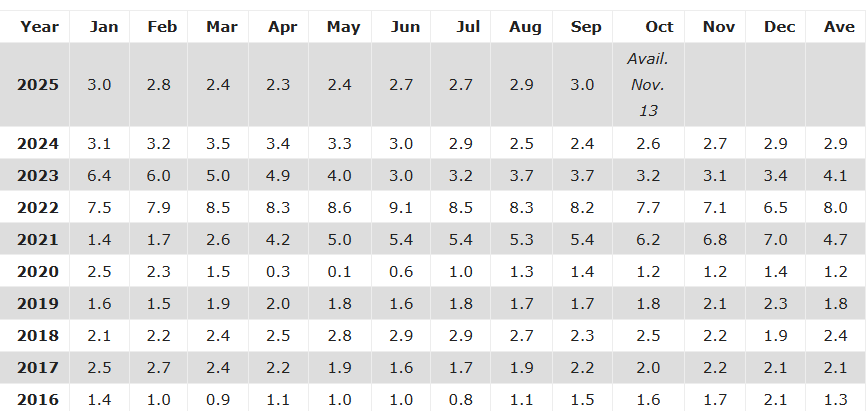
Keep in mind that the historical average inflation since the country began is 3.24%. So, when you couple the historical average with the average 4.93% during the Biden years, and the current 2.4% during the first reported 9 months of Trump's second term...
That's, in practical terms, next to zero inflation.
To keep things into a bit of perspective, when we talk about inflation and the pinch we continue to feel from what has been higher than desired inflation, the biggest kick came in 2022 at 8% and was the single largest contributing year to the prices we are seeing now.
By comparison, Trump's first term saw an average of 1.88% inflation. Because I think it is important to be fair, Obama actually saw LESS inflation in his two terms as an average than Trump did, ending his term with an average of 1.21%. George W. Bush oversaw 2.83% inflation during his eight years in office.
The reason I present these examples between the presidents is to make it clear that just based on inflation numbers, Barack Obama fared the best. So, when I show Trump's numbers then and now, it's not to paint a "Trump is the best" picture. It is simply to state the facts as they are.
By economic terms, Barack Obama and Donald Trump presided over technical zero interest economies, while George W. Bush and Joe Biden presided over total inflation economies.
We also need to keep in mind that when we are tracking inflation, it is an average taken across all sectors. Some things may see higher inflation while others stay the same, and yet others see negative inflation.
For example, beef and coffee have seen total inflation while eggs have seen negative inflation. Gas prices have also seen negative inflation, as have interest rates. Milk has seen zero inflation.
Now we have to talk about tariffs and their impacts on inflation so far. In other words, have we actually seen an impact over the averages from them overall? If you consider that Biden's final tally on inflation was 2.9% as an average in 2024, and the current trend is lower at 2.4% in the first 9 months of collected data, the short answer is no. The longer answer is...
We don't know yet.
But it is fair to say that so far, if tariffs were causing any inflationary pressures, current inflation would be higher than the final tally in 2024 and certainly inching closer to Biden's 4.93% total term average.
And again, that's just staying within the facts and being fair. My only aim here is for everyone to understand the terms so we can better advance any discussion about inflation, tariffs and what it all means, and to be honest about what is happening, as well as what is not.
2 people like this
No responses