

Taj Mahal finally made its way to the list!! Is it really a Wonder!!

By gloria777
@gloria777 (1674)
India

July 9, 2007 5:29am CST
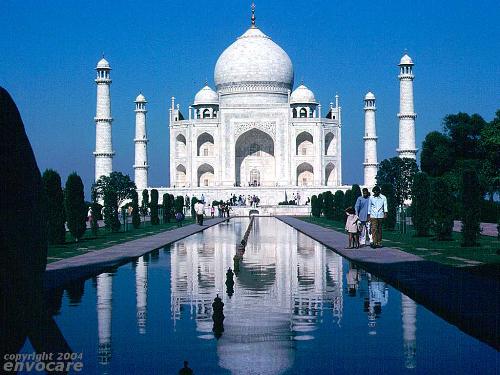
No wonder, its really a Wonder.Why?Taj Mahal is a world famous monument located in Agra, in the state of Uttar Pradesh, India.
Taj Mahal was built by a Muslim, Emperor Shah Jahan in the memory of his dear wife and queen Mumtaz Mahal.
The Taj Mahal was constructed using materials from all over India and Asia. Over 1,000 elephants were used to transport building materials during the construction.
The white marble was brought from Rajasthan, the jasper from Punjab and the jade and crystal from China. The turquoise was from Tibet and Lapis lazuli from Afghanistan, while sapphire came from Sri Lanka and the cornelian from Arabia. In all, 28 types of precious and semi-precious stones were inlaid into the marble. The cost of construction was about 40 million Rupees, at a time when 1 gram of gold sold for 1.3 Rupees. The architectural complex of the Taj Mahal covers an area of 1900'x 1000' and comprises of five main components: the darwaza (gateway), the bageecha (garden) which is in the form of the typical Mughal charbagh (garden divided into four parts), the masjid (mosque), the mihman khana (guest house), and finally the mausoleum.
Several designers and architects - thirty seven men in all - are mentioned by name in the official Mughal histories, and it is probable that they would have worked together to form the creative team that shaped the Taj Mahal: Ismail Afandi (a.k.a. Ismail Khan) who had worked for the great Ottomans in Turkey as a designer and builder of domes; Qazim Khan, a goldsmith from Lahore who cast the gold finial that crowns the dome; Chiranji Lal, a lapidary from Delhi chosen as the chief mosaicist; Amanat Khan from Shiraz, the master calligrapher whose signature is inscribed on the Taj gateway; Mohammed Hanif, Multan and Quandhar, master masons from Delhi; and Mukrimat Khan and Mir Abdul Karim from Shiraz, chief supervisors and administrators.
Ustad Ahmad (a.k.a. Isa Khan), an architect in the court of Shah Jahan from Lahore, is most often credited as the chief architect (or plan drawer) of the Taj Mahal, based on a seventeenth century manuscript which claims that Ustad Ahmad was the architect of both the Taj Mahal and the Red Fort at Delhi
Various studies on the Taj speculate on what makes it unique and beautiful. One reason is attributed to its perfect proportions and geometry. Another is ascribed to the various moods that the Taj presents to its viewers. Clad in delicate, white Makrana marble, the Taj changes its character across time as the light changes- dawn, noon, twilight, night. The shadows that fall on the marble too enhance the effect, being very delicate. The Taj is considered especially ethereal when viewed on a full moon night.
1 response

@jalbeos (1175)
• Philippines
9 Jul 07
Thanks for helpful information. I have visited MSN last morning... 7 Wonders of the World was the headline... there are 21 in the list. I hope I will be on the one of those places someday.
~mar
