

microwave

By missyann73
@missyann73 (1454)
United States

25 responses

@toonatoons (3734)
• Philippines
9 Nov 06
i used to do it often, mostly during lunchtime. but somebody sent me a message of its ill effects on our health. so if i could help it, i don't heat my food in the microwave anymore.
@missyann73 (1454)
• United States
9 Nov 06
my mother has stents in her arteries of her heart, and the doctors at Duke hospital told me it was fine to use a microwave. Told me I would have to use it for hours at a time and her right beside of it for several days in a row, before it would hurt her.

@themiddleone (267)
• United States
9 Nov 06
Everyday at least 4-6 times. From reheating drinks and leftovers, to making popcorn at night for my snack.
1 person likes this




@ishavasyam (1801)
• India
11 Nov 06
U mean my wife ? oh..she uses quite often,,but not as a primary tool but as a secondary or supporting one...


@mavijayne (429)
• Philippines
9 Nov 06
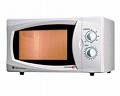
![Microwave - Microwaves are electromagnetic waves with wavelengths longer than those of terahertz (THz) wavelengths, but relatively short for radio waves. Microwaves have wavelengths approximately in the range of 30 cm (frequency = 1 GHz) to 1 mm (300 GHz). However, the boundaries between far infrared light, terahertz radiation, microwaves, and ultra-high-frequency radio waves are fairly arbitrary and are used variously between different fields of study. The term microwave generally refers to "alternating current signals with frequencies between 300 MHz (3 x 10⁸ Hz) and 300 GHz (3 x 10¹¹ Hz)."[1] This range of wavelengths has led many to question the naming convention used for microwaves.
The existence of electromagnetic waves, of which microwaves are part of the frequency spectrum, was predicted by James Clerk Maxwell in 1864 from his Maxwell's equations. In 1888, Heinrich Hertz was the first to demonstrate the existence of electromagnetic waves by building an apparatus that produced and detected microwaves in the UHF region. The design necessarily used horse-and-buggy materials, including a horse trough, a wrought iron point spark, Leyden jars, and a length of zinc gutter whose parabolic cross-section worked as a reflection antenna.
The microwave range includes ultra-high frequency (UHF) (0.3-3 GHz), super high frequency (SHF) (3-30 GHz), and extremely high frequency (EHF) (30-300 GHz) signals.
Above 300 GHz, the absorption of electromagnetic radiation by Earth's atmosphere is so great that it is effectively opaque, until the atmosphere becomes transparent again in the so-called infrared and optical window frequency ranges.](http://img.mylot.com/350x350/141869.jpg "Microwave - Microwaves are electromagnetic waves with wavelengths longer than those of terahertz (THz) wavelengths, but relatively short for radio waves. Microwaves have wavelengths approximately in the range of 30 cm (frequency = 1 GHz) to 1 mm (300 GHz). However, the boundaries between far infrared light, terahertz radiation, microwaves, and ultra-high-frequency radio waves are fairly arbitrary and are used variously between different fields of study. The term microwave generally refers to \"alternating current signals with frequencies between 300 MHz (3 x 10⁸ Hz) and 300 GHz (3 x 10¹¹ Hz).\"[1] This range of wavelengths has led many to question the naming convention used for microwaves.
The existence of electromagnetic waves, of which microwaves are part of the frequency spectrum, was predicted by James Clerk Maxwell in 1864 from his Maxwell's equations. In 1888, Heinrich Hertz was the first to demonstrate the existence of electromagnetic waves by building an apparatus that produced and detected microwaves in the UHF region. The design necessarily used horse-and-buggy materials, including a horse trough, a wrought iron point spark, Leyden jars, and a length of zinc gutter whose parabolic cross-section worked as a reflection antenna.
The microwave range includes ultra-high frequency (UHF) (0.3-3 GHz), super high frequency (SHF) (3-30 GHz), and extremely high frequency (EHF) (30-300 GHz) signals.
Above 300 GHz, the absorption of electromagnetic radiation by Earth's atmosphere is so great that it is effectively opaque, until the atmosphere becomes transparent again in the so-called infrared and optical window frequency ranges.")
Sorry but i don't have microwave, im just a poor guy. lol
1 person likes this

@melody1011 (1663)
• India
9 Nov 06
Everyday. We cant do without it now. Especially when our gas cylinders get over at home the micro is a real blessing
@melody1011 (1663)
• India
9 Nov 06
Everyday. We cant do without it now. Especially when our gas cylinders get over at home the micro is a real blessing


