

The Cold Hard Realities of Emergency Management...

By ParaTed2k
@ParaTed2k (22940)
Sheboygan, Wisconsin

February 5, 2009 5:58am CST
When I used to run a blog, I wrote a lot about Emergency Management. It is my opinion that Emergency Management is one of the least understood and most ignored part of the services we expect from our government.
Fire, Police and EMS have done a great job educating the public about what they do, how they do it, and how to get a hold of them when the need arises. But there is no 9-11 for the Emergency Management Office in your city, county or state. Policemen, Firefighters, EMTs all have TV shows and movies showcasing our work. But therea are no "Roy and Johnnies" (still the patron saints of Emergency Services) for Emergency Management. The career field is still in its toddler stage, and 99% of the work is done in the office and on the telephone.. until Sir Disaster rears its ugly head.
This lack of knowledge by the general public has built a pretty unreasonable expectation. People think that the purpose of Emergency Services organizations (both public and privately owned) are there to keep disasters from interfering with out day planners. They expect the responders to be there, for each individual in the disaster area the moment the disaster hits.
This actually isn't the fault of the people in general. People tend to expect things simply because it's how they think it "should" be, unless someone from the inside teaches them what "is".
The cold hard reality of it all is, an Emergency is a situtation that DOES take us away from our day planners. A disaster is an Emergency that takes us so far away from our day planners, we are overwhelmed by it. By "we" I mean ourselves, and the entire infrastructure of our little corner of the world.
Another Cold Hard reality is, big cities are not designed for survival of disasters. How many trucks does it take to keep the shelves of your local stores stocked each day? How many gallons of water run through the pipes of your city every hour? How long could you stand to stay in your apartment with no water or electricity; especially if you live in a building where the windows don't open.. or you don't have cross ventilation? But this article isn't being written so I can make excuses for the Emergency Management field. I'm writing this (and I'll probably write more) to help readers understand the facts about Emergency Management. I'm also opening it up as a forum for us to talk about what are and aren't realistic expectations.
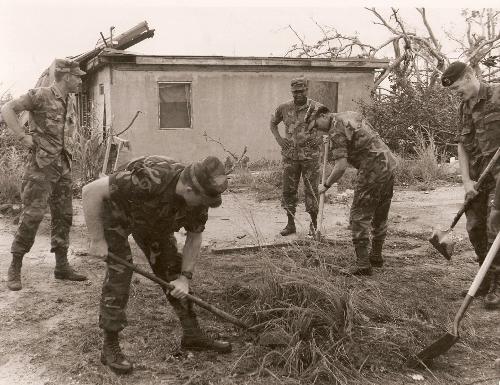
I have been a part of Hurricane, flood, snow emergency and mudslide recovery operations. I've been a wild land fire fighter, paramedic and been trained in High Angle, Cave, White Water and Wilderness Search & Rescue. That doesn't make me an expert, but it does give me enough experience to know what I'm talkign about when I answer questions and try to explain the "hows and whys".
I hope this will be enjoyable and informative for everyone participating.
(((all explanations, opinions and anything else I say in this discussion is based on my own experience, reading and background. I do not work for or represent any organization, company, government department or any person other than myself. If the protocols or instructions of your local Emergency Management Office differ from what I say here, go with what they say, since they are the ones calling the shots for your area. What I write is based on how things are done in the United States of America. I have no idea who or why they do things anywhere else in the world.. although it would be interesting reading if you would like to participate.))))
Whew, there! On with the discussion!
1 response

@KatieDidit (989)
• United States
5 Feb 09
My first career was with the Military and my second with a local Department of Public Safety as a 9-1-1 Operator, Police and Fire Dispatcher. Every year we had disaster drills with different scenario's. These were big productions involving interagency cooperation between multiple City, County, State and Fed Gov. entities and civilian entities such as hospitals, schools etc.
It's great training for emergency workers but it doesn't do anything to train the public in what to do for themselves until we can get to them. Disasters are disasters not just because of the damage they cause but because they overwhelm available emergency resources.
I'd really like to see Local, State, Federal Emergency Management offices come up with both general and targeted public services announcements that run emergency tips continually through the year.
For example it wouldn't make any sense to run tips on what to do in a hurricane here as we never have hurricanes, you'd target those tips to hurricane prone areas. Running tips on what to do when you come across a down power line though applies to just about any disaster.
A lot more could and should be done.
