

A Law Unto The EU Themselves; Lowering Vacuum Cleaner Wattage & What It Means To You Part 1
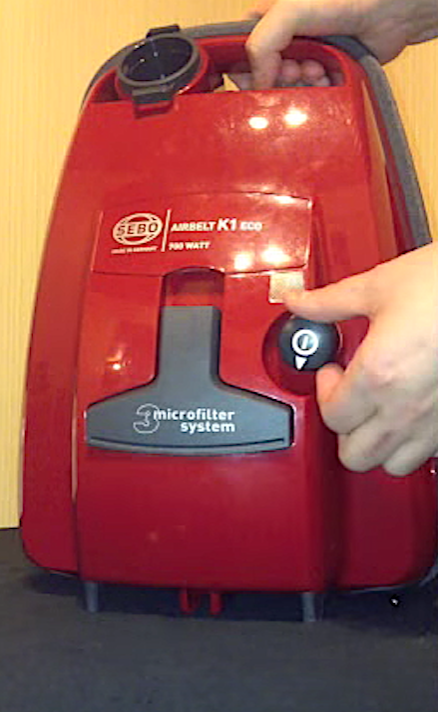

By NR2
@crystalvisions (440)
United Kingdom

December 5, 2015 7:38pm CST
If you live in Europe, there's every chance that you have seen energy labels hanging off vacuum cleaners if they are displayed in shops. Why all of a sudden are vacuums being fitted with energy labels?
Well, it all comes down to a law that was passed in September 2014 (last year) by the European Union to lower energy usage in domestic homes. The Commission Regulation EU No.666/2013 was implemented in July 2013 for the “eco-design requirements for energy-related products.”
Whilst large household appliances like refrigeration and freezers, washing machines, tumble driers and dishwashers have had energy labels applied to each model, the vacuum cleaner has now been attacked by the EU because it is deemed to be too energy inefficient due to high wattage motors up to 2500 watts. Nothing about lowering energy for electric fires or fans though, some of which go up to 3000 watts!
The new law now rules that 1600 watts or less must be the total/maximum motor wattage output that a brand new domestic market vacuum cleaner can be fitted with for the purposes of sale (and with further reduction to a total of 900 watts, planned next year).
But already it has been a nightmare for the brands and for the buyers when considering these newly tagged “Eco” vacuums.
The problem comes down to the test data because in my view it just isn't realistic enough. The EU claims for example that by lowering a vacuum cleaner's motor, consumers stand to save money from the energy used in the home. How much of a saving cannot be determined since it is impossible to collect a realistic average on the whole of Europe using their vacuum cleaners. The EU have however managed to find a way; a saving of a paltry £5 / $7.95 US over FOUR TO FIVE YEARS. That's not much of a saving to me!
Firstly, the actual usage of floor heads that brands have redesigned in order to pass the performance tests that the EU have set appear to have little thought to the owner who had bought the vacuum cleaner by the very belief of the energy label and test data ratings in question.
Secondly it would be fairer if the EU had organised an independent group to test ALL vacuums that enter Europe; but the EU have been lazy and indignant to leave the testing up to the brand themselves. This process then turns brands into testers of their own product with not so accurate and misleading claims and test data!
Thirdly the tests that the EU have set are also FLAWED. The EU outlines test data sand and grit that wouldn’t be normally found in a domestic home whilst floor heads and crevices have to deal with picking up dirt from a hard floor - though how anyone can ever clean a home full of hard floors with just a crevice TOOL is beyond me - the crevice tool is a thin tapered half size tube designed for corners, not a full sized floor head on either a canister (or "cylinder" as it is known in Europe) or upright vacuum.
The EU label for example dictates total energy efficiency, annual usage consumption data, carpet performance, hard floor performance, filtration and noise levels. The highest rating is A to F being the lowest/poorest.
Having already purchased a few Eco branded vacuums myself, I can testify that one brand in particular supplied the most difficult to use floor heads with the use of their vacuum cleaner in order to gain the highest A ratings for hard floor and carpet cleaning performance.
Instead of normally finding ONE suction only floor head, I got two separate floor heads - one to cope with carpets which turned out to be so sticky on the carpet that I was in fear of breaking the vacuum whilst the hard floor cleaning tool fails to pick up what it is designed to do.
It is clear that the brand concerned did not test the floor heads in a real life home cleaning scenario - and the brand in question is "Hoover Europe" stemmed from the FIRST brand to ever bring a domestic vacuum cleaner to the home - the now Chinese owned TTI based "Hoover" in America.
Hoover Europe is owned by Candy of Italy who make washing machines and clearly have no idea on floorcare. Although Hoover-E have since improved their decision to supply domestic floor care machines with one floor head, they haven’t applied the policy to ALL of their vacuums and they have failed to produce a reaction to the EU law as well as informing owners of the change of floor heads.
The Americans of course have a totally different voltage where motor watts are called motor amps and where electricity current and voltage is different. Most high performing vacuums in the U.S level out at 1300 watts for example.
So, not only do European/British consumers stand to be lied to from brands and their floorcare products, but also the cost prices for these "eco" vacuums can be pretty steep to meet all of the highest ratings. Only a few brands such as German companies Bosch, SEBO and Miele have provided fairer pricing.
Whichever way the EU swings in terms of trying to help consumers, it seems to me that the new EU directive is a law that has been passed to tick a box rather than actually and realistically lowering energy usage in a home.
In short, it is of no value to any consumer who should worry about lowering their vacuum cleaner usage, let alone throw out the high-motor fitted ones currently just because the EU doesn't swing in its favour. Ill-advised and a complete waste of time for the already confused buyer, the EU law needs to be heavily and fairly revised. Thanks for reading (c)Nar2/Crystalvisions.
1 person likes this
3 responses

@Dalane (691)
• United States
6 Dec 15
This is the most ridiculous thing I ever heard. When I open this post I thought it was going to be a satire on energy regulations gone overboard. However, It appears this law actually went into effect in the UK. If vacuum cleaners were running several hours a day, I could see the point, but how many minutes of the week is a vacuum cleaner run. It hardly seems worth all the fuss, especially if the savings is only 5 pounds every five years.
1 person likes this
@crystalvisions (440)
• United Kingdom
6 Dec 15
Precisely, @Dalane - the EU seem to make up rules as they go along. Meanwhile hairdryers are still energy hungry as are microwaves, oven, kettles and even toasters. When you think that an average toaster has 900 watts and are used every day, it begs the question on where the priorities are. Also central heating systems such as boilers use far more power.


@boiboing (13147)
• Northampton, England
6 Dec 15
It's ridiculous. If they want us to use less electricity tell us to vac less often.