

Pub Sign Photo Study – The Ladysmith – Ashton Under Lyne Manchester

@arthurchappell (44941)
Preston, England

June 20, 2016 7:53am CST
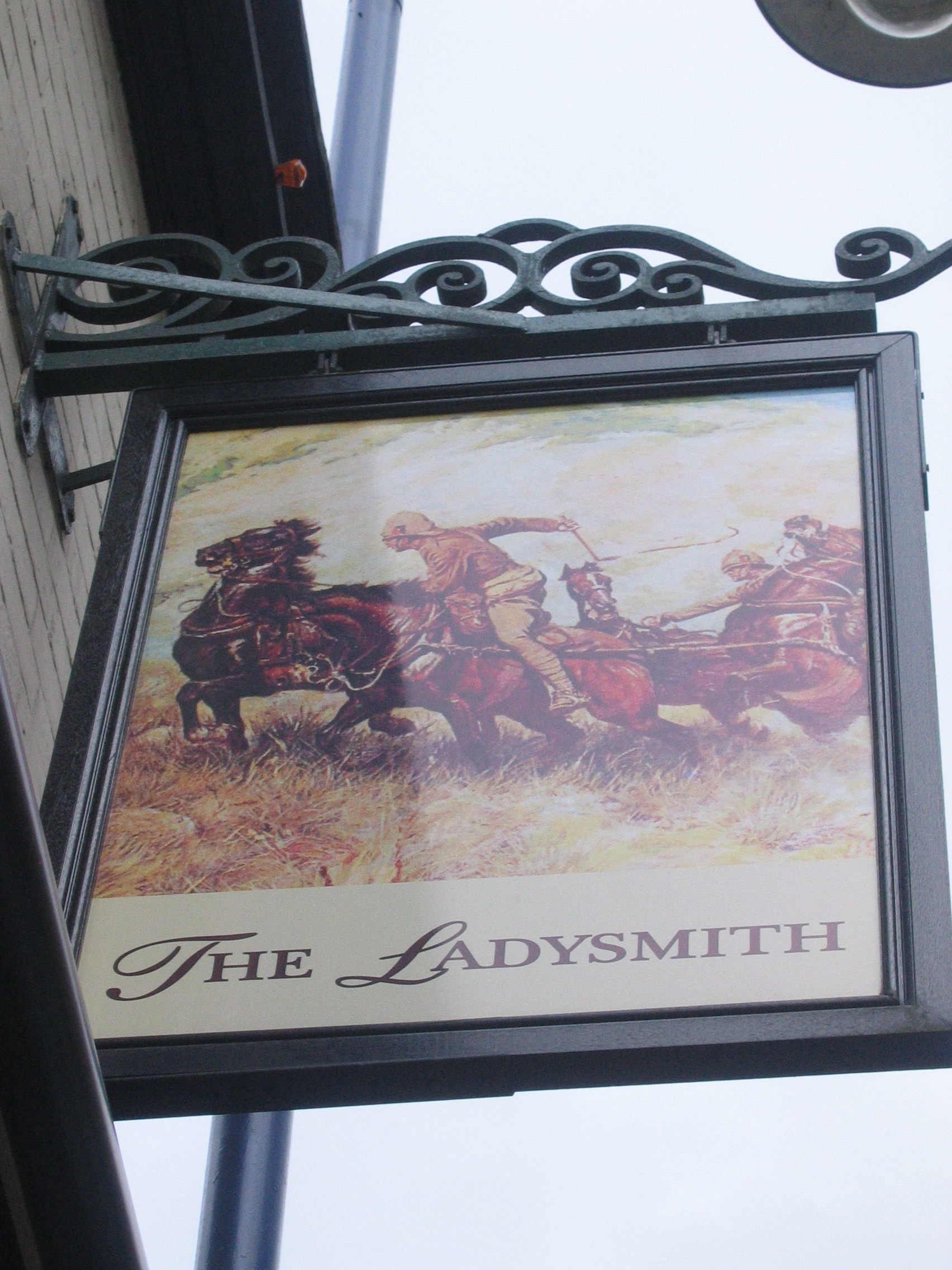
Named after a military Barracks that was located close to the pub though the barracks have long since been demolished.
The cavalry barracks was established in 1841 with the purpose of dealing with civil unrest as the government feared revolution from Chartists and the Working Classes, as was happening in parts of Europe. The Barracks were originally called The Wellington Barracks.
In 1889, soldiers and officers from the barracks were caught up in the three month siege of Ladysmith, in Natal, South East Africa in the second Boer War. It lasted from November 1889 until February 1900.
The British Government sent 15,000 men to Ladysmith just in case the uneasy peace treaty between Britain and the Boers broke down. The very act of sending so many men broke the peace and angered the Boers who surrounded the town with 21,000 men. Some leading officers escaped by train under heavy fire, including Douglas Haig who would be a major and controversial commander for Britain’s forces during the Great War.
The Dutch-Afrikaan Boers began crippling railway lines and the British launched a disastrous attack in an attempt to force a way out, losing 1,200 men in the attempt.
On Christmas Day, The Boers initiated a cease fire and actually threw a large Christmas pudding into the city for the besieged British forces. Aside from such humorous interludes, the siege was deadly with men on both sides running desperately short of food and medical supplies. Dysentery and typhoid were rife for both sides and British troops were eating their own horses and pack mules.
In February 1900, a relief force broke through for the British. One of the men leading the rescue party was Winston Churchill.
The Wellington Barracks was renamed Ladysmith in honour of the men who served and fought and died there. The pub and a shopping precinct in Ashton share the name Ladysmith.
The sign depicts a dramatic desperate looking cavalry ride over rough overgrown grassland.
Arthur Chappell
9 people like this
6 responses

@Jessicalynnt (50523)
• Centralia, Missouri
20 Jun 16
when I hear that name I imagine a lady blacksmith working at a forge lol
1 person likes this
@arthurchappell (44941)
• Preston, England
20 Jun 16
@Jessicalynnt Makes me think of fingersmiths - a Victorian name for pickpockets
1 person likes this
@Jessicalynnt (50523)
• Centralia, Missouri
20 Jun 16
@arthurchappell oh now that's a term Ive never heard, but it rather makes sense
1 person likes this

@JohnRoberts (109841)
• Los Angeles, California
20 Jun 16
That is a great sign. It is a genuine painting, an artwork. Great detail.
1 person likes this
@arthurchappell (44941)
• Preston, England
20 Jun 16
@JohnRoberts such signs turn the streets into an art gallery for me - it makes the search for them more exciting

@arthurchappell (44941)
• Preston, England
20 Jun 16
@amadeo the photo is there as others are referring to it - not sure why it isn't stem - hope it comes through OK soon

@Dragonairy1 (1722)
• Newcastle Upon Tyne, England
20 Jun 16
Another interesting sign.
1 person likes this

@arthurchappell (44941)
• Preston, England
20 Jun 16
@Dena91 thanks, I do hope you get a chance to come over one day
1 person likes this

