

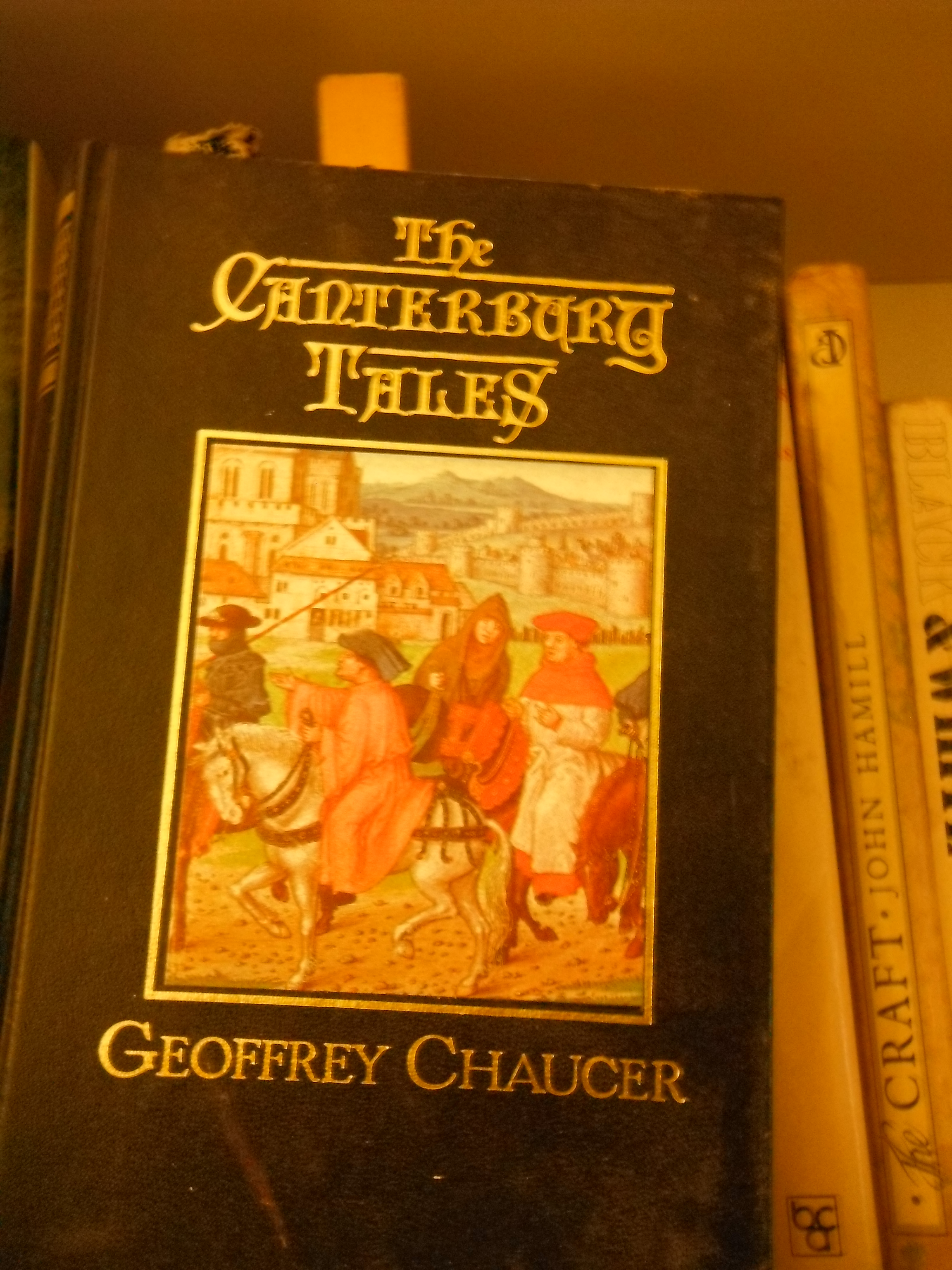
Book Review Chaucer The Canterbury Tales The Clerks Tale

@arthurchappell (44941)
Preston, England

March 14, 2018 4:18pm CST
Spoiler alerts
A quiet, unassuming Clerk who has not spoken at all since the Pilgrims embarked on their journey to Canterbury is now called upon to give a story for the entertainment of his fellow travellers. He offers one of the cruellest takes in English literature.
It is the story of an Italian Marquis, called Walter. He is regarded as a wise ruler, but he is single, and shows no desire to marry. His subjects worry that he has no male heir able to succeed him, so they pressure him to find a wife quickly.
Walter gives in to their wishes and seeks a bride. He settles on the pretty, but poor Griselda, a young virtuous virginal lady who lives with her father and works hard on his little farm.
Griselda is swept up in what seems to be a fairy-tale wedding 9which she knows nothing of in advance0, and all seems well for her future. However, Walter has insisted that she takes a vow never to complain or hate him no matter what he does to her. Griselda promises to honour the vow, and over the years, Walter wonders just how far he can push her and have her still respect her vow.
When Griselda has a daughter, everyone rejoices, though they really want a male heir for Walter. When the daughter is two years old, Walter puts his first terrible trial before Griselda. He hasher daughter snatched away, and leads Griselda to believe that the girl will be murdered. In fact, he has the girl adopted in secret by a distant cousin. Griselda holds to her vow and does not complain.
Later, when Griselda gives birth to a son, and heir, Walter waits two years and then has the boy abducted in the same circumstances. Again, Griselda remains steadfast, keeping her grief to herself.
Now Walter decides to fake a divorce from his wife, and even secures fake Papal Bulls (permission from the Pope), and makes it look as if he is trading her in for a younger prettier wife. Once again, Griselda takes in her fate without complaining – Chaucer compares her patience to that of the Bible’s Job.
Banished back to her father and poverty, Griselda is invited to the wedding, and helps prepare decorations for the wedding feast. It is only at the wedding that Walter admits that this was all a massive test of Griselda’s love and faith. He reveals that he is not in fact divorcing her or remarrying. In fact, the girl brought in as the new bride, is really Griselda’s daughter, brought back to her Mother safe and sound. The son is also there, as a pageboy for the wedding.
Griselda is happy at the reunion, and totally forgiving of the years of deception she has endured.
The story seems to be totally uncritical of Walter’s disgraceful actions, though Chaucer does add an independent post-script advising that no other men should treat their wives in such a way and that no wife should tolerate such behaviour.
Arthur Chappell
4 people like this
3 responses

@arthurchappell (44941)
• Preston, England
14 Mar 18
@mydanods very much such an age and clearly Chaucer shares your pity - sadly many women still experience such cruelties and worse today too
1 person likes this
@mydanods (6513)
• Nigeria
14 Mar 18
@arthurchappell Yes, they do in some countries.
1 person likes this

@teamfreak16 (43685)
• Denver, Colorado
15 Apr 18
Geez. Walter sounds like a great guy! 
1 person likes this
@arthurchappell (44941)
• Preston, England
15 Apr 18
@teamfreak16 yes, not a role model for us to copy by any means
1 person likes this

 This bit of literature sounds familiar to me thanks Arthur.