

A particularly nasty wasp - if you happen to be a certain type of spider!

By John Welford
@indexer (4852)
Leicester, England

October 6, 2018 9:41am CST
There are several wasp species across the world that have a life cycle that involves them becoming parasites of other creatures. One of these is a Costa Rican wasp (Hymenoepimecis argyraphaga) that targets a particularly formidable spider (Plesiometa argyra).
The spider is large and fearsome, and therefore avoided by just about every other insect apart from females of the wasp. It hovers above the spider then lands directly on its back, where it lays a single egg before making its escape.
The spider is not affected by this visit at first, but in time the egg absorbs nutrients from the host and the larva that hatches from it injects the spider with a chemical that makes it act in ways that it would not otherwise have done.
The night before the larva is ready to pupate, the spider destroys its web, which is not unusual given that many spiders do so as part of their regular behaviour. However, when a new web is spun, it is very different from what went before because its purpose is entirely to benefit the wasp and not the spider.
This web is hardly a web at all, because it consists of strands of strong silk that provide an anchor to nearby plants. When finished, the spider hangs beneath this framework and never moves again.
The wasp larva then eats the spider, and by dawn it is ready to weave its own cocoon which hangs inside the rough web made by the spider. It will then take its time in transforming into an adult wasp, protected inside its cocoon which in turn is safe from ants and the effects of heavy rain thanks to the strong threads that the wasp forced the spider to weave.
Nature has managed to produce some amazingly unpleasant creatures!
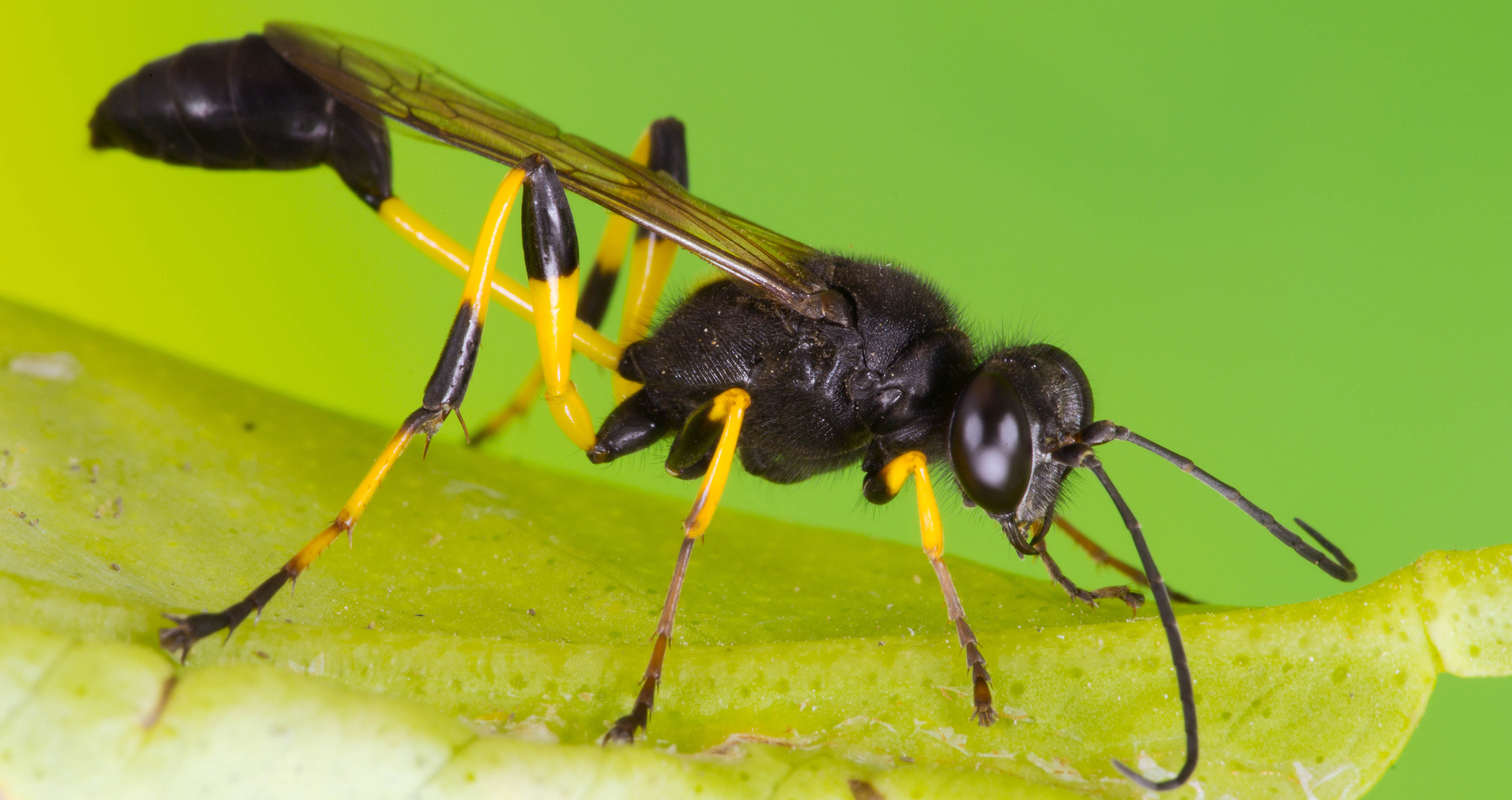
(The photo – of a related wasp species – has been taken from a copyright-free source)
4 people like this
4 responses

@JohnRoberts (109841)
• Los Angeles, California
6 Oct 18
Such creatures are necessary for nature's balance.
1 person likes this
@indexer (4852)
• Leicester, England
6 Oct 18
It may appear that way, but it is all down to evolution and the fact that species that survive do so because they are able to maintain their numbers in the environment that they have found themselves in. Many have become extinct because this has not happened for them - we are left with the survivors and it looks like balance. As conditions change, so will the balance and more species will become extinct.
1 person likes this

@indexer (4852)
• Leicester, England
6 Oct 18
Do bear in mind that this is not the wasp in question, but another type of parasitic wasp. I couldn't find an illustration of the one mentioned in this piece.

@cmoneyspinner (9218)
• Austin, Texas
6 Oct 18
Wasps are not my friends. I've been afraid of them ever since I was a child and we had a wasp nest outside of our house. But I'm glad this wasp eats spiders because I'm no friend of spiders either. 

