

1967: a poem by Thomas Hardy

By John Welford
@indexer (4852)
Leicester, England

November 12, 2018 6:09am CST
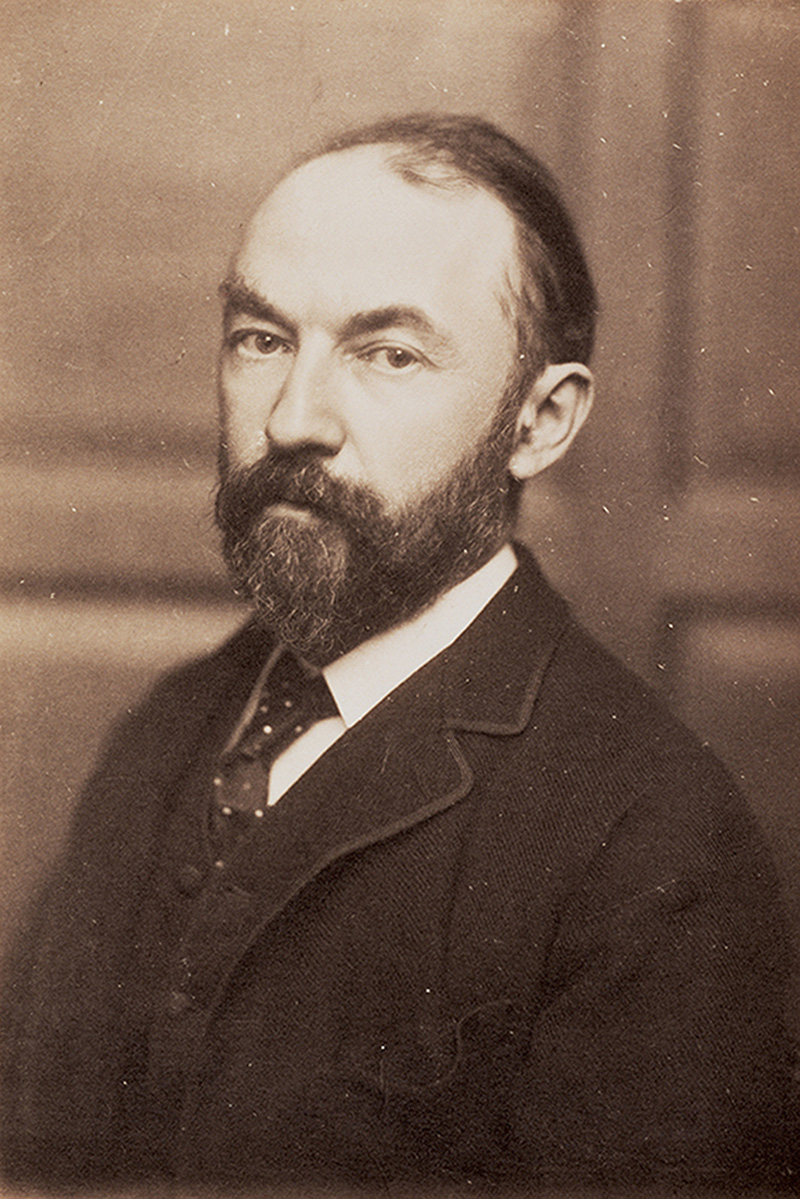
“1967” is a poem that Thomas Hardy (1840-1928) wrote in 1867 towards the end of the five-year period during which he was living in London and working as an assistant architect. The poem was not published until 1909 when it was included in the “More Love Lyrics” section of his collection entitled “Time’s Laughingstocks and Other Verses”.
The title is an obvious reference to a date 100 years in the future, but that is all the significance that should be attached to it. The poem is not an attempt to prophesy what the world would be like in that specific year, and there is therefore no point in commenting on any features of the year 1967 that either did or did not correspond with anything said in Hardy’s poem. This would in any case be rather difficult given that Hardy did not make any predictions of this nature.
The Poem
In five-score summers! All new eyes,
New minds, new modes, new fools, new wise;
New woes to weep, new joys to prize;
With nothing left of me and you
In that live century’s vivid view
Beyond a pinch of dust or two;
A century which, if not sublime,
Will show, I doubt not, at its prime,
A scope above this blinkered time.
Yet what to me how far above?
For I would only ask thereof
That thy worm should be my worm, Love!
Discussion
The poem comprises twelve lines split between four three-line stanzas, with each group of three lines sharing the same rhyme.
The first stanza emphasises the word “new”, which is used seven times. In “five-score summers” everything will be new, but not necessarily better; there will be “New woes to weep” as well as “new joys to prize”.
In the second stanza it becomes clearer that this is a love poem with the mention of “me and you”, although the sentiment expressed seems a bit negative with the statement that there will be “Nothing left of me and you / … / Beyond a pinch of dust or two”. On the other hand, this is hardly earth-shattering as a prediction!
The third stanza comes as close as Hardy ventures towards real prediction in this poem, with his conviction that the coming century will “show … at its prime, / A scope above this blinkered time”. It is no by means a vision of a glorious future in which all the world’s problems will be solved, in that the poet appreciates that the next hundred years may not be “sublime” and that there will be times when it is not “at its prime”, the implication being that, at such “subprime” times, there will be no improvement on Victorian lack of vision and social progress.
The fourth stanza brings everything back to the personal level, much as the second stanza did in response to the global vision of “newness” put forward in the first stanza. The poet asks what any of this will matter to him, because he only has one wish and that is to share his grave with that of his beloved. The thought expressed in the final line, “That thy worm should be my worm, Love!”, is a concept that seems to owe something to John Donne’s poem “The Flea”, in which the poet speculates on the union that he has with the woman he loves because their blood has been sucked by the same flea. Much later in his life Hardy actually noted this connection with Donne in a comment he scribbled in a copy of a book written about his work.
“1967” is therefore a poem that regards the future with modified optimism but which also dismisses the significance of any future progress, however “far above” the present it might be, in contrast to what really bothers him, namely the wish never to be separated from the woman he loves. The implication of sharing a grave is, obviously enough, that their lives will have been spent together for as many years of the next century as possible.
It is, however, a strange mixture of love lyric and political statement. Although the final message is about love, there is also plenty of talk in these twelve lines about what Hardy would later call “evolutionary meliorism”, which is the idea that things will get better over time provided that human beings exercise “loving-kindness” towards each other and the world they live in. That exercise can take place at the personal level but must also inform the way people treat each other in social and political terms.
The date of 1867 is important to note, because this was the year in which the British Parliament passed the Second Reform Act which extended the voting franchise to a much wider social stratum, in effect allowing working class men (not women) to vote for their government for the first time. This was therefore a year in which there was much talk about planning for a different, more democratic future. It is probably significant that the Reform League, which was founded in 1865 and organised demonstrations to press for extension of the franchise, had its headquarters on the ground floor of the building in which Hardy worked as an assistant architect, so that he would have passed their offices every time he arrived at and departed from his place of work.
It was also a time of intense debate occasioned by the working class movement that began with the holding of the “First International” conference in London in 1864, which Hardy may well have attended.
These political influences seem to have rubbed off on Hardy to a considerable extent, although he was to express his radicalism through his novels and poems rather than any overt political means. In any case, he was soon to leave London and return to Dorset, thus removing himself from the hotbed of radicalism that the capital city threatened to become.
“1967” is thus an interesting poem from the perspective of the developing thoughts of a young man who was soon to make his mark as a literary figure, firstly as a novelist and later as a poet. Whether it really works as a love poem, due to the throwing together of political, social and personal elements, is a matter for debate.
1 person likes this
No responses
