

Words and Deeds

By John Welford
@indexer (4852)
Leicester, England

June 13, 2019 5:51am CST
My mother died on Sunday 2nd June, and on the following Friday I took the train to Eastleigh to meet my sister Jill and her husband Peter to begin the process of sorting everything out. During the afternoon we went to the care home where Mother had spent her last seven weeks and packed up her clothes and other bits and pieces.
During the evening we went through a few hymn books to select the hymns that we wanted at her thanksgiving service and it was also decided that I should write a short tribute and read it out at the service, to be held at the church where she had worshipped all her life.
On Saturday morning we had an appointment to see someone at Mother’s bank in Poole to go over the next steps in sorting out her financial affairs, and this meant an early start in order to miss the worst of the traffic and find a parking space. The idea was that we would then go to Mother’s flat to do some more sorting out before I was taken to Bournemouth to catch a train home, but the flat visit did not prove to be possible for me.
The reason for the delay was the time it took to go through all the banking details, followed by setting up a joint executor’s account so that my sister and I will be able to deal with Mother’s assets and administer her will.
But there was one little matter that had puzzled us and to which we sought an answer. This was that we had been told that Mother had had something kept by the bank in safe deposit. We supposed that this might be a particularly important piece of jewelry, maybe something left to her by her own mother. We really hoped that it was not a later will than the one we knew about and for which we were the named executors.
The lady who had been talking to us went away for a few minutes and asked, on her return, if “61 Lackenham Road” meant anything to us. It did not, but the address we knew very well was “61 Tatnam Road”, this being the house that had been our home for many years. The bank lady had found a set of deeds, but they were labelled Lackenham Road, not Tatnam Road. There is no Lackenham Road in Poole.
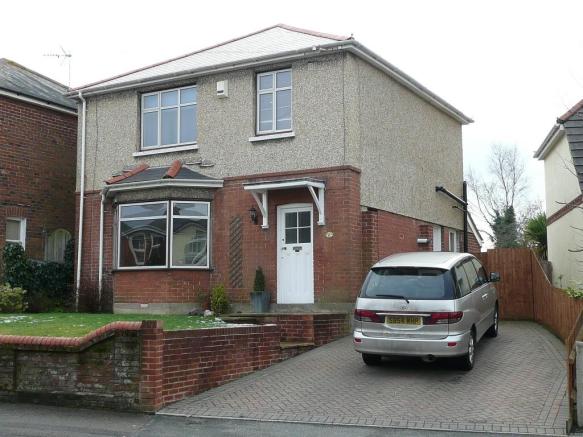
My grandfather, on my father’s side, had retired from the Methodist ministry in 1922 and bought what was then a brand new house. After he died in 1950 it became the property of two of his sons, one of whom died in 1977 and the other, my father, in 1983. It was then owned by my mother, who sold it in 2001 so that she could buy a ground-floor flat in a sheltered housing block.
When she wanted to sell the house she had a problem, which was that nobody knew the whereabouts of the deeds to the property. My mother did not have them and they could not be traced by her solicitor. In order to sell the house she had to make a series of legal declarations to claim her ownership, which probably added a tidy sum to the fee she ended up paying the solicitor.
It seems extraordinary to me that, apparently, nobody thought to ask if the bank held the deeds. Given that my father had spent his whole career working for Lloyd’s Bank, and had been the sole owner of the house between 1977 and 1983, where else would he have kept the deeds other than in the safe keeping of his former employer? Why did that simple thought not occur to the solicitor? Or did it?
It is even more likely that the deeds had been kept at the bank ever since they were first drawn up in 1922. There would have been no need for them to be consulted at any time since then, because ownership of the house had been passed on by bequest and not sale.
If the deeds did indeed go back to the 1920s, that might explain why they were labelled “Lackenham Road” and not “Tatnam Road”. Did a clerk have terrible handwriting that was then misread by somebody else? Or did somebody shout the name across a room and was misheard as someone else wrote it down? At least they got the house number right.
But that does not explain why any solicitor, had they made a proper search and found that a set of deeds did indeed exist in my mother’s bank, did not ask why she would have held a set of deeds for a house at an address that did not exist. Surely it should have been obvious that Lackenham meant Tatnam, and that the deeds were those of the house in question.
The conclusion in those circumstances must be that the solicitor was utterly useless and applied an interesting piece of logic that said that if there were no deeds headed “61 Tatnam Road” then there were no deeds to the property that actually existed at that address, even though the owner had only one set of deeds in her possession that matched the property in every other respect.
Or did he not even bother to check?
At any event, he clearly preferred to go through an unnecessary process so that an 86-year-old woman (as she was at the time) could be made to pay an extra fee on top of what he charged for the property conveyance.
My sister and I had been in the process of applying for Power of Attorney so that we could manage Mother’s affairs on her behalf. It so happened that we had sent off the completed paperwork just one day before she went rapidly downhill and died peacefully in her sleep, only a few weeks before what would have been her 104th birthday. A solicitor – not the one who made such a hash with the house deeds search – had offered to do the necessary work for a fee of £700. At least we didn’t make that mistake!
2 people like this
1 response

@DocAndersen (54399)
• United States
13 Jun 19
Sorry again for your loss.
What a touching story, sometimes you have to wonder about the intent of some people.
