

Countries of the World - Armenia
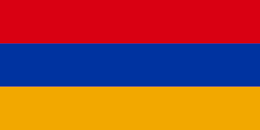

@just4him (323168)
Green Bay, Wisconsin

April 6, 2024 4:49pm CST
ARMENIA
Officially known as the Republic of Armenia, it is a country that has gone through many changes in dynasties and kingdoms since the sixteenth century BC. Armenia’s name derives from Hayk, the legendary patriarch of the Armenians and the great-great-grandson of Noah, defeated the Babylonian king Bel in 2492 BC and established his kingdom in the Ararat region according to the fifth century AD author, Moses of Chorene.
Armenia is a landlocked nation bordering Turkey to the west, Georgia to the north, Azerbaijan to the east and Iran and Azerbaijani exclave Nakhichivan to the south. Yerevan is the capital and largest city and financial center. It is one of the world’s oldest continuously inhabited cities.
Evidence of early civilization dates back to 4000 BC during the Bronze Age.
With its turbulent history with the nations surrounding Armenia, it still retains uneasy relations with Turkey and Azerbaijan. Turkey still holds a blockade against Armenia. During World War I, confrontations between the Ottoman Empire and the Russian Empire caused much distrust and suspicion from the new government in Istanbul. On 24 April 1915 Ottoman authorities arrested Armenian intellectuals and eventually led to the Armenian Genocide. Turkish authorities deny the genocide happened.
“The genocide was implemented in two phases: the wholesale killing of the able-bodied male population through massacre and subjection of army conscripts to forced labor, followed by the deportation of women, children, the elderly and infirm on death marches leading to the Syrian desert. Driven forward by military escorts, the deportees were deprived of food and water and subjected to periodic robbery, rape, and massacre. There was local Armenian resistance in the region, developed against the activities of the Ottoman Empire. The events of 1915 to 1917 are regarded by Armenians and the vast majority of Western historians to have been state-sponsored mass killings, or genocide.” Wikipedia.
Turkish authorities deny such events took place, yet the International Association of Genocide Scholars places the death toll at more than one million. Estimated between 1 and 1.5 million people.
Azerbaijan has also been in major conflict with Armenia and in 1993 joined Turkey in blockading Armenia’s rail traffic. Most of its cargo and goods arrived by railroad. This blockade is in effect today.
The kingdom of Armenia reached its height in the first century BC under Tigranes the Great, and in 301 AD, became the first state in the world to adopt Christianity. The Armenian Apostolic Church is the oldest national church.
Though no longer located in Armenia, Mount Ararat is seen in the center of its coat of arms. Mount Ararat, historically part of Armenia, now belongs to Turkey, though it is visible from Armenia with its height at 16,854 feet above sea level, and is still regarded as a symbol of their land.
Geography
Armenia is in the geopolitical Transcaucasus region, Southern Caucasus Mountains and their lowlands between the Black Sea and Caspian Sea. Its topography is mostly mountainous with fast flowing rivers and a few forests.
Climate
The climate is highland continental. Summers – June to mid-September – are hot, dry, and sunny. Temperatures range from 22 – 36 C or 72 – 97 F. With low humidity and air coming off the mountains it provides a welcome and refreshing cooling effect. Winters are cold with lots of snow and temperatures ranging from -10 and -5 C or 14 to 23 F. Winter sports enthusiasts enjoy skiing down the hills of Tsaghkadzor thirty miles outside Yerevan.
Statistics
Capital
and largest city Yerevan
40°11'N 44°31'E
Official languages Armenian[1]
Ethnic groups
(2022[2])
• 98.1% Armenians
• 1.1% Yazidis
• 0.8% Other
Religion
(2011)[3][4]
• 94.8% Christianity
• —92.5% Armenian Apostolic Church)
• —2.3% Other Christian
• 0.8% Yazidism
• 0.4% Other
• 4.0% None
Demonym(s)
Armenian
Government
Unitary parliamentary republic
• President
Vahagn Khachaturyan
• Prime Minister
Nikol Pashinyan
• President of the National Assembly
Alen Simonyan
Legislature National Assembly
Establishment
• Hayasa-Azzi
16th century BC - 13th century BC
• Urartu[5]
860 BC – 590 BC
• Orontid dynasty
6th century BC
• Kingdom of Armenia[6]
321 BC–428 AD
• Artaxiad dynasty[7][8]
190 BC
• Arsacid dynasty
52–428
• Bagratid Armenia
885–1045
• Kingdom of Vaspurakan
908–1021
• Kingdom of Tashir-Dzoraget
979–1118
• Kingdom of Syunik
987–1170
• Kingdom of Artsakh
1000–1261
• Kingdom of Cilicia
1198–1375
• Principality of Khachen
1261–1603
• Melikdoms of Karabakh
1603–1822
• Republic of Armenia
28 May 1918
• Soviet conquest; Armenian Soviet Socialist Republic
29 November 1920
• Independence restored
23 September 1991
• CIS accession
21 December 1991
• Admitted to the United Nations
2 March 1992
• Current constitution
5 July 1995
Area
• Total 29,743 km2 (11,484 sq mi) (138th)
• Water (%) 4.71[9]
Population
• 2024 estimate 3,165,000[10] (138th)
• Density 101.5/km2 (262.9/sq mi)
GDP (PPP)
2023 estimate
• Total $58.497 billion[11] (115th)
• Per capita $19,745[11] (81st)
GDP (nominal)
2023 estimate
• Total $24.540 billion[11] (115th)
• Per capita $8,283[11] (82nd)
Gini (2019)
29.9[12]
low
HDI (2022)
0.786[13]
high (76th)
Currency Dram (?) (AMD)
Time zone UTC+4 (AMT)
Date format dd.mm.yyyy
Driving side
right
Calling code
+374
ISO 3166 code
AM
Internet TLD
• .am
• .???
Economy
Armenia’s economy relies on investment and support from Armenians abroad. Before independence from the former Soviet Union, their economy was largely industry-based in chemicals, electronics, machinery, processed food, synthetic rubber, and textile, and highly dependent on outside resources. Armenia developed a modern industrial sector supplying machine tools, textiles and other manufactured goods in exchange for raw materials.
Armenian mines produce copper, zinc, gold, and lead. Most of their energy is produced with fuel imported from Russia, including gas and nuclear fuel. They have one power plant.
Music and Dance
Armenian music is a mixture of indigenous folk music, light pop, and extensive Christian music.
The Armenian Genocide caused widespread emigration that led to Armenians settling in many various countries, including the United States. The ‘kef’ style Armenian dance music used Armenian and Middle Eastern folk instruments and some western instruments preserved the folk songs and dances of Western Armenia.
Armenia also enjoys art and cinema.
Sports
Armenia enjoys a wide variety of sports. Wrestling, weightlifting, judo, association football, chess, and boxing. The mountains add to sports in skiing and mountain climbing.
Armenia is an active member of the international sports community with full membership in the Union of European Football Associations and International Ice Hockey Federation. It also hosts the Pan-Armenian Games.
Prior to 1992 Armenians participated in the Olympics representing the USSR. They won many medals for the USSR. Hrant Shahinyan won the first Olympic medals with two golds and two silvers in gymnastics at the 1952 Summer Olympics in Helsinki. Armenia first participated at the 1992 Summer Olympics in Barcelona under a unified CIS team, winning three gold medals and one silver medal in weightlifting, wrestling, and sharp shooting with only five athletes. Since the 1994 Winter Olympics in Lillehammer, Armenia participated as an independent nation.
Football is also a popular sport in Armenia, participating in many of the different World Cups.
Thank you for reading. Image courtesy of Wikimedia Commons.
5 people like this
4 responses

@Deepizzaguy (122232)
• Lake Charles, Louisiana
6 Apr 24
Thank you for sharing the facts of Armenia.
2 people like this

@LindaOHio (222624)
• United States
7 Apr 24
Thank you for the very thorough article. I did not know about the Genocide. Have a good day.
1 person likes this


@JESSY3236 (22244)
• United States
9 Apr 24
cool info. My former pastor went on a mission trip there.
1 person likes this
