

brain freeze causes
sphenopalatine ganglioneuralgia
ice cream headache science
trigeminal nerve pain
cold stimulus headache
Slick Unmentionables About the Reasoning Behind Getting a Brain Freeze

@AmeekaG (36)

March 7, 2026 12:12am CST
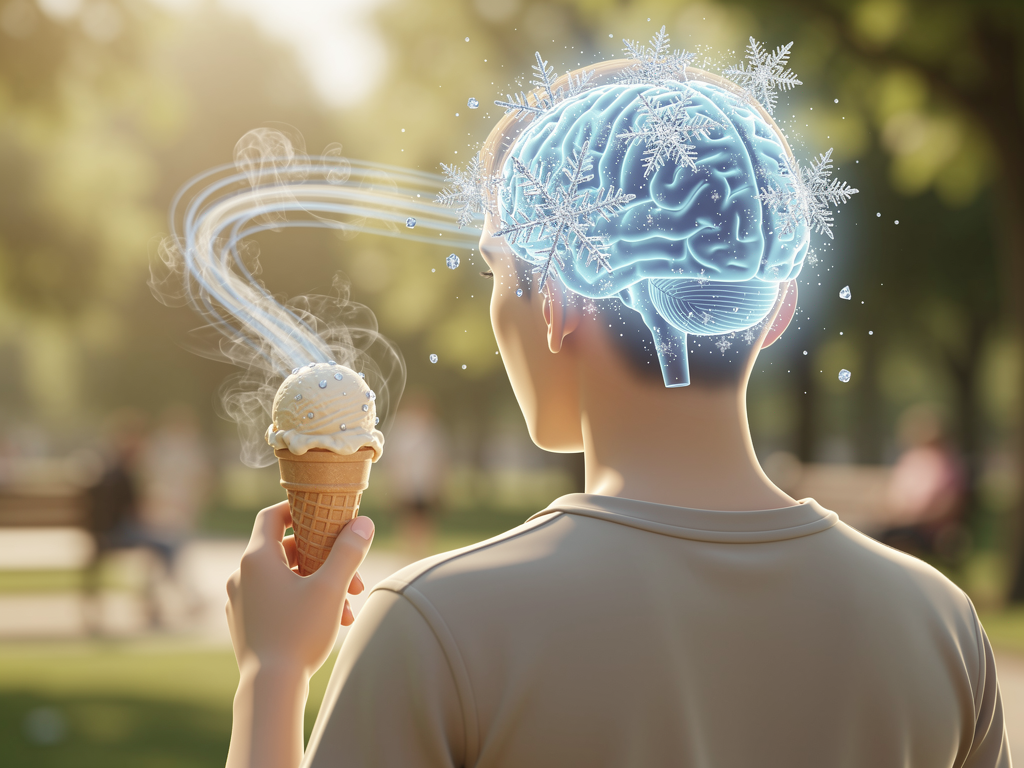
Brain freeze — medically known as sphenopalatine ganglioneuralgia — is that sharp, sudden headache you feel after eating ice cream or drinking something icy too quickly. While it seems dramatic, the reasoning behind it is surprisingly scientific and fascinating.
When something extremely cold touches the roof of your mouth (the palate), it rapidly lowers the temperature of nearby blood vessels. In response, these vessels constrict and then quickly dilate to preserve brain warmth. This sudden change triggers nearby nerves — particularly the trigeminal nerve — which sends pain signals to the brain. The brain misinterprets the source, projecting pain to the forehead instead of the mouth. That’s why brain freeze feels like a frontal headache.
Hot weather can actually increase the likelihood of brain freeze. When your body is already warm, the temperature contrast from cold foods becomes more extreme, intensifying the vascular reaction. In short, your brain is overprotective — it’s reacting quickly to defend itself from perceived temperature shock.
The good news? Brain freeze is temporary and harmless. Pressing your tongue against the roof of your mouth or sipping lukewarm water can help restore temperature balance quickly.
Understanding this clever biological reflex turns a painful surprise into a small lesson in human physiology — and makes your next scoop of ice cream just a bit more strategic.
No responses
