

Type setting

By Fleur
@Fleura (34927)
United Kingdom

April 7, 2026 3:41am CST
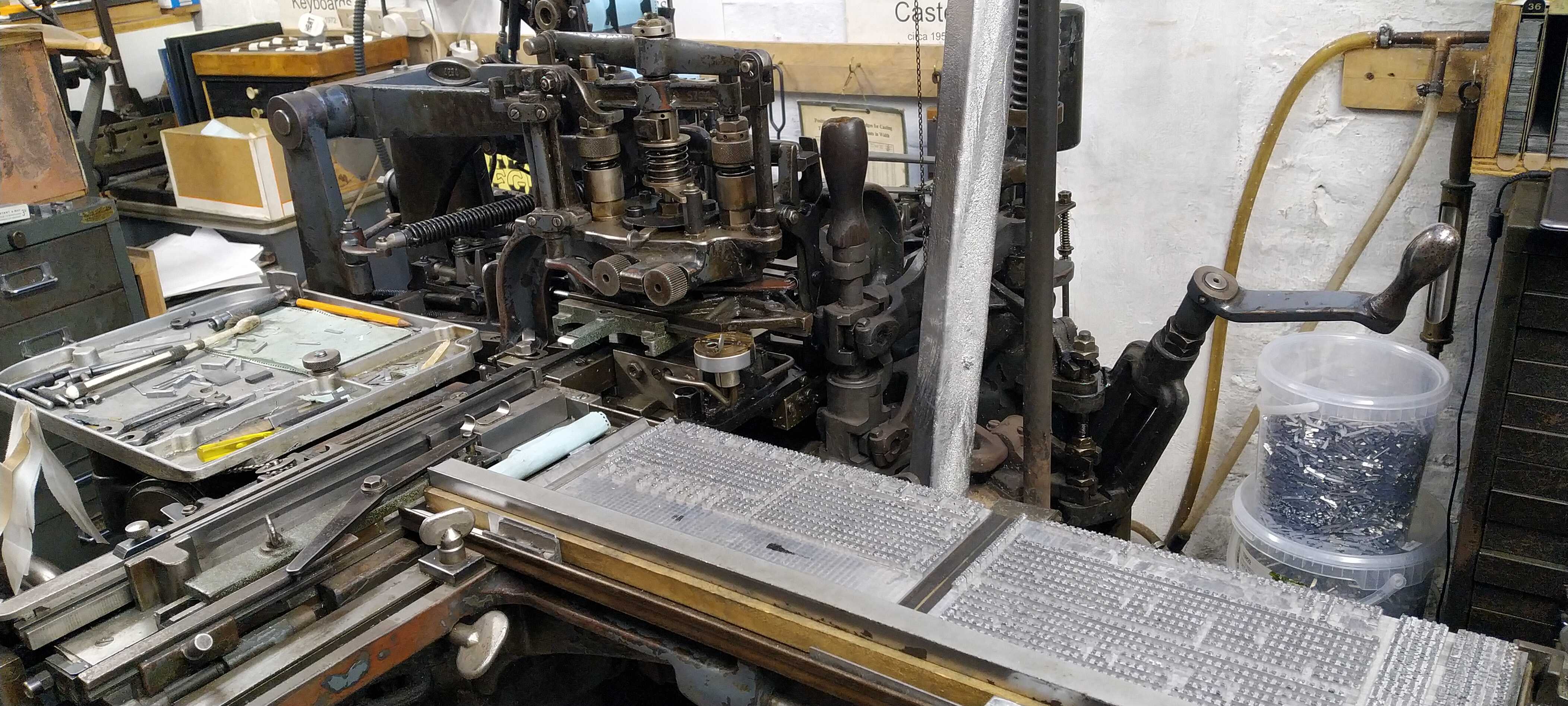
In my last post I wrote about the man with the assorted printing presses; well, on the other side of the small passageway, behind another door, a similar but somewhat shorter and greyer oldish man with specs and overalls was surrounded by a similar array of old mechanical devices. And he was operating the type-setting machines, actually making the type one letter at a time.
I knew a tiny bit about printing but the actual type-setting was something I had never really thought much about. Obviously in order to print type you have to have the letters and other characters, and these get worn over time, losing their crisp edges, and fresh ones are needed. Buckets of used letters were standing around in a corner of the yard outside, ready to be melted down and re-used. (I confess that since criminals regularly steal lead off church roofs and the like, I was surprised no-one had yet made off with a bucket or two of used type!)
Anyway I was fascinated to see the type-setting process in action. The lead (with a little tin and antimony added, to modify the melting and setting temperature) is made into a long ingot which is suspended over a sort of basin so that as the bottom of it is heated it melts and fills this reservoir. It then passes though a tube into what I can only describe as like a miniature drinking fountain, which squirts the molten metal up into the mould. That then immediately moves away and the cast letter falls out. The metal alloy and the temperature are carefully controlled so that the hot metal is liquid enough to get into all the tiny shapes and yet sets almost immediately so that within a second or so it is cool enough to handle and comes out cleanly.
The sequence of cast letters is programmed using a punched tape, and this is generated using another machine with a keyboard a bit like an old typewriter. Then all around the room there were drawers and drawers of brass moulds for characters in different fonts, different sizes, and different languages.
Fascinating, but incredibly laborious! But nevertheless, still in demand I was told.
All rights reserved. © Text and image copyright Fleur 2026.
10 people like this
8 responses

@changjiangzhibin89 (17239)
• China
7 Apr
The lead type printing made an indelible contribution,though it has been largely replaced by laser phototypesetting ,offset printing,and digital printing now.
3 people like this


 I only just learned that 'linotye' literally meant that they could produce a line of type in one go.
@Fleura (34927)
• United Kingdom
7 Apr
Yes that would be a concern, there must be lead vapour around.
Lead has a fairly low melting point; I remember once at primary school the teacher melted some lead in a pan and poured it into a mould in the shape of a fish. No-one believes me when I tell them this story!
3 people like this

@BarBaraPrz (51811)
• St. Catharines, Ontario
7 Apr
@DianneN Or asbestos...We used to use it as moldeling "clay."
3 people like this


@Ineeddentures (33875)
•
7 Apr
@Fleura
I would have asked
Just so I could gasp on astonishment
Then I joke I would need a mortgage or a bank loan...
2 people like this

@JudyEv (381739)
• Rockingham, Australia
8 Apr
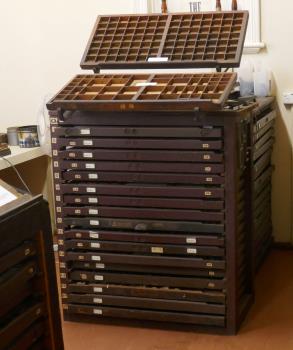
Vince used to frequent the local printing shop when he was younger and was telling me about this just yesterday. It's quite a complicated process but must have taken years to perfect. He would watch the guy setting the type for the local newspaper and said he was incredibly fast.
Here is a photo of the drawers of type from New Norcia monastery. Years before this, I'd picked up two drawers and used them to display tiny bits and pieces.
1 person likes this

@LindaOHio (222222)
• United States
7 Apr
Interesting. It still surprises me that this type of printing is still in demand.
2 people like this
