

Way Down Yonder in New Orleans

By Four Walls
@FourWalls (87165)
United States

August 21, 2026 10:34pm CST
One thing about New Orleans: it’s got a long history of lascivious living. What, the song countdown has had two songs about brothels or prostitutes (“House of the Rising Sun” and “Lady Marmalade,” respectively), and there’s the Doobie Brothers’ “Toulouse Street” (which didn’t make this countdown). Why is that?
Let’s talk about Storyville. Doesn’t that sound like a pleasant name? Well, in doing this countdown I’ve found a lot of stories, and history, about the city. One of the things I found is that New Orleans was home to the first government-approved and regulated “red light district.” Las Vegas had nothing on New Orleans when it came to being “sin city”…in fact, New Orleans was the first city in America slapped with that unflattering label!
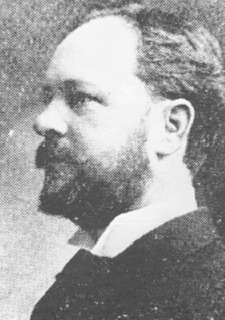
In the late 19th century New Orleans councilman Sidney Story (pictured from the video screen grab) decided that he’d had all he could take of the “street walkers” tarnishing the reputation of the city.  He drafted legislation that would remove all houses of ill-repute from the “tourist” area around the city and relocate them to a single place. Hopefully, Story thought, “out of sight, out of mind.”
You know, they call prostitution “the world’s oldest profession” for a reason. Out of sight? Maybe. Out of mind? Are you nuts?
Anyway, the law was passed, and a section of New Orleans, “off the main drag” as we would say today, was cordoned off as the only place where “disorderly houses” could operate.
Now, Story thought he was doing something moral and upright. Imagine his humiliation when the prostitution area of town became known as “Storyville.” In fact, he was so distraught that his name was linked with the brothel section of town that he left town! (He moved to that bastion of morals, Chicago,
He drafted legislation that would remove all houses of ill-repute from the “tourist” area around the city and relocate them to a single place. Hopefully, Story thought, “out of sight, out of mind.”
You know, they call prostitution “the world’s oldest profession” for a reason. Out of sight? Maybe. Out of mind? Are you nuts?
Anyway, the law was passed, and a section of New Orleans, “off the main drag” as we would say today, was cordoned off as the only place where “disorderly houses” could operate.
Now, Story thought he was doing something moral and upright. Imagine his humiliation when the prostitution area of town became known as “Storyville.” In fact, he was so distraught that his name was linked with the brothel section of town that he left town! (He moved to that bastion of morals, Chicago,  where he died in 1937.)
Then there was advertising. No kidding! There were a number of competing directories published (the most famous being the Blue Book) that listed the addresses of the brothels; AND, in many cases, had photographs and biographies (real or imagined, such as much of what one of the most famous madams, Lulu White, said about herself and her girls) of the ladies who were available. The title page of the Blue Book had, in French, Honi soit qui mal y pense (“Shamed be anyone who thinks evil of it”), which should tell you that these weren’t exactly cloistered nuns putting this thing out. Not only were these published and sold for money, they carried advertisements. Many of the ads were for cigars, liquor, and pharmacies offering snake oil, I mean curative treatments for various diseases (some books explicitly mentioned syphilis, while others were more tactful). The directories were listed alphabetically and by race. A couple of the books even had a separate area for the Creole and Jewish workers.
where he died in 1937.)
Then there was advertising. No kidding! There were a number of competing directories published (the most famous being the Blue Book) that listed the addresses of the brothels; AND, in many cases, had photographs and biographies (real or imagined, such as much of what one of the most famous madams, Lulu White, said about herself and her girls) of the ladies who were available. The title page of the Blue Book had, in French, Honi soit qui mal y pense (“Shamed be anyone who thinks evil of it”), which should tell you that these weren’t exactly cloistered nuns putting this thing out. Not only were these published and sold for money, they carried advertisements. Many of the ads were for cigars, liquor, and pharmacies offering snake oil, I mean curative treatments for various diseases (some books explicitly mentioned syphilis, while others were more tactful). The directories were listed alphabetically and by race. A couple of the books even had a separate area for the Creole and Jewish workers.  Storyville was shut down by the government in 1917 because the Navy base was expecting a large influx of military personnel with the U.S. involvement in World War I, and they didn’t want training time wasted on sick call visits (and penicillin wouldn’t be discovered for another decade).
  The buildings, many of which were rather opulent mansions, were destroyed at the beginning of World War II to make room for the Iberville housing projects. The New Orleans historical sites agree that only three buildings are still standing from the “glory days” of America’s first legal “sin city.”
Here’s a short video about the history of Storyville:
The buildings, many of which were rather opulent mansions, were destroyed at the beginning of World War II to make room for the Iberville housing projects. The New Orleans historical sites agree that only three buildings are still standing from the “glory days” of America’s first legal “sin city.”
Here’s a short video about the history of Storyville:
He drafted legislation that would remove all houses of ill-repute from the “tourist” area around the city and relocate them to a single place. Hopefully, Story thought, “out of sight, out of mind.”
You know, they call prostitution “the world’s oldest profession” for a reason. Out of sight? Maybe. Out of mind? Are you nuts?
Anyway, the law was passed, and a section of New Orleans, “off the main drag” as we would say today, was cordoned off as the only place where “disorderly houses” could operate.
Now, Story thought he was doing something moral and upright. Imagine his humiliation when the prostitution area of town became known as “Storyville.” In fact, he was so distraught that his name was linked with the brothel section of town that he left town! (He moved to that bastion of morals, Chicago, where he died in 1937.)
Then there was advertising. No kidding! There were a number of competing directories published (the most famous being the Blue Book) that listed the addresses of the brothels; AND, in many cases, had photographs and biographies (real or imagined, such as much of what one of the most famous madams, Lulu White, said about herself and her girls) of the ladies who were available. The title page of the Blue Book had, in French, Honi soit qui mal y pense (“Shamed be anyone who thinks evil of it”), which should tell you that these weren’t exactly cloistered nuns putting this thing out. Not only were these published and sold for money, they carried advertisements. Many of the ads were for cigars, liquor, and pharmacies offering snake oil, I mean curative treatments for various diseases (some books explicitly mentioned syphilis, while others were more tactful). The directories were listed alphabetically and by race. A couple of the books even had a separate area for the Creole and Jewish workers.
Storyville was shut down by the government in 1917 because the Navy base was expecting a large influx of military personnel with the U.S. involvement in World War I, and they didn’t want training time wasted on sick call visits (and penicillin wouldn’t be discovered for another decade). The buildings, many of which were rather opulent mansions, were destroyed at the beginning of World War II to make room for the Iberville housing projects. The New Orleans historical sites agree that only three buildings are still standing from the “glory days” of America’s first legal “sin city.”
Here’s a short video about the history of Storyville:Your browser isn’t supported anymore. Update it to get the best YouTube experience and our latest features. Learn moreRemind me later
9 people like this
7 responses

@teamfreak16 (45135)
• Denver, Colorado
14h
Interesting. It's hilarious that they named the place after him! Amazing the things you learn when doing a music series. I'm learning lots about natural disasters right now.
2 people like this
@FourWalls (87165)
• United States
2h
One of my favorite natural disaster songs is “Louisiana 1927” by Randy Newman, but I don’t see that making your list.  Yes, the things songs will teach us! I did a series (which I need to redo and expand) on real events depicted in songs, like OMD’s “88 Seconds in Greensboro.” History is so much more fun when you can sing along or dance to it.
Yes, the things songs will teach us! I did a series (which I need to redo and expand) on real events depicted in songs, like OMD’s “88 Seconds in Greensboro.” History is so much more fun when you can sing along or dance to it.1 person likes this
@teamfreak16 (45135)
• Denver, Colorado
Just now
@FourWalls -OMD seemed to do a lot of that. "Enola Gay," "Joan of Arc," etc.
1 person likes this

@FourWalls (87165)
• United States
2h
Oh, I know. This is a sterling example of how people never practice what they preach. Never have.


@FourWalls (87165)
• United States
2h
As opposed to San Francisco, which has a straight district.
1 person likes this

@ptrikha_2 (49919)
• India
7h
That is very interesting!
Yes morality and ethics have their value; but there are things that do have their place in this world.
Where were people relocated when Storyville was shut down?
1 person likes this
@ptrikha_2 (49919)
• India
57m
@FourWalls
Yes there is no way that one can stop such practices.
They have been around since ages.
Instead Government should have helped some of those people financially and helped in relocation.
@FourWalls (87165)
• United States
2h
They just got absorbed into other parts of the town. If the government thought that sailors never frequented a wh*rehouse they were exceptionally stupid. (Funny story about that: my brother said there was a madam in Naples nicknamed “Humpty Dumpty” because she was sitting on the wall at the port when the ships pulled in.)
1 person likes this

@crossbones27 (53540)
• Mojave, California
12h
This reminds me Of Yes Theory, they like from Netherlands and France, kind of mixed country culture thing where they travel the world. They pretty good, they never dive deep into the title of their posts.
Meaning sounds harder than the videos actually end up. They all hugs and kisses at the end and I get it no one wants to die, can't you dig just a little further and use your charm to get better answers in a way people will not harm you or invite you back?  I do not know does not seem to change much but maybe it takes time and when people see the history they go that was kind of brutal how we did things.
I do not know does not seem to change much but maybe it takes time and when people see the history they go that was kind of brutal how we did things.
Your browser isn’t supported anymore. Update it to get the best YouTube experience and our latest features. Learn moreRemind me later
1 person likes this
@crossbones27 (53540)
• Mojave, California
2h
@FourWalls You know what is also is cool is how neat it made that place, hell Marines have so many names after the French , you have blacks and native Americans mixed with white people made some of the prettiest music ever heard/
Plus if we get to loud we have a little island to go. Pretty neat story. Also if you go to Maine, they have some neat ones too.
Pretty neat story. Also if you go to Maine, they have some neat ones too.1 person likes this

@FourWalls (87165)
• United States
2h
I think so, too. Not that New Orleans has ever been mistaken for a hotbed of morality.

@FourWalls (87165)
• United States
2h
Yes, it’s pretty wild. A number of cities, especially out in the “Wild West,” “looked the other way” when it came to brothels, but this was an effort to centralize the district. Technically, it was called “the district,” but the nickname “Storyville” stuck.