

More Coal Mining History

By Four Walls
@FourWalls (91005)
United States

November 25, 2026 1:25pm CST
In addition to having the really cool underground tour at the Beckley Exhibition Coal Mine Museum, there’s other aspects showing what life was like for coal miners in the 19th and 20th centuries. It’s a fascinating, and very sad in many ways, look at the coal mining industry in particular, and labor life in general in the Gilded Age. It shows why labor unions rose, and why they were so necessary.
Most of you have heard the classic song by Tennessee Ernie Ford, “Sixteen Tons,” with the closing line of the chorus, “St. Peter don’t you call me, ‘cause I can’t go, I owe my soul to the company store.” That was the existence for miners. While it superficially sounds great that part of their employment included a place to live in a “company town,” scratching the surface of that indicates that it was far from idyllic.
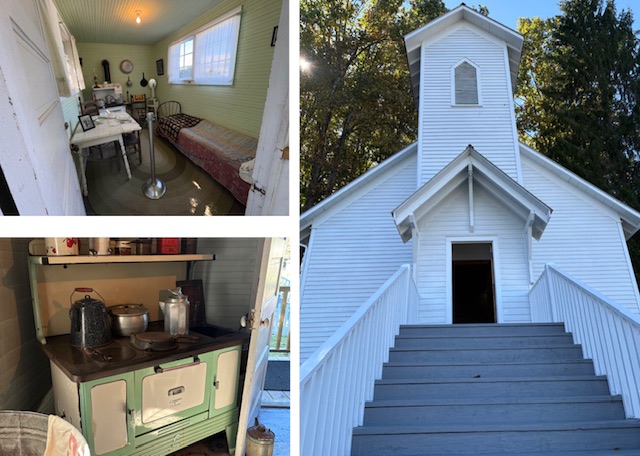
In the upper left-hand corner you see a “bachelor’s shanty.” This was about the size of a typical walk-in closet these days. I’ve seen countless houses with bathrooms larger than this living space. As you can tell from the name, that’s where single men (or men who didn’t have their families with them) lived. There’s a bed, a table, and a stove. (Toilet facilities were outhouses and communal showers, where men would wash after work.) In the lower left, you see the stove in a “much bigger” home for the families.
On the right is a recreation of the town church. This is where things can get interesting. A lot of the miners were Italian immigrants, and therefore Catholic. The church, however, was a Protestant one…AND one that preached the word of the mining companies. Any Biblical stuff about helping the poor was strictly forbidden by the owners, because, you know, that’d make them look bad.
And, yes, as in all mining towns there was the “company store,” where goods could be bought with scrip (what miners were paid in). Scrip was like “goofy money” in arcades: good in one, but not another. IF, by some chance, the miner tried to go to a real bank (not a company-owned one), they’d get precious little in the way of monetary exchange. If the miner didn’t have enough money to feed his family, he could just get “credit” at the store (hence, the “I owe my soul to the company store” line).
In short, what we’re talking about here is legalized slavery. Instead of working in the cotton fields on the plantations, the people were working underground in far worse conditions. They didn’t technically own the house they lived in (as was evident later when union organization and strikes began: miners were evicted from the towns), or much of anything else.
These living conditions, combined with the dying conditions of so many disasters inside the coal mines, brought about the unions…and, in the process, what could easily be called the Second Civil War. But that’s for another discussion.
At the Beckley Exhibition Mine Museum you got to see these houses, along with the really nice house the “company boss” lived in, the one-room school, and even the outhouses!
3 people like this
2 responses