

DO YOU KNOW WHAT IS BLOOD PRESSURE

By naveen338
@naveen338 (458)
India

December 15, 2006 9:00pm CST
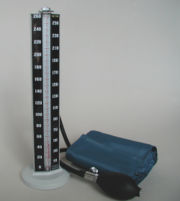
Blood pressure is the pressure exerted by the blood at right angles to the walls of the blood vessels. Unless indicated otherwise, blood pressure refers to systemic arterial blood pressure, i.e., the pressure in the large arteries delivering blood to body parts other than the lungs, such as the brachial artery (in the arm). The pressure of the blood in other vessels is lower than the arterial pressure. Blood pressure values are universally stated in millimetres of mercury (mmHg). The systolic pressure is defined as the peak pressure in the arteries during the cardiac cycle; the diastolic pressure is the lowest pressure (at the resting phase of the cardiac cycle). The mean arterial pressure and pulse pressure are other important quantities.
Typical values for a resting, healthy adult human are approximately 120 mmHg systolic and 80 mmHg diastolic (written as 120/80 mmHg), with large individual variations. These measures of blood pressure are not static, but undergo natural variations from one heartbeat to another or throughout the day (in a circadian rhythm); they also change in response to stress, nutritional factors, drugs, or disease.
[edit] High blood pressure
Main article: Hypertension
Blood pressure exceeding normal values is called arterial hypertension. In itself it is only rarely an acute problem; see hypertensive crisis. But because of its long-term indirect effects (and also as an indicator of other problems) it is a serious worry to physicians diagnosing it.
All levels of blood pressure put mechanical stress on the arterial walls. Higher pressures increase heart workload and progression of unhealthy tissue growth (atheroma) that develops within the walls of arteries. The higher the pressure, the more stress that is present and the more atheroma tend to progress and the heart muscle tends to thicken, enlarge and become weaker over time.
Persistent hypertension is one of the risk factors for strokes, heart attacks, heart failure, arterial aneurysms, and is the second leading cause of chronic renal failure after diabetes mellitus.
In the past, most attention was paid to diastolic pressure; but nowadays it is recognised that both high systolic pressure and high pulse pressure (the numerical difference between systolic and diastolic pressures) are also risk factors. In some cases, it appears that a decrease in excessive diastolic pressure can actually increase risk, due probably to the increased difference between systolic and diastolic pressures (see the article on pulse pressure).
[edit] Low blood pressure
Main article: Hypotension
Blood pressure that is too low is known as hypotension. The similarity in pronunciation with hypertension can cause confusion.
Low blood pressure may be a sign of severe disease and requires urgent medical attention.
When blood pressure and blood flow decrease beyond a certain point, the perfusion of the brain becomes critically decreased (i.e., the blood supply is not sufficient), causing lightheadedness, dizziness, weakness and fainting.
However, people who function well while maintaining low blood pressures have lower rates of cardiovascular disease events than people with normal blood pressures.
FROM:WIKIPEDIA
No responses
