

tell me about your computer?

By kaniam
@kaniam (582)
India

December 28, 2006 12:37am CST
Computer
From Wikipedia, the free encyclopedia
Jump to: navigation, search
For the IEEE magazine see Computer (magazine).
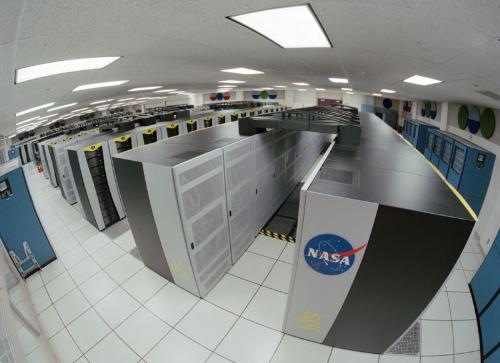
The NASA Columbia Supercomputer.A computer is a machine for manipulating data according to a list of instructions.
Computers take numerous physical forms. Early electronic computers were the size of a large room, consuming as much power as several hundred modern personal computers.[1] Today, computers can be made small enough to fit into a wrist watch and be powered from a watch battery. Society has come to recognize personal computers and their portable equivalent, the laptop computer, as icons of the information age; they are what most people think of as "a computer". However, the most common form of computer in use today is by far the embedded computer. Embedded computers are small, simple devices that are often used to control other devices—for example, they may be found in machines ranging from fighter aircraft to industrial robots, digital cameras, and even children's toys.
A computer in a wristwatch.The ability to store and execute programs makes computers extremely versatile and distinguishes them from calculators. The Church–Turing thesis is a mathematical statement of this versatility: Any computer with a certain minimum capability is, in principle, capable of performing the same tasks that any other computer can perform. Therefore, computers with capability and complexity ranging from that of a personal digital assistant to a supercomputer are all able to perform the same computational tasks so long as time and storage capacity are not considerations.
Contents[hide]
1 History of computing
2 Stored program architecture
2.1 Programs
2.2 Example
3 How computers work
3.1 Control unit
3.2 Arithmetic/logic unit (ALU)
3.3 Memory
3.4 Input/output (I/O)
3.5 Multitasking
3.6 Multiprocessing
3.7 Networking and the Internet
4 Further topics
4.1 Hardware
4.2 Software
4.3 Programming languages
4.4 Professions and organizations
5 See also
6 Notes
7 References
History of computing
Main article: History of computing
The Jacquard loom was one of the first programmable devices.It is difficult to define any one device as the earliest computer. The very definition of a computer has changed and it is therefore impossible to identify the first computer. Many devices once called "computers" would no longer qualify as such by today's standards.
Originally, the term "computer" referred to a person who performed numerical calculations (a human computer), often with the aid of a mechanical calculating device. Examples of early mechanical computing devices included the abacus, the slide rule and arguably the astrolabe and the Antikythera mechanism (which dates from about 150-100 BC). The end of the Middle Ages saw a re-invigoration of European mathematics and engineering, and Wilhelm Schickard's 1623 device was the first of a number of mechanical calculators constructed by European engineers.
However, none of those devices fit the modern definition of a computer because they could not be programmed. In 1801, Joseph Marie Jacquard made an improvement to the textile loom that used a series of punched paper cards as a template to allow his loom to weave intricate patterns automatically. The resulting Jacquard loom was an important step in the development of computers because the use of punched cards to define woven patterns can be viewed as an early, albeit limited, form of programmability.
In 1837, Charles Babbage was the first to conceptualize and design a fully programmable mechanical computer that he called "The Analytical Engine".[2] Due to limited finance, and an inability to resist tinkering with the design, Babbage never actually built his Analytical Engine.
Large-scale automated data processing of punched cards was performed for the US Census in 1890 by tabulating machines designed by Herman Hollerith and manufactured by the Computing Tabulating Recording Corporation, which later became IBM. By the end of the 19th century a number of technologies that would later prove useful in the realization of practical computers had begun to appear: the punched card, boolean algebra, the vacuum tube (thermionic valve) and the teleprinter.
During the first half of the 20th century, many scientific computing needs were met by increasingly sophisticated analog computers, which used a direct mechanical or electrical model of the problem as a basis for computation. However, these were not programmable and generally lacked the versatility and accuracy of modern digital computers.
Defining characteristics of five first operative digital computers Computer Nation Shown working Binary Electronic Programmable Turing
complete
Zuse Z3 Germany May 1941 Yes No By punched film stock Yes (1998)
Atanasoff-Berry Computer USA Summer 1941 Yes Yes No No
Colossus computer UK 1943 Yes Yes Partially, by rewiring No
Harvard Mark I/IBM ASCC USA 1944 No No By punched paper tape No
ENIAC USA 1944 No Yes Partially, by rewiring Yes
1948 No Yes By Function Table ROM Yes
A succession of steadily more powerful and flexible computing devices were constructed in the 1930s and 1940s, gradually adding the key features that are seen in modern computers. The use of digital electronics (largely invented by Claude Shannon in 1937) and more flexible programmability were vitally important steps, but defining one point along this road as "the first digital electronic computer" is difficult (Shannon 1940). Notable achievements include:
EDSAC was one of the first computers to implement the stored program (von Neumann) architecture.Konrad Zuse's electromechanical "Z machines". The Z3 (1941) was the first working machine featuring binary arithmetic and a measure of programmability.
The Atanasoff-Berry Computer (1941) which used vacuum tube based computation, binary numbers, and regenerative capacitor memory.
The secret British Colossus computer (1944), which had limited programmability but demonstrated that a device using thousands of tubes could be reasonably reliable and electronically reprogrammable. It was used for breaking German wartime codes.
The Harvard Mark I (1944), a large-scale electromechanical computer with limited programmability.
The US Army's Ballistics Research Laboratory ENIAC (1946), which used decimal arithmetic and was the first general purpose electronic computer, although it initially had an inflexible architecture which essentially required rewiring to change its programming.
Several developers of ENIAC, recognizing its flaws, came up with a far more flexible and elegant design, which came to be known as the stored program architecture or von Neumann architecture. This design was first formally described by John von Neumann in the paper "First Draft of a Report on the EDVAC", published in 1945. A number of projects to develop computers based on the stored program architecture commenced around this time, the first of these being completed in Great Britain. The first to be demonstrated working was the Manchester Small-Scale Experimental Machine (SSEM) or "Baby". However, the EDSAC, completed a year after SSEM, was perhaps the first practical implementation of the stored program design. Shortly thereafter, the machine originally described by von Neumann's paper—EDVAC—was completed but didn't see full-time use for an additional two years.
Nearly all modern computers implement some form of the stored program architecture, making it the single trait by which the word "computer" is now defined. By this standard, many earlier devices would no longer be called computers by today's definition, but are usually referred to as such in their historical context. While the technologies used in computers have changed dramatically since the first electronic, general-purpose computers of the 1940s, most still use the von Neumann architecture. The design made the universal computer a practical reality.
Microprocessors are miniaturized devices that often implement stored program CPUs.Vacuum tube-based computers were in use throughout the 1950s, but were largely replaced in the 1960s by transistor-based devices, which were smaller, faster, cheaper, used less power and were more reliable. These factors allowed computers to be produced on an unprecedented commercial scale. By the 1970s, the adoption of integrated circuit technology and the subsequent creation of microprocessors such as the Intel 4004 caused another leap in size, speed, cost and reliability. By the 1980s, computers had become sufficiently small and cheap to replace simple mechanical controls in domestic appliances such as washing machines. Around the same time, computers became widely accessible for personal use by individuals in the form of home computers and the now ubiquitous personal computer. In conjunction with the widespread growth of the Internet since the 1990s, personal computers are becoming as common as the television and the telephone and almost all modern electronic devices contain a computer of some kind.
Stored program architecture
Main articles: Computer program and Computer programming
The defining feature of modern computers which distinguishes them from all other machines is that they can be programmed. That is to say that a list of instructions (the program) can be given to the computer and it will store them and carry them out at some time in the future.
In most cases, computer instructions are simple: add one number to another, move some data from one location to another, send a message to some external device, etc. These instructions are read from the computer's memory and are generally carried out (executed) in the order they were given. However, there are usually specialized instructions to tell the computer to jump ahead or backwards to some other place in the program and to carry on executing from there. These are called "jump" instructions (or branches). Furthermore,
1 response

@stringer321 (5682)
• Kiryat Ata, Israel
10 Oct 12
So, you can copy and paste. That's a thing that would take you days without a computer, ah ?
I have a Samsung laptop, it has an Intel core i5. Windows 7 home premium.
I'm not sure how much hard disk space it has, but, I don't think I need too much. I keep most of my things in the email or the internet just has it all.
I use my computer for the internet, some writing, drawing things, making tasks for the studies and even make some money on the internet. I also play games in the computer and watch videos on Youtube.
