

Jungle Book

@moumitamazumder (817)
India

4 responses

@dyupe_moe (225)
• Philippines
6 Mar 07
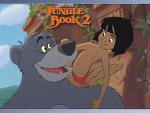
I have seen this a dozen times and I don't mind seeing the Jungle Book again. I agree with the "Watcha wanna do?" portion of the vultures. I also like the elephants when they come marching in. And to top it off, I have almost all songs of the Jungle Book in my music collection (except the one that Kaa the Snake sings "trust in me"). :)
1 person likes this


@ericajoyce (1746)
• Philippines
11 Dec 07
Hello moumitamazumder. I do agree with you. Jungle Book is indeed a great movie. Its a classic movie. I have seen the cartoon several times when I was a kid. I do miss watching it. I couldn't recall if there was a Jungle Book the movie. Who were the actors in there? I only watched the cartoon.

@sumit057 (227)
• India
30 Jun 10
The Jungle Book (1894) is a collection of stories written by Rudyard Kipling. The stories were first published in magazines in 1893–4. The original publications contained illustrations, some by Rudyard's father, John Lockwood Kipling. Kipling was born in India and spent the first six years of his childhood there. After about ten years in England, he went back to India and worked there for about six-and-half years. These stories were written when Kipling lived in Vermont.[1]
The tales in the book (and also those in The Second Jungle Book which followed in 1895, and which includes five further stories about Mowgli) are fables, using animals in an anthropomorphic manner to give moral lessons. The verses of The Law of the Jungle, for example, lay down rules for the safety of individuals, families and communities. Kipling put in them nearly everything he knew or "heard or dreamed about the Indian jungle."[2] Other readers have interpreted the work as allegories of the politics and society of the time.[3] The best-known of them are the three stories revolving around the adventures of an abandoned 'man cub' Mowgli who is raised by wolves in the Indian jungle. The most famous of the other stories are probably "Rikki-Tikki-Tavi", the story of a heroic mongoose, and "Toomai of the Elephants", the tale of a young elephant-handler. Kotick, The White Seal seeking for his people a haven where they would be safe from hunters, has been considered a metaphor for Zionism, then in its beginning.[citation needed]
As with much of Kipling's work, each of the stories is preceded by a piece of verse, and succeeded by another. The title of each is given in italics in the list of stories below.
The Jungle Book, because of its moral tone, came to be used as a motivational book by the Cub Scouts, a junior element of the Scouting movement. This use of the book's universe was approved by Kipling after a direct petition of Robert Baden-Powell, founder of the Scouting movement, who had originally asked for the author's permission for the use of the Memory Game from Kim in his scheme to develop the morale and fitness of working-class youths in cities. Akela, the head wolf in The Jungle Book, has become a senior figure in the movement, the name being traditionally adopted by the leader of each Cub Scout pack.
Have watched this movue more than 50 times just love it!!