

Spirituality, Remembering, and Hot Cross Buns!

@kitchenwitchoftupper (2290)
United States

March 5, 2007 4:20pm CST
If you are a friend of mine you already know how my spirituality developed. If not, I can briefly explain that over quite a long period of time I tried on many religions. Some of the Christian religions were almost comfortable, but just not as comfortable as a pair of sweats. Some of the Eastern religious beliefs were a bit more comfortable, but they didn't fit right either. Neither my grandmother or my mother ever went to church or discussed religion with me. They both stopped walking the earth in their forms very early in their "this world" lives, and did not give me any oral teachings of who or what I was. I did not learn of my Pagan heritage until during Dream Time when I Remembered Who and What I Am. This educations continues even now as I am 59 years old.
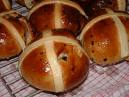
On Friday I went to the grocery store and saw one of my mother's favorites - Hot Cross Buns. I bought them and then felt the need to look up the history of them (as well as the recipe!). I am going to copy and paste the history and for my fellow pagans, I hope you get the same giggle as I did, as I was totally shocked when I could not understand how such a Christian tradition as these tasty buns could have been associated with my mother. Happy Reading~Donna
------------------------------------------------------------
ABOUT HOT CROSS BUNS
"The practice of eating special small cakes at the time of the Spring festival seems to date back at least to the ancient Greeks, but the English custom of eating spiced buns on Good Friday was perhaps institutionalized in Tudor times, when a London bylaw was introduced forbidding the sale of such buns except on Good Friday, at Christmas, and at burials. The first intimation we have of a cross appearing on the bun, in remembrance of Christ's cross, comes in Poor Robin's Amanack (1733): Good Friday comes this month, the old woman runs, with one or two a penny hot cross buns' (a version of the once familiar street-dry "One-a-penny, two-a penny, hot cross buns'). At this stage the cross was presumably simply incised with a knife, rather than piped on in pastry, as is the modern commercial practice. As yet, too, the name' of such buns was just cross buns: James Boswell recorded in his Life of Johnson (1791): 9 Apr. An. 1773 Being Good Friday I breakfasted with him and cross-buns.' The vact that they were generally sold hot, howeer, seems to have led by the early nineteenth century to the incorpordaion of hot into their name."---An A-Z of Food & Drink, John Ayto[Oxford University Press:Oxford] 2002 (p. 164)
"The pagans worshipped the goddess Eostre (after whom Easter was named) by serving tiny cakes, often decorated with a cross, at their annual spring festival. When archaeolgists excavated the ancient city of Herculaneum in southwestern Italy, which had been buried under volcanic ask and lava since 79 C.E., they found two small loaves, each with a cross on it, among the ruins. The English word "bun" probably came from the Greek boun, which referred to a ceremonial cake of circular or crescent shape, made of flour and hone and offered to the gods. Superstitions regarding bread that was baked on Good Friday date back to a very early period. In England particulary, people believed that bread baked on this day could be hardened in the oven and kept all year to protect the house from fire. Sailors took leaves of it on their voyages to prevent shipwreck, and a Good Friday loaf was often buried in a heap of corn to protect it from rats, mice, and weevils. Finely grated and mixes with water, it was sometimes used as a medicine. In England nowadays, hot cross buns are served at break are served at breakfast on Good Friday morning. They are small, usually spiced buns whose sugary surface is marked with a cross. The English believe that hanging a hot cross bun in the house on this day offers protection from bad luck in the coming year. It's not unusual to see Good Friday buns or cakes hanging on a rack or in a wire basket for years, gathering dust and growing black with mold--although some people believe that if the ingredients are mixed, the dough prepared, and the buns baked on Good Friday itself, they will never get moldy."---Holiday Symbols and Customs, Sue Ellen Thompson, 3rd edition[Omnigraphics:Detroit] 2003, (p. 233)
"Hot cross bun, a round bun made from a rich yeast dough containing flour, milk, sugar, butter, eggs, currants, and spices, such as cinnamon, nutmeg, allspice, and cloves. In England, hot cross buns are traditionally eaten on Good Friday; they are marked on top with a cross, wither cut in the dough or composed of strips of pastry. The mark is of ancient origin, connectd with religious offerings of bread, which replaced earlier, less civilized offerings of blood. The Egyptians offered small round cakes, marked with a representation of the horns of an ox, to the goddess of the moon. The Greeks and Romans had similar practices and the Saxons ate buns marked with a cross in honor of the goddess of light, Eostre, whose name was transferred to Easter. According to superstition, hot cross buns and loaves baked on Good Friday never went mouldy, and were sometimes kept as charms from one year to the next. Like Chelsea buns, hot cross buns were sold in great quantities by the Chelsea Bun House; in the 18th century large numbers of people flocked to Chelsea during the Easter period expressly to visit this establishment."---Oxford Companion to Food, Alan Davidson[Oxford University Press:Oxford] 1999 (p. 114)
"Bath buns, hot cross buns, spice buns, penny buns, Chelsea buns, currant buns-all these small, soft, plump, sweet, fermented' cakes are English institutions...The most interesting of the recipes is perhaps the simple spiced fruit bun, the original of our Good Friday hot cross bun without the cross. These spice buns first became popular in Tudor days, at the same period as the larger spice loaves or cakes, and were no doubt usually made form the same batch of spcied and butter-enriched fruit dough. For a long time bakers were permitted to offer these breads and buns for sale only on special occasions, as is shown by the following decree, issued in 1592, the thirty-sixth year of the reign of Elizabeth I, by the London Clerk of the Markets: That no bakers, etc, at any time or times hereafter make, utter, or sell by retail, within or without their houses, unto any of the Queen's subject any spice cakes, buns, biscuits, or other spice bread (being bread out of size and not by law allowed) except it be at burials, or on Friday before Easter, or at Christmas, upon pain or forfeiture of all such spiced bread to the poor...If anybody wanted spice bread and buns for a private celebration, then, these delicacies had to be made at home. In the time of James I, further attempts to prevent bakers from making spice breads and buns proved impossible for enforce, and in this matter thhe bakers were allowed their way. Although for difference reasons, the situation now is much as it was in the late seventeenth century, spice buns appearing only at Easter--not, to be sure, on Good Friday when bakeries are closed, but about a fortnight in advance..."---English Bread and Yeast Cookery, Elizabeth David[Penguin Books:Middlesex UK] 1979 (p. 473-5)
4 people like this
5 responses

@GnosticGoddess (5626)
• United States
6 Mar 07
That was very interesting! Thanks for the info!
1 person likes this

@kathy77 (7485)
• Australia
5 Mar 07
Wow what valuable information you have here it must of taken you some time to find out all the information. I only eat hot cross buns at Easter time and really enjoy them. I really enjoyed this very informative information regarding hot cross buns and now I know the history behind the story of hot cross buns thanks to you.
1 person likes this
@kitchenwitchoftupper (2290)
• United States
7 Mar 07
Thank you for your comment kathy, and now that cut and paste is an option for me, it's not really hard at all! lol!~Donna

@Angelwhispers (8978)
• United States
6 Mar 07
Good morning Donna, great information. I too remember the childrens song but I also know that its a tradition in my husbands family for breakfast on good friday they having very stout traditional Catholic beliefs. It has always blown my mind when I have researched "our" christian holiday traditions how much of it is so firmly rooted in pagan traditions. I just do not believe that in realilty that is how it was meant to be, as far as bibical directives. That does not keep me from celibrating each holiday with children and grand children, in the forms that have been passed down in my own family. I think I have mentioned before to you that I worship differantly and privately from the regular christian community.
Spring truly is a celibration of life renewed, and any form of appreciation is respect for that new life. I adore your posts my Dear friend and I think we are all sharing an education here.
1 person likes this

@lifeiseasy (2292)
• United States
5 Mar 07
I have heard of these hot cross buns ...but not as a food as a song the kids learn to play in music class ... I don't think they even sound like they would taste good to me ...lol not big on those types of spices ...as for the the history behind them ... that was truly fasinatating ... Isn't it strange how they found the ones buried within the city ... when things like this happen it sure makes you take a second look around you ...great story ...
@kitchenwitchoftupper (2290)
• United States
5 Mar 07
They are really not as spicy as they sound. There are more raisins than anything and the dough is a basic yeast bread dough that has been a bit sweetened. I love finding these tid bits of history too. ~Donna

@APMorison (424)
• United States
5 Mar 07
Hot Cross Buns. Of course they belong to the older tradition of the Goddess. The little circular cakes divided by an equal arm cross are a symbol of the universe and universal energy. The cross divides the light and darkness, male and female, active and passive energies. That is the function of the Equal Armed Celtic Cross - the ones with the 'long tail' that seem similar to the Roman crucifix are taken from the equal arm cross set atop a plinth so that it was placed high up.
Another Eostar (Easter) tradition that not every one thinks of is the Egg Hunt. Ever wonder where that started?? Part of the story is that as the celebration of Spring approached and the people and animals began to try and think of lovely gifts for the Goddess Eostar, the rabbit found a beautifully colored egg and brought that as his gift.
If you go back and think about it though - this was a hunter/gatherer background tradition. When, after the long cold winter, you started seeing the rabbits out and about again you knew that spring was on the way and that the wild birds would be laying their eggs. Wild bird eggs are in patterns and colors that are beautiful to look at, but after a hard winter it was fresh protein as well. So when you saw the bunnies, it was time to hunt the eggs! Usually around the time of the festival of Eostar!
Here endeth the lesson Pagani. ;)
@kitchenwitchoftupper (2290)
• United States
5 Mar 07
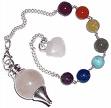
Great answer AP! I love having little discoveries like this about my grandmother and mother. They had so much to share with me and just not the time. I can remember when I was only in grade school and my girlfriends taught me the trick about putting a threaded needle in a pencil eraser (pendulum) and then holding it over each others' bellies to see how many babies we were going to have. When I went home to show it to my mother she told me to not play that game because I wasn't old enough to yet. - go figure~Donna
