

some step a head ,what's your contribution?

By ruralafrica
@ruralafrica (3)
Uganda

October 19, 2006 11:27am CST
Summary
The practice of intensive care medicine is at an early stage in rural Sub-Saharan Africa although for many years it has been a facility in large urban centres of Africa where there are more resources of personnel and funds. In an analysis of the workload and outcome of one year of intensive care practice in rural Africa the group which had most benefit was the postoperative surgical patient. Oxygen concentrators, pulse oximeters and simple central lines were important items to maintain good care. The most expensive item of equipment of clinical value was a modified oxygen concentrator which also powered a ventilator. Intermittent positive pressure ventilation in tetanus patients gave good outcomes in children only. With an overall mortality of 27% in all admissions nursing morale and motivation was high and non physician anaesthetists and clinical officers made substantial contributions.
…………………………………………………………………………………….
Although Intensive Care Units, ICU, may be said to have started in 1953 in Europe1 the great majority of hospitals in rural Sub-Saharan Africa have no such facility and in the context of working with major limitations in financial and human resources the planning of a facility in this environment requires careful consideration. Life expectancy in many parts of Africa is about 45 years and equivalent to the1840s in England and Wales. Medical care in Africa predates conditions not only before ICU care in Europe but even before the discovery of anaesthesia2. In rural sub-Saharan Africa where medical care is more limited than the urban areas the life expectancy figures must be even worse than those published for Sub-Saharan Africa as a whole. A recent review of Intensive Care Units in less developed countries3 noted the lack of data available upon which planning and organising such a facility in the developing world could be carried out.
Method
A collection of data was made prospectively in St.Mary’s Hospital Lacor Gulu Uganda over a 12 month period from July 2005 to July 2006 on all patients admitted to the Intensive Care Unit and stored on a spreadsheet and database by the authors. Fifteen fields of data were stored for each patient.’COULD WE MENTION OUT THE FIELD HERE’
BACK GROUND
St.Mary’s Hospital Lacor is a Church supported previous missionary general hospital now integrated into the Ugandan health system in a rural area which continues to have a major insecurity conflict over the last 20 years. As a consequence there has been considerable breakdown in the primary health care structures in an area of severe deprivation. It has a bed capacity of 476 beds with 4 functioning operating theatres performing about 3,500 operations per year with specialists in medicine, surgery, paediatrics, oral surgery, obstetrics and gynaecology, anaesthesia, and radiology but no specialists in thoracic, cardiac or neurosurgery. With external support the hospital patient costs are 87% subsidised.
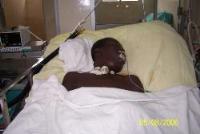
An Intensive Care Unit was set up 10 years ago in a side-room off one of the surgical wards near the operating theatre and was upgraded to a purpose built unit during the course of the study with a bed capacity of 8 beds. There were no formally agreed criteria for admission to the unit. The senior clinicians in anaesthesia, medicine, paediatrics, surgery and obstetrics could admit at any time subject to bed availability (TAKE NOTICE OF THOSE PARTICULAR FIELDS WE HAVE ,THEY POINT OUT WHAT KIND OF ADMISSION WE DO MAKE)and the patient’s clinician had ultimate clinical responsibility with the physician anaesthetist and the clinical officer anaesthetist providing a supportive role. During the period of study a clinical officer was appointed with clinical responsibilities for the ICU alone. The trained nursing ratio was approximately one nurse per 4 patients. There were also several assistant nurses attached to the ICU. There was no capacity for haemodialysis or peritoneal dialysis. There were no infusion pumps. There was capacity for IPPV of one and sometimes 2 patients for adults or children at any one time. Two pulse oximeters and 2 oxygen concentrators were available and oxygen cylinders were available but not for long periods as the logistics of replacing empty cylinders from the nearest main city involved a five hour road journey which was limited by other demands on hospital transport. Single lumen catheter central lines were available most of the time from donations.
As there was facility for oxygen therapy both in the paediatric ward and in the medical ward using oxygen concentrators transfer to the ICU for oxygen therapy alone from these wards was therefore not required. These main wards usually had a functioning pulse oximeter so that rational use of oxygen could be carried out on the main wards.
Results
.
Two hundred a eighteen patients were admitted during the 12 month period of which 47% were female and 53% male. The overall mortality was 27%. The mortality for female patients was 23% and for male was 30%.(DR YOTI WANTS US TO POINT STATISTICAL SIGNIFICANT HERE FOR THE DIFFERENCE) (Table1.)
The age distribution and mortality of the ICU patients is shown in Table 2. As expected the extremes of life have the highest mortality and demographic distribution reflects the large percentage of younger patients in a developing country.
The patients were classified into 14 diagnostic groups and the mortality of each group is shown in Table 3. The commonest diagnostic group for admission was for general surgical post operative stabilisation which comprised 33% of all admissions. When patients in the categories of burns, obstetrics and gynaecology, oral surgery, and head injury are grouped together then this would make 67% of all admissions. Medical patient admissions were very few, five patients during the time of the study, and the mortality was 40%.
Tetanus remains a major challenge in all areas of rural Africa with a total of 23 patients admitted with an overall mortality of 57%. We think that the use of magnesium has improved the mortality from previous years.4 We have classified tetanus into 3 age groups, neonatal, child and adult. During the time of the study we had no capacity to ventilate neonates as this is a particularly demanding on the skills and time of both nurses and clinicians and we had no suitable ventilator. Six neonates were admitted with tetanus of which 5 died. All were managed by sedation mainly with diazepam (diazemuls to preserve venous access as generic diazepam causes loss of venous access from phlebitis in a short time). Of the six children (over one month to 18 years) admitted with tetanus all survived among whom 4 required long term IPPV for about 3 weeks when magnesium failed to control the spasms. Eleven adults were admitted with tetanus and 8 died. No adult patient who was given IPPV when magnesium failed to control the spasms survived. Long term IPPV for tetanus is a major commitment of resources and should only be embarked upon after careful planning of available resources but in our experience children gave a good outcome.
The care of patients with a tracheostomy was one of the major skills of the ICU nurse and often the assistant nurses also became very skilled. The use of a tracheostomy tube with an inner removable tube for cleaning (Portex code 100/810) made tracheostomy tube blockage a less common occurrence and more easily managed. This was especially so as we had no means of humidification besides some donated disposable single use filter humidifiers. Eighteen patients had tracheostomies and 4 died from the underlying condition. No patient died from a complication of tracheostomy. Ten patients had a tracheostomy for some form of upper airway obstruction and 6 for tetanus. Causes of upper airway obstruction included trauma to the mandible, laryngeal papillomas, Ludwigs Angina, laryngotracheobronchitis, and postoperative care of patients who had had thyroidectomies for giant goitres(WHERE DO WE PUT FB? NOT HERE). It was our preference to perform a tracheostomy than leave an endotracheal tube in situ for more than one day as with limited means of humidification and limited nursing care tube blockage of endotracheal tubes became hazardous5.
Our policy is to care for all patients with a tracheostomy in the ICU in order to avoid any problems with tube blockage on the main wards where suction machines are not always available. Time spent in ICU is therefore extended for some patients whose general condition may be good but this policy has meant we have had few major problems with tube obstruction.
There were 9 patients admitted with eclampsia all of whom survived. Unlike other areas of Sub-Saharan Africa eclampsia is an uncommon problem in the local ethnic group and when present often runs a mild course.
Twenty one percent of admissions had central lines placed in the internal jugular vein and 22% of admissions had femoral vein cannulae sited. Femoral vein cannulation with central lines using a Seldinger wire was very useful in the longer stay patients where venous access became problematic. The equipment item of primary major importance we found were oxygen concentrators, pulse oximeters and central line cannulae.
Intermittent positive pressure ventilation was carried out on 30 patients with a mortality rate of 53% (Figure 4). The commonest group to benefit from IPPV was the post-operative general surgical patient with 13 patients of this group given IPPV with a 54% mortality. The majority of these patients were ventilated for not more than 24 hours hours. As a general policy head injured patients were not given any IPPV as our resources were limited though this policy was flexible and 2 head injured patients were ventilated with one survivor where the main indication was for sputum retention. (NO MENTION ABOUT OTHER CONDITIONS MANAGED;GASROSCHISIS AND SHORT BOWEL ARE OF VERY SIGNIFANT ATTEMPT)
Discussion
(COULD PART OF OU
No responses
