

A good camera?

By wiccania
@wiccania (3360)
United States

June 12, 2007 10:23am CST
i love taking photos of flowers, the moon, musicians performing and at sporting events.
anyone know of a digital camera that's good for all of those? i currently have an olympus camedia, and it's not bad. but i'm hoping to upgrade soon and was hoping for recommendations.
3 responses

@volschenkh (1043)
• South Africa
12 Jun 07
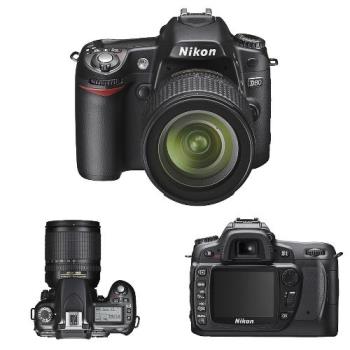
Im using the Nikon D50 SLR, but would love to have the D80. The ket is to buy good glass (lenses). Normally the fast lenses are better than the slow lenses Fast and slow refers to to a lens's maximum aperture, which is the maximum amount of light that a lens can let in. A simple rule of thumb is that a fast lens lets in a lot of light, while a slow lens lets in less light, which defines how your photos will look.
Maximum apertures are measured in f/stop numbers, which are actually a ratio of the size of the lens aperture and focal length. The smaller the f/stop number, the more light is let in. An increment in the f/stop number doubles the amount of light let in, so f/1.4 lets more light than f/2.0.
Of course the fast lenses are more expenses that the consumer class lenses.
Here are some review articles about the Nikon D80:
www.dpreview.com/articles/nikond80/
www.dpreview.com/news/0609/06092301nikond80review.asp
www.imaging-resource.com/PRODS/D80/D80A.HTM
www.nikonians.org/nikon/d80/
www.trustedreviews.com/digital-cameras/review/2006/12/05/Nikon-D80-10MP-Digital-SLR/p1
www.bythom.com/d80review.htm
Main Features
10.2 effective megapixel Nikon DX Format CCD image sensor
High-speed continuous shooting: 3 frames per second (fps) in bursts of up to 100 consecutive JPEG (FINE M-size or smaller) or 6 RAW (NEF) images
Advanced high-precision, high-performance imaging processing engine with color-independent pre-conditioning
3D-Color Matrix Metering II with 420-pixel RGB sensor delivers consistent and dependable automatic exposure for ideal results in most lighting conditions
Refined 11-area AF system with new Auto-area AF mode and center sensor that can be switched to wide-frame operation for broader coverage
ISO AUTO mode automatically adjusts sensitivity between ISO 100 to 1600, maximizing available light to help achieve optimal exposure
Seven automated Digital Vari-Programs (Auto, Portrait, Landscape, Close Up, Sports, Night Landscape and Night Portrait) optimize white balance, sharpening, tone, color, saturation and hue to match the scene.
User-selectable choice of Normal, Softer, Vivid, More vivid, Portrait, Custom and Black-and-white image optimization options
Near-instant response with 0.18 sec. power-up and approx. 80-millisecond shutter release time lag promotes fast handling
Top shutter speed of 1/4,000 second and flash sync speeds up to 1/200 second
Fast image transfer via USB 2.0 Hi-Speed interface and SD memory card
Creative in-camera effects and editing functions consolidated under the new Retouch menu, including D-Lighting, Red-eye correction, Trim, Image Overlay, Monochrome settings (Black-and-white, Sepia, Cyanotype) and Filter Effects (Skylight, Warm filter, Color balance)
Multiple Exposure shooting option automatically produces an effect that resembles multiple exposure techniques used with film
Large 2.5-inch LCD monitor with ultra-wide 170-degree viewing angle for clear image preview and easy access to settings and information, including RGB Histograms
Selectable Slideshow function (Standard or Pictmotion)
SD memory card storage, SDHC compatible
Lightweight, compact body
High-energy EN-EL3e rechargeable lithium-ion battery delivers the power to shoot up to 2,700 pictures on a single charge and provides detailed battery status information. (Battery life figure determined by in-house test parameters)
Built-in Flash with i-TTL flash control and full support for Nikon's Creative Lighting System
The D80 supports more than 43 AF Nikkor lenses in addition to the growing family of DX Nikkor lenses
Includes Nikon’s PictureProject software for easy control over image adjustment and management
Support for Nikon's new Capture NX software, which provides easier access to powerful and visually intuitive enhancement tools that help tap the full potential of NEF images
www.cameralabs.com/reviews/NikonD80/

@TerryZ (22076)
• United States
12 Jun 07
I love taking pictures too. But I really need to upgrade on a camera badly. Im saving for a digital camera and I know nothing about them. I will bring my husband with me.LOL Good luck with that.

