Costa Rica is in Central America . It has so much to offer:
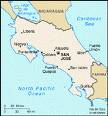
" Costa Rica is located in the Central American isthmus, between the Pacific Ocean and the Caribbean Sea. It is a privileged destination because of its location in the middle of the Western Hemisphere. Its varied landscapes and mild climate make this small country the perfect getaway for a spectacular vacation, medical or health tourism, a memorable business meeting or convention.
Land of peace, Costa Rica is the oldest democracy in Latin America with more than 100 years of political stability.
Costa Rica's economy has been constantly growing during the last 10 years. The country has signed seven trade agreements with other Latin American Costa Rica Beach countries, and one trade with the United States (CAFTA). It also has preferential access agreements with several European markets. This economic development has been encouraged by direct ocean access on both coastlines, easy access by road to neighboring countries, Nicaragua and Panama, as well as regular flight connections to North America, Latin America and Europe. Costa Rica has two international airports: Juan Santamaría in the capital city and Daniel Oduber in the northern city of Liberia.
Costa Rica is internationally known as a potential major electricity producer: 97% of the territory has electric power and telecommunications are available throughout the territory. In terms of health indicators, Costa Rica has the best life expectancy rate of Latin America: 78 years on average. San José, the capital city, is ranked fourth among Costa Rica Volcano Latin America's cities with the best quality of life. 95% percent of Costa Ricans have access to drinkable water.
Costa Rica attracts important investments thanks to its efficient productivity in high technology, its well-educated population and the high-quality technical education accessible in the country.
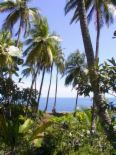
Exuberant nature, pristine beaches, active volcanoes, contrasting landscapes, impressive places of scenic beauty, biological diversity ...
... this is Costa Rica ... Costa Rica Activities... Hiking in the rainforest, horseback riding through picturesque trails, mountain biking in the country side, white water rafting in wild and untamed rivers, snorkeling through tropical reefs, surfing the most incredible breaks, sport fishing in cobalt blue waters, challenging golfing greens, kayaking, surfing ...
"
60 million years ago... ...the actual territory of Costa Rica did not even exist. It was during the 3rd Period when the ocean floor folded and pushed a mountain range above sea level. This mountain range set up a land bridge between two continental masses, and during a period of formidable volcanic activity, which is still perceivable, the Central American Isthmus was formed. Between 12,000 and 8,000 years B.C.E... ...approximately, people began first appearing in this area, occupying areas in the tropical forest. The first inhabitants lived by hunting large animals, like the giant sloth, which are now extinct. It took over centuries of selection of plants and animals for the inhabitants to establish their diet. Over this time period they also perfected the use of specific tools. Slowly the inhabitants began to group together and stay in the same place. Between 4,000 and 800 years B.C.E. cacicazgos Costa Rica...the production of food began, mainly because the geographical location of the area lent itself to growing many diverse crops. In this region, there were harvests of corn, yucca, sweet potatoes, beans and other vegetables. This process allowed for growth in the population as well as changes in the necessary tools used to grind grain, explore the forest, and store food.
The development of agriculture led to the establishment of villages and social and political organization based on family groups. From this the cacicazgos (tribal units lead by the Cacique or Tribal Headman) began to trade with other groups from the South (Panama, Ecuador, Colombia) and the North (Mexico and other Mesoamerican people). Salt and cocoa became two of the few Costa Rica’s exports. During the First Centuries of the Christian Era... ...the predominance of the southern cultures became more evident; so the influence of the Mayan cultures like the pieces of artisan Jade work was starting to be replaced by other metals, such as gold.
The people were organized in a political system of cacicazgos (tribal headman) and developed better agricultural tools: sowing, natural fertilizer, and irrigation. They added fishing, hunting, and recollecting items such as honey and salt and handmade goods.
These changes also influenced variations in the social order bringing about conflicts of status and rank that had not existed before. Before the Arrival of the Spaniards.. ...and unlike the civilizations to the north, the Yucatan, the highlands of Guatemala, and the gulf of Honduras, the territory of Costa Rica was home to a diverse population, politically divergent with a precarious technological and social development. Some 400,000 people lived in Costa Rica at the start of the 16th century, mostly in the Central Valley and the North Pacific region.
“The universe constructed by the first people was a lush, tropical environment, characterized by dense tropical forests, plentiful rivers, bogs and reservoirs, thick, lush vegetation, blue mountains, and beautiful fauna, abundant and diverse” say the historians Iván Molina and Steven Palmer.
The village was the fundamental social nucleus, the core cell of daily activities which made up the cacicazgo. All power depended on the people and the extension of their will. The Cultural Characteristics of the Villages... Village Costa rica...answer to a vision of power that is hereditary and passed through the mother, tying people to their ancestors; the power was translated through this lineage. The differences in these different groups can be seen through their architecture, depending on which region they live in.
In the North Pacific, the people built rectangular ranches, while they were circular in the Central Valley. On the other hand, the whole Atlantic region like in the South Pacific region, the people lived in palenques (thatched-roofed, log houses), in which up to 400 people lived and which were protected by large fences.
And, as it is natural, there were many different languages.
The vision of the world held by those first people was decidedly animistic. That is to say, they held the belief that individual spirits reside in natural phenomena and objects.
The rites of the dead indicated these early cultures’ preoccupation with immortality. The funeral ceremonies included special treatment of the body, which was sometimes buried with treasured possessions and slaves (sometimes sacrificed), according to the social status, to help the person in the afterlife.
The shaman was the center of the religious life. He was the intermediary between the natural and supernatural world. The rites and ceremonies were held in temples, bigger that the regular houses, where they also kept the ritual objects such as masks, musical instruments and some icons like gold pieces. In 1502, Christopher Columbus... ...on his fourth trip, arrived to the Caribbean coast to Cariari, what today is Limon. From that moment began a period of catastrophic conquest, not only in terms of exploitation and violence, but also because of the diseases that came with the Europeans, like smallpox, measles or the flu, to which many of the indigenous population succumbed.
ImageThe conquest was hindered by lack of political coherence of the indigenous people and the anarchy among the invaders. However, the spread of slavery and human commerce in all only reinforced the civil and religious control of the region. During this time, the Atlantic region kept control of its people and land, thanks to its remote location through the harshness of its climate and the fierce resistance of its people.
However, the conquest of this region was extremely arduous and violent. The plundering brought upon the indigenous people, friendly at first, created a determined resistance of “fierce indians”, as the historians say. Around the 17th Century... ...Costa Rica was a country with a scant population. The 400,000 indigenous people who lived here at the start of the 16th century had been reduced to some 10,000 after the wars and epidemics. Compared to the other central colonies, Costa Rica was remote and poor. The Central Valley, closed in by mountains, far from the trade routes and ports, sheltered the most important settlement in the territory.
The economy depended on the exportation of consumable goods, like beans, salt, corn, certain materials like cloth and dye as well as cattle and pigs. All of these goods went to Nicaragua and communities to the north or far to the south: Portobelo, Panama and Cartagena. Later, the exportation of cocoa to the Caribbean opened whole new markets. Likewise, they also imported manufactured goods.
But the most influential commercial endeavor was the exploitation of the work force, particularly the work structure they set up. Basically a group of indigenous workers were assigned to an overseer to fill a labor need. In return for free labor, the overseer was supposed to educate and convert the natives to Christianity.
Due to the decreased numbers of indigenous people, the conquistadors were forced to look elsewhere for the "labor force", mostly in Talamanca.
The resistance in this area was strong against the conquerors, especially the port lead by Cacique (headman) Pablo Presbere, until he was killed in 1710.
The shortage of local manpower as well as the problems overtaking the locals opened the door to the importation of slaves, mostly black, from other parts of the Caribbean. The Transformations of the 18th Century... ...were significant, especially s
|