

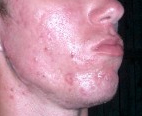
why do some people have acne?

By 123456_
@123456_ (1052)
Philippines

December 14, 2006 7:33pm CST
according to wikipedia these are the reasons why some people have acne. do you have other reasons to?
Exactly why some people get acne and some do not is not fully known. It is known to be partly hereditary. Several factors are known to be linked to acne: * Hormonal activity, such as menstrual cycles and puberty
* Stress, through increased output of hormones from the adrenal (stress) glands.
* Hyperactive sebaceous glands, secondary to the three hormone sources above.
* Accumulation of dead skin cells.
* Bacteria in the pores, to which the body becomes 'allergic'.
* Skin irritation or scratching of any sort will activate inflammation.
* Use of anabolic steroids.
* Any medication containing halogens (iodides, chlorides, bromides), lithium, barbiturates, or androgens.
* Exposure to high levels of chlorine compounds, particularly chlorinated dioxins, can cause severe, long-lasting acne, known as Chloracne.
Traditionally, attention has focused mostly on hormone-driven over-production of sebum as the main contributing factor of acne. More recently, more attention has been given to narrowing of the follicle channel as a second main contributing factor. Abnormal shedding of the cells lining the follicle, abnormal cell binding ("hyperkeratinization") within the follicle, and water retention in the skin (swelling the skin and so pressing the follicles shut) have all been put forward as important mechanisms. Several hormones have been linked to acne: the male hormones testosterone, dihydrotestosterone (DHT) and dehydroepiandrosterone sulfate (DHEAS), as well as insulin-like growth factor 1 (IGF-I). In addition, acne-prone skin has been shown to be insulin resistant[citation needed].
Development of acne vulgaris in later years is uncommon, although this is the age group for Rosacea which may have similar appearances. True acne vulgaris in older adults may be a feature of an underlying condition such as pregnancy and disorders such as polycystic ovary syndrome or the rare Cushing's syndrome.
1 person likes this
1 response