Explore
Top Rated Discussions
Most Recent Discussions
Most Recent Activity
Hot Discussions
New User Discussions
Discussions w/ No Response
Help
FAQ
Earnings Program
Community Guidelines
Contact
Sign Up!
Log In
Search
Tagged Discussions
Tagged Responses
Tagged Comments
Tagged All Activity
Users
Full Text Discussions
Full Text Responses
Full Text Comments
Full Text All Activity
X
favorite game
Tagged Discussions
#My Favorite Games: 5 L-O-N-D-O-N London Statue
Sheali
@Sheali
(7461)
•
India
30 Mar 19
A person (curator) is supposed to turn his/her back, stand at a distance and say ‘L-O-N-D-O-N London Statue’; while everyone else has to run towards him and be a statue as soon as he turns towards them. He then...
favorite game
london statue
outdoor game
statue
9 responses
•
9 people
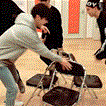
#My Favorite Games: 4 Musical chair - (Ever fell down while playing this, just like in the picture?)
Sheali
@Sheali
(7461)
•
India
17 Mar 19
I always felt butterflies in my stomach while playing this as we need to have full concentration and quickly sit on a chair when the music stops. I didn’t want to get out very soon. Sometimes, we used to dance while moving just...
favorite game
musical chair
indoor game
party
12 responses
•
12 people
#My Favorite Games: 3 Hide and Seek
Sheali
@Sheali
(7461)
•
India
8 Mar 19
I loved playing this game with my cousins, friends and even parents. My favorite hiding spot was under the bed. We used to play it inside the house and even outside. Sometimes, we used...
favorite game
hide and seek
indoor game
outdoor game
11 responses
•
10 people
#My Favorite Games: 2 Chess
Sheali
@Sheali
(7461)
•
India
1 Mar 19
It is supposed to improve your analytical skills. When I played the game for the first time, I won. -Beginners luck I forgot to say, ‘checkmate’ -My stupidity Well, my cousin didn’t accept my...
favorite game
chess
indoor game
11 responses
•
10 people
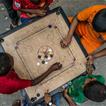
# My Favorite Games: 1 Carrom Board - Have you heard of it before?
Sheali
@Sheali
(7461)
•
India
26 Feb 19
Carrom Board used to be one of our favorite indoor games during summer vacation. Due to heat, we couldn't go and play out. So, we used to gather at a friend's house every morning to play the game. Four people could play at a...
indoor game
carrom board
summer vacation
favorite game
9 responses
•
9 people
i love textwist
missjahn
@missjahn
(4572)
•
Philippines
24 Jul 12
i really love textwist. it is not just entertaining but it is also educational game. all you need to do is to arrange the letters to form a word or words from given blocks of letters. your aim is to guess the word until you will...
favorite game
textwist
2 responses
What is Your favorite game
ku4eto1
@ku4eto1
(6)
6 Nov 10
What is your favorite and why?My favorite game is Chicken Invarders 3 because its very fun and going to lose your time.
favorite game
4 responses
•
1 person
Do you download new skins and patches for your favorite game more often???
sauravmillion
@sauravmillion
(929)
•
India
11 Oct 10
Well I love to play Ea sports Cricket07 and love download its various patches and new theme.I don't stick to that old default skin but look for new themes and patches every time.I love doing this .Do you all gamers do this???????
download
favorite game
patches
4 responses
•
1 person
Favorite game
sigmar
@sigmar
(48)
•
Estonia
4 Feb 10
Hello! I like to know what is your favorite card game? For me it's Texas Hold'em, cause its actually very simple and interesting.
favorite game
2 responses
Favorite game you played in your youth?
MissMarlaSinger
@MissMarlaSinger
(43)
•
United States
23 Dec 09
What's a game you played all the time when you were younger? Me. I played a floppy disc copy of my Dad's Wolfenstein 3D. And boy, was I obsessed with it. I was even restricted from it at a point because I was always on the...
favorite game
5 responses
What Was Your Favorite Childhood Game Or Toy
EbonyFire
@EbonyFire
(146)
•
Canada
13 Nov 09
I liked Pac Man and remember having a favorite doll who I called Craig. Maybe you had a favorite Cabbage Patch doll or lego set that you enjoyed. What was your favorite toy or game?
cabbage patch kid
favorite game
favorite toy
lego
pac man
7 responses
What is your favorite game? Why is it your favorite?
pranavpillai93
@pranavpillai93
(267)
•
India
23 Jul 09
Are you a hard core gamer? Well, I am one! And my favorite game is Assasin's Creed(PC). I chose this one as my favorite because of it's excellent storyline, graphics and gameplay. What about you?
favorite game
games
gaming
9 responses
•
1 person
Which Halo is your favorite
sd3233
@sd3233
(5)
•
United States
20 Jul 09
This discussion is for all the Halo fans, including myself, who love the trilogy game. I played all of them, and i have found they are all different, whether it be controls or storyline. My discussion, is which you think is your...
2009
best
favorite game
gaming
halo
xbox
xbox 360
xbox live
6 responses
•
1 person
What is your favorite video game of all time?
Rootmere
@Rootmere
(133)
•
United States
18 Jul 09
My favorite video game of all time is probably Warcraft 3 on the PC, because it has so much to offer. Battlefield: Bad Company for the PS3 is super sick too though.
bad company
battlefield
favorite game
favorite video game
game
pc
ps3
video game
warcraft
warcraft 3
2 responses
•
1 person
Which is your favorite sport?
devganrahul
@devganrahul
(40)
•
India
4 Feb 09
I like Cricket it is my favorite sport. I always play cricket every holiday with my fiends in Stadium. I am a spinner and Good Fielder but batting is so so Have won 17 times man of the match in cricket at my street level...
cricket
favorite game
game
sports
1 response
whats your all time PS2 favorite game?
tabish8612
@tabish8612
(78)
•
Pakistan
3 Nov 08
My all time favorite PS2game is "WWE vs SMACKDOWN 2008" whats your favorite
favorite game
5 responses
•
1 person
Favorite Classic PC Games
beccasthoughts
@beccasthoughts
(303)
•
United States
17 Jul 08
I must say that my favorite classic pc game is Baldur's Gate 2. I loved the storyline and the graphics. Being able to have a romance was cool too. I've played it several times and am in the process of playing it once more. You are...
classic game
dragons
favorite game
pc game
pc game
pc games
4 responses
Favorite game
optimisticgrl23
@optimisticgrl23
(397)
•
United States
4 Jun 08
What is your favorite game to play on Pogo? Do you play just for fun or do you set personal goals for yourself? I was also wondering how many of you have made good friends with someone in the chat rooms?
favorite game
game to play
3 responses
•
1 person
What's your favorite game?
gxnfly
@gxnfly
(1147)
•
China
6 May 08
I used to think chess is a very slow game, players spend hours on a move,so I didn't like it. But I was wrong.Chess players move quite quickly. They usually take only a minute or two for a move.I started playing chess when I was...
favorite game
play chess
34 responses
•
6 people
Any Sim Holics out there?
evoluchun
@evoluchun
(69)
•
United States
2 Feb 08
anybody like a major sims 2 freak? i love sims 2 its the best game in the world to me... anybody else agree? If not why?
sims 2
17 responses
•
3 people