

Do you want some free food?
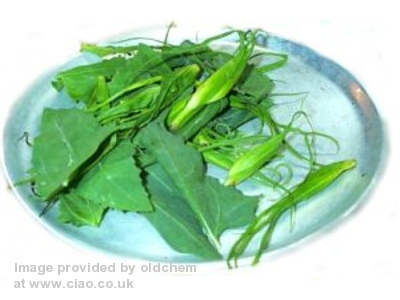

By oldchem1
@oldchem1 (8132)

May 17, 2010 12:32pm CST
In today’s credit crunch days did you know that there is a food that grows wild and is completely free
I remember the day’s years ago, when a trip to our local fish market for a nice piece of cod (yes it was THAT long ago!!), that in with you succulent cod fillet the fishmonger would throw in a handful of bright green, seaweedy stuff "on the house".
It usually got thrown away!!
I have to admit that it is only in the last few years since we moved to a coastal area that I have become properly aware of samphire, and so I thought that I would share all I now know about it with you.
Samphire is no longer a seasonal freebie, it has suddenly become a trendy vegetable that you'll have to pay good money for, unless you know what I know – and you soon will!!!
Originally this was called "sampiere", which is a corruption of the French "Saint Pierre" (Saint Peter), Samphire was named for the patron saint of fishermen because it grew along the sea coast of northern Europe or in its coastal marsh areas. It is sometimes called sea asparagus, sea pickle, poor man’s asparagus, glasswort, sea fennel or crest marine.
Samphire is an annual plant, and not a sea weed, although it does grow in tidal areas, on muddy, sandy flats, often around estuaries and tidal creeks.
The samphire begins growing in the autumn and vegetates throughout the winter until the first warm weather arrives.
Then the first stems and internodes form and by mid-spring the plant measures 6 to 8 cm.
It has a short season (around mid-June until late August)
The reason I know about this vegetable is that my son’s friend lives on a farm which is right on the edge of the tidal estuary of the River Lune and the North Sea. My son and his friend go gathering the samphire for Will’s mum who pickles it
in vinegar (and very nice it is too!).
It is very easy to gather and if you're visiting the coast in thee arly summer you should look out for it.
Simply pinch snip off the tops of the plants, leaving the more fibrous stems in the ground; that way, not only will you have less washing and trimming to do, there's also a fair chance that what you've left in the mud will carry on growing.
The crisp, salty, fleshy tender stalks of young samphire, gathered in May or June, can be eaten raw, plain or with a vinaigrette, alone or in a salad with other ingredients. It has a satisfying crunch and takes on a salty tang from the sea or the marshes.
As a vegetable, it's delicious and unique.
As the season progresses samphire becomes a bit bitter and it is better to blanch it. Just a few minutes in boiling water will remove its bitterness and excess salt. It is delicious when boiled and served on its own or sautéed in a pan with butter, garlic and parsley as an accompaniment to fish, red or white meats or poultry.
It's also delicious made into soup with twice its weight in half-cooked potato, a little butter and pepper.
I can guarantee that pickled samphire is excellent, from personal experience, it also flavours mustard, mayonnaise or vinegar.
When pickled it looks like tiny gherkins
1 person likes this
4 responses

@TeamCholent (2832)
• United States
17 May 10
Thanks so much for sharing this with us. Do you know the nutritional benefits from it? Any medicinal benefits? Thanks a lot
@oldchem1 (8132)
•
17 May 10
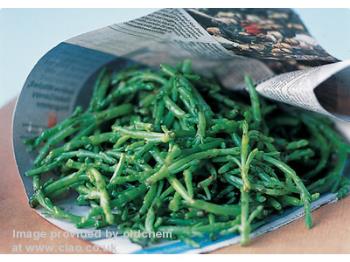
Samphire is known as an aid to digestion and for its anti-flatulent properties.
In 1597: Gerard wrote:
'The leaves kept in pickle and eaten in sallads with oile and vinegar is a pleasant sauce for meat, wholesome for the stoppings of the liver, milt and kidnies. It is the pleasantest sauce, most familiar and best agreeing with man's body.'
Culpepper wrote in the 17th century that samphire was useful in curing ailments relating to "ill digestions and obstructions," while being "very pleasant to taste and stomach."
It also contains diuretic properties and is rich in iodine, phosphorus, calcium, silica, zinc, manganese and vitamins A, C and D.
When pickled, it was often taken along by sailors on ocean voyages to combat scurvy.
The plant has a reputation for helping weight loss and aiding digestion.
@TeamCholent (2832)
• United States
17 May 10
Is it related to fennel in anyway as it sounds similar in medicinal properties.


@marguicha (230350)
• Chile
17 May 10
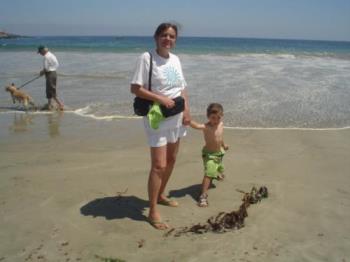
While I was reading your post (very interesting) I remembered an algae that grows in most of the chilean coast. The local name is "cochayuyo" and I couldn´t fin a name in English. It´s a brown algae that can measure up to 3 meters long. Its full of iodine so it is very good to eat it. There are hot and cold dishes that can be prepared with it, but I prefer the salad with diced tomatoes, onions, cfresh parsley leaves and salt, pepper and plenty of lemon.

@GardenGerty (169486)
• United States
18 May 10
It actually sounds quite good. I am not in any place that is at all near to a place to harvest it, but i wold at least try it. It probably is very healthy and tasty.

@topffer (42155)
• France
18 May 10
Samphire is sold in pickles with vinegar here. I tried fresh samphire once as a boiled vegetable : it was good -- I like to taste new foods -- though a bit salty. I realize that I had to remove the first water now. It is weird to see how it began commercialized with success in the last ten/twenty years.
Thank you for this discussion.

