

Author Birthday 11/12 Marie-Jeanne L'Héritier

By Siduri
@msiduri (5687)
United States

November 12, 2015 10:00am CST
Marie-Jeanne L'Héritier de Villandon
Birthplace: Paris, Île-de-France, France
Date of birth: 12 (…maybe) November 1664
Date of death: 24 February 1734
Language: French
Today is the 351st birthday of Marie-Jeanne L'Héritier, a French novelist and poet. She also translated (into French) some of the works of the Roman poet Ovid. The French academy thought highly enough of her translations that she received a state pension.
She was related to Charles Perrault, who may or may not be familiar to former French-language students as an 18th century published of fairy tales, and the origin of many “Mother Goose” (“Les Contes de ma Mère l’Oye”) stories.
L'Héritier made her own contribution to the development of what we now call fairy tales in children’s literature.
The one story of L'Héritier’s that has made it into English is “The Discreet Princess” (“L'Adroite Princesse”), originally published in 1721. (Link to English text below) Because of its violence—several people die, one for no greater sin than laziness—Disney will probably not be making a movie of this any time soon. At least not in any recognizable form.
The story is set during the time of the Crusades. A certain king decides to go off “in the war against the infidels in Palestine.” He’s worried about his three daughters at home, all of whom are of marriageable age. The eldest, Drona, is terminally lazy; the middle sister, Pratilia, does nothing but talk all day; and the youngest, Finetta, is the only one who does anything. She helped keep her father from being cheated in a treaty with an ambassador from a neighboring king. But now that king and his sons are plotting revenge…
This is a remarkably frank and, well, violent little fairy tale, given that it’s intended for kids. They live happily ever after, but not until after a little blood is shed.
https://en.wikipedia.org/wiki/Marie-Jeanne_L%27H%C3%A9ritier
https://fr.wikipedia.org/wiki/Marie-Jeanne_L%27H%C3%A9ritier_de_Villandon
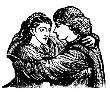
Web and Book design, Copyright, Kellscraft Studio 1999-2007 (Return to Web Text-ures) Click Here to return to The Child's Own Book Content Page Return to the Previous Chapter (HOME) THE DISCREET PRINCESS N the time of the first crusades a certain king res
3 people like this
3 responses

@msiduri (5687)
• United States
13 Nov 15
In the originals, yes, they can be pretty harsh. In this one, the heroine kills a prince who's been trying to kill her. When her father gets back from the Crusades and finds the two older sisters have been such losers, her sends them to the fairies who kill them.
When I was a kid, we had a German 19th century book—I don't remember the kids' names now—but they were brats, pulled all sorts of sadistic pranks. They tortured geese, IIRC. In the end, they fell into a mill, were ground into grain and the geese ate them. Harsh.
1 person likes this


@JohnRoberts (109841)
• Los Angeles, California
4 Jul 16
I really don't know this author at all.
1 person likes this

