

The Day the Music Died

By Four Walls
@FourWalls (86713)
United States

February 3, 2017 8:44pm CST
February 3, 1959. It's a date carved in tears on the hearts of music fans across genres and generations. February 3, 1959 was, as Don McLean described it in his classic song "American Pie," "the day the music died."
There have been countless articles and books written on "what if." What if Buddy Holly had lived and continued his grab for Elvis' crown while Elvis was in the Army? What if Ritchie Valens had continued to shine a light on Mexican-Americans? What if J.P. Richardson had shaken off that one big novelty hit of his? And what if Waylon Jennings hadn't shown compassion on Richardson, who was suffering with the flu, and given up his seat on the plane (since Holly had chartered the plane for himself and his two band members)? And what if Tommy Allsup, who died last month at the age of 85, had won that coin toss with Valens instead of losing it?
All conjecture. What we have instead is the memories of three performers who died very young (Richardson was the oldest, at 28), at the peak of popularity. We have the music, although it's all too little from them (Valens had all of three singles; Richardson, although he had written several songs, only had "Chantilly Lace" on the charts).
Buddy Holly, being the biggest star at the time and having an impact even at his young age (he was 22), has been inducted into several halls of fame. His songwriting was perfect for the time, and yet remains timeless (as evidence, Linda Ronstadt had hits with two Holly songs -- "It's So Easy" and "That'll Be the Day" -- over 15 years after Holly's death). Ritchie Valens, just 17, was the subject of the biopic La Bamba.
Only Jiles Perry (J.P.) Richardson, known as "The Big Bopper," remains in obscurity. That's a shame, because he had other hits as a songwriter: Johnny Preston's "Running Bear" (which, recorded in late 1958, featured Richardson on backing vocals and George Jones [yes, that George Jones] on guitar); his friend George Jones' hit "White Lightnin'," and the tender ballad "Beggar to a King," which was a hit for Hank Snow in 1962. His son, who went by the name "The Big Bopper Jr.," carried on his dad's legacy until he died of a heart attack at the age of 54 in 2013. (He was born three months after his dad's death.)
One of the blessings of music is that we have it forever. Even though these three lost their lives 58 years ago today the strains of "Come On, Let's Go," "Peggy Sue," and "Chantilly Lace" can still warm our hearts.
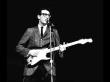
One of Buddy Holly's biggest hits:
8 people like this
3 responses

@JohnRoberts (109841)
• Los Angeles, California
4 Feb 17
At the Buddy Holly Museum in Lubbock, they play vintage videos and I saw some Big Bopper performances. He was a trip. Sort of a novelty act.
2 people like this


@teamfreak16 (43602)
• Denver, Colorado
7 Feb 17
Such a tragic day. Buddy Holly obviously (I even played James Taylor's cover of "Everyday" the other day, but man, did The Big Bopper have a great voice or what?) If anything positive at all can come out of that, at least Waylon didn't end up on that plane.
1 person likes this

@teamfreak16 (43602)
• Denver, Colorado
7 Feb 17
@FourWalls- I've never heard it before. Great!
1 person likes this