

Them Bones

By Genipher
@Genipher (5405)
United States

November 1, 2017 4:50pm CST
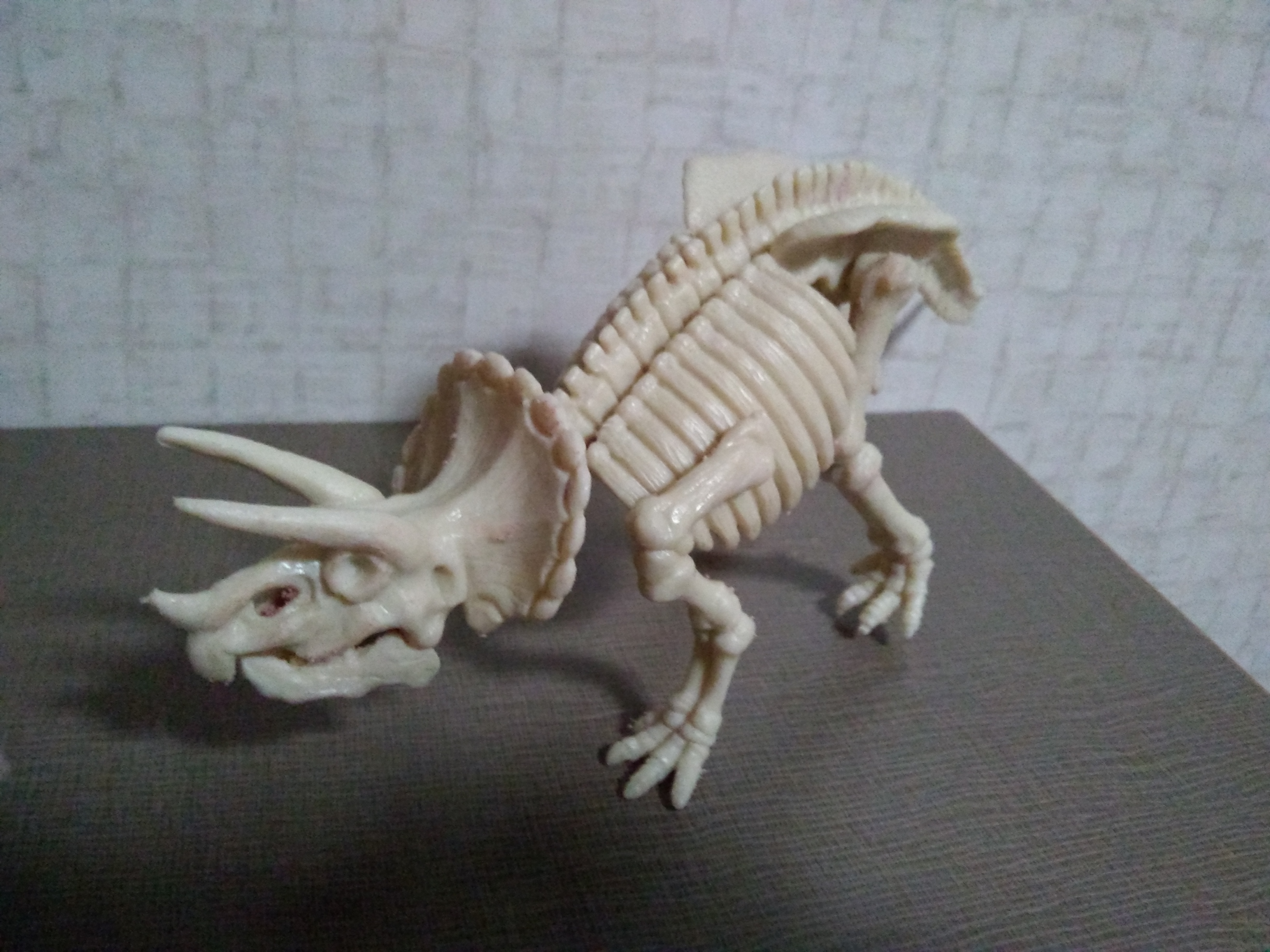
Today my kids watched a video called, I Dig Dino's. About, as you would rightly guess, paleontology. After the video I handed out some bone diggin' kits and let them all loose. Outside, of course, since paleontology is dirty work.
We ended up with a Triceratops, a one-armed T-Rex (they can't really use those things anyway, right?), and a Stegosaurus that has yet to be freed from its clay prison.
During the video, Buddy Davis made a comment that sparked my interest. Apparently soft tissues (proteins, DNA, hemoglobin, etc) have been found in dinosaur bones.
Since the kids were occupied with their dino-dig, I decided to do a little research. And this is what I found:
Too long, don't wanna read:
Soft tissue found in dinosaur bones proves we're living on a young earth.
Loooooong Version (with citations!) :
Scientist Mark Armitage went on a dino-dig in May 2012 and found the largest triceratops horn ever found in Hell Creek, Montana. Later, while studying the horn under a microscope, he discovered, "unfossilized, undecayed tissue" (1).
After publishing his study in the peer-reviewed journal, Acta Histochemical, in February 2013, he was fired from the California State University at Northridge. Apparently the school couldn't tolerate Armitage's "religious, young earth views". (2)
However, Armitage's discovery of soft tissue isn't the first to fly in the face of evolution. "Paleontologists found collagen in the fossilized bone of a sauropodomorph dinosaur, Lufengosaurus." (3)
In 2005, Dr. Mary Schweitzer also discovered soft tissue in dinosaur fossils. (4)
"It's not just dinosaur soft tissue, either, but the presence of detectable proteins such as collagen, hemoglobin, osteocalcin, actin, and tubulin that they must account for…" (5)
It's commonly known, as Dr. Robert Reisz says, that an, "animal's remains mineralize as they decay" (6)
So how could all this sinewy, bloody "stuff" have possibly survived millions of years?
Dr. Schweitzer believes iron helps preserve the proteins in the bones. (7)
Dr. Elizabeth Mitchell, however, says, "Iron chelation may be the key to preservation, a conclusion supported by Dr. Schweitzer's work, but nothing in the discovery demonstrates how long such preservation would be effective." (8)
In fact, in a report in the science journal, The Biochemist, we're told that, "…even if collagen were stored at 0°c, it would not be expected to last even three million years." (9)
Interestingly enough, Dr. Schweitzer's iron studies support a young earth, creationist view. "Measured decay rates of some proteins are compatible with an age of about 4500 years (since the flood), but not with millions of years," says Dr. Jonathan D. Sarfati. (10)
Even Dr. Schweitzer, a proclaimed evolutionist, sounded flabbergasted as she questioned how blood cells in a 65-million-year-old bone could survive that long. (11)
We know that proteins, DNA, and other soft tissue could not survive millions of years, as such matter decays quickly. So why do scientists continue to cling to an evolutionist mind set when presented with evidence like this?
(1) Dou, Chad (2017, August 11). "University settles lawsuit with scientist fired after he found soft tissue in dinosaur bones".
(2) Kemp, Christopher (2014, November 5). "University sued after firing creationist fossil hunter". www.nature.com
(3) Botkin-Kowacki Eva (2017, January 31). "How a 195-million-year-old dinosaur bone could still have soft tissue in it". www.csmonitor.com
(4) Pappas, Stephanie (2013, November 26). "Controversial T-Rex Soft Tissue Find Finally Explained". www.livescience.com
(5) Smith, Calvin (2014, January 28). "Dinosaur Soft Tissue". www.creation.mobi
(6) Botkin-Kowacki, Eva (2017, January 31). "How a 195-million-year-old dinosaur bone could still have soft tissue in it". www.csmonitor.com
(7) Pappas, Stephanie (2013, November 26). "Controversial T-Rex Soft Tissue Find Finally Explained". www.livescience.com
(8) Mitchell, Elizabeth (2013, December 4). "Iron Key to Preserving Soft Tissue". www.answersingenesis.com
(9)Smith, Calvin (2014, January 28). "Dinosaur Soft Tissue". www.creation.mobi
(10) Sarfati, Jonathan D. (2012, December 11). "DNA and bone cells found in dinosaur bone". www.creation.mobi
(11) Sarfati, Jonathan D. (2012, December 11). "DNA and bone cells found in dinosaur bone". www.creation.mobi
4 people like this
3 responses

@1creekgirl (44560)
• United States
1 Nov 17
@Genipher I think some people fit the "facts" to their theories, instead of the other way around.
1 person likes this
@Genipher (5405)
• United States
1 Nov 17
@1creekgirl
I think that's why I love that an evolutionist scientist (Schweitzer) first discovered the soft tissue. She's so flummoxed by it because it doesn't fit her preconceived notions!
1 person likes this

@kobesbuddy (78833)
• East Tawas, Michigan
1 Nov 17
God created all living things, that's the bottom line. Evolution is not true, it's a fable.
3 people like this


