

A Terrible Disaster

By Four Walls
@FourWalls (86812)
United States

August 21, 2019 9:58pm CST
Poor Johnstown, Pennsylvania. This small town has been hit by not one, but THREE major floods in its history (along with several other smaller floods). It’s easy to understand why the town floods so easily, given that it’s in a “bowl” at the bottom of a number of surrounding mountains. In a region where snowfall is plentiful the spring and gravity ensure that there’s going to be high water in the valleys.
The worst of the three major floods is known as the “Great Johnstown Flood.” It occurred on May 31, 1889. It is this flood, not the other two major floods (1936, when many other cities along the Ohio River region suffered massive flooding; or 1977, where a “100-year storm” set up shop in the area, dumping over a foot of rain on the region and causing flash flooding and killing 84), that is commemorated at the Johnstown Flood National Memorial.
The Memorial is not in Johnstown; rather, at the site of the earthen South Fork Dam that gave way on May 31, 1889, causing the destruction of Johnstown and other towns in the path of the raging water. Part of the dam that was constructed in the mid-1800s (finished in 1853) collapsed under the weight of the water in a manmade lake that was worsened by an unusually rainy month. From there, the water and debris it collected (such as train cars, trees, and homes) roared down the mountainside toward Johnstown. Fourteen miles later, the “snowball effect” flattened Johnstown and a number of smaller towns upstream.
The death toll was staggering: over 2,200 lives lost. Only the 1900 Galveston hurricane took more lives in a US natural disaster. Hundreds were buried in unmarked graves because they could not be identified.
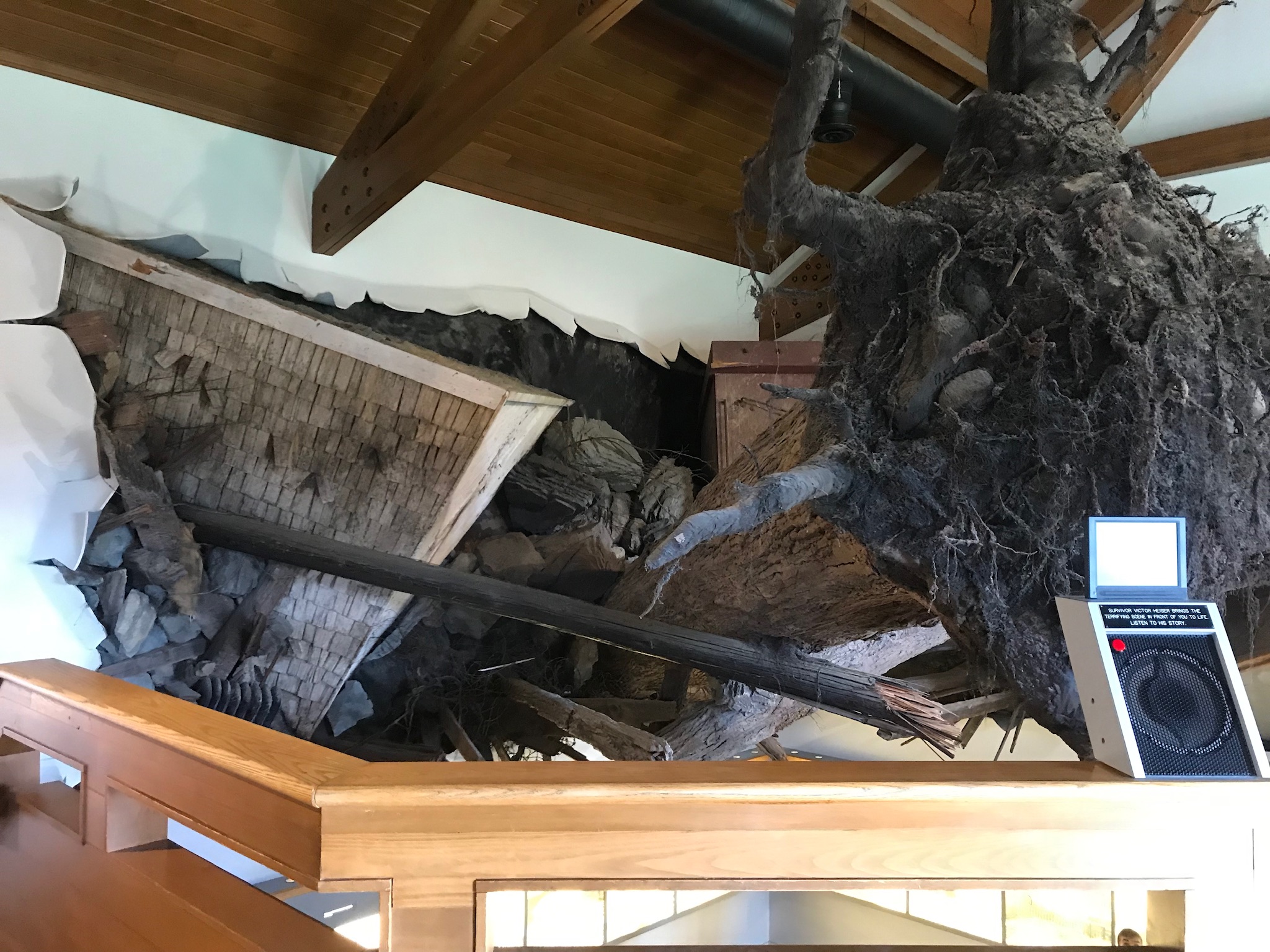
There are a number of exhibits, consisting of recovered artifacts from the town, rare photographs, and oral history recordings from survivors (including Dr. Victor Heiser, who went on to become a world-renown physician). Visitors can see the area that used to be Lake Conemaugh and walk to both surviving sides of the earthen dam (which shows the massive gap that gave way in 1889 to cause the disaster).
Unfortunately, the 35-minute film that is shown in the visitors center is awful. Instead of being factual, or (as many of the informational films at Civil War battlefields do) dramatic recreations based on the letters or memories of soldiers, this film relied on an unnamed person with no connection mentioned to the people or the region beyond an interest in the subject matter (no “my great-grandfather died in the flood” or “my grandmother escaped” here), filled with terrible “stock footage” that looks like it came from either 1920s silent films or junior high school productions.
Visit the site, but skip the movie. The 2,200 who died on that terrible day deserve to have their story told in a more respectful fashion.
4 people like this
3 responses

@JohnRoberts (109841)
• Los Angeles, California
22 Aug 19
Not a good place to build.
1 person likes this
@FourWalls (86812)
• United States
22 Aug 19
Yeah, it’s like building a city four feet below sea level with bodies of water on three sides.....
1 person likes this

@FourWalls (86812)
• United States
22 Aug 19
Oh, well, live and learn. It was fascinating to stand there on the north side of the dam, look over to the south side, and see the huge space in between that let all that water ravage the towns below. Everything else was fine.
1 person likes this

@SophiaMorros (5044)
• Belews Creek, North Carolina
22 Aug 19
I've read a few good historical novels dealing with the Great Johnstown Flood and I went to college with a survivor of the 1977 flood.
1 person likes this
