

Pure Evil

By Four Walls
@FourWalls (86775)
United States

November 18, 2019 10:38am CST
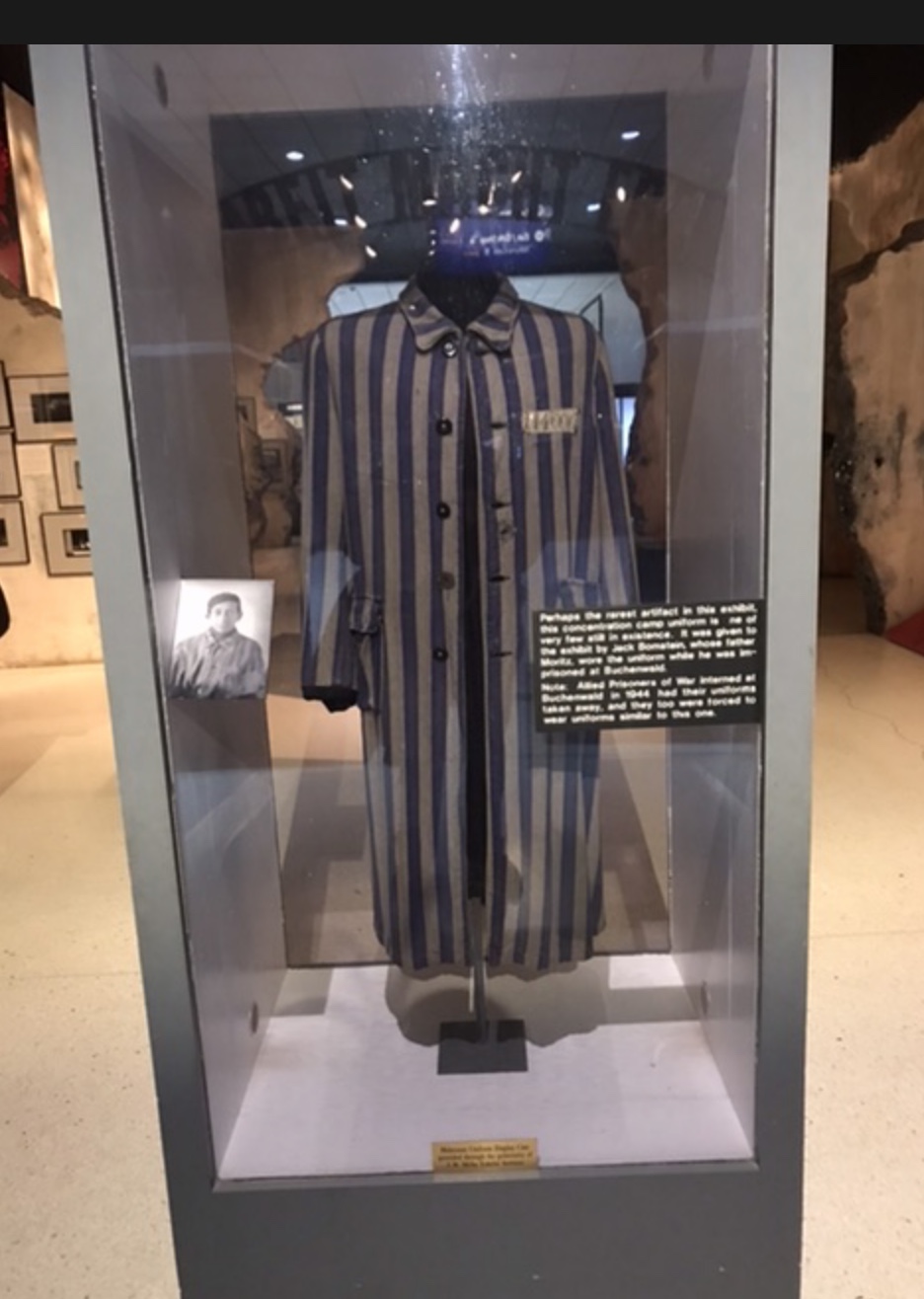
A surprise (to me) display inside the National Museum of the U.S. Air Force was a segment devoted to the Holocaust. More specifically, it dealt with area residents who were either survivors of concentration camps or soldiers who liberated them.
The short film that shows interviews with soldiers and doctors who were part of the camp liberation is difficult to watch, because of the subject matter. One soldier said he was still having flashbacks of the horrors he saw. The doctor explained that a nutritionist had to come in to set up the survivors’ diet in order to slowly re-acclimate them to food. “We started them with very weak potato soup,” the doctor said.
Photos of families who endured — many with the photo donor being the sole survivor of those pictured — the camps were on display.
The most unique item was the striped prison uniform the victims wore. The donor wore it during his time in a camp, and thankfully lived to donate it.
May all who see it look on it and rededicate themselves to ensuring it never happens again.
6 people like this
5 responses

@Hannihar (130150)
• Israel
28 Nov 19
@FourWalls
I saw Cast a Giant Shadow with Kirk Douglas in it and he was a soldier that liberated one of the camps and he could not believe what he saw when he got there. There are those that deny it ever happened and there are those that tried to let the world know and they were not believed. There are survivors that would not speak about it for a very long time because they thought others would not understand. I remember growing up I had two friends that one bopth parents were in the Holocaust and all their friends were survivors. I did not understand much then and would stare at the number on their arms. When I understood it made sense because others could not understand what they went through and how much they lost. My other friend her father was a survivor and he used to joke around with us. The Holocaust affected people in different ways. I used to work at this bookstore in Jerusalem and we had postcards of the survivors in the window and some of them would go by and point out where they were in the picture. When I was in school they showed one movie over and over again called Let My People Go and my history teacher would cry throughout it. We have here in Israel something called The March of the Living and People take school kids to the camps to teach them of what happened there to our People. They are not the same when they return. It was a very very horrible time in our history. People need to learn about what happened and hope it will never happen again.
1 person likes this
@FourWalls (86775)
• United States
28 Nov 19
"Back then" the world didn't see much need for mental healing to go along with the physical healing. The doctor in the interview said they called in a nutritionist so they could carefully re-introduce them to solid, nutritious food. Nobody thought, back then, to call in psychological help to get them re-introduced to life. There was a quote in the museum where a liberated prisoner said that the day the camp was liberated was his birthday. "This is the day I was re-born."
Even today people won't "talk about" a lot of traumatic experiences. Most veterans won't talk about the battles they saw.
The only book I've ever read about the Holocaust was Robert Clary's autobiography, From the Holocaust to Hogan's Heroes. He was a child when imprisoned, and he became a famous (in America, anyway) actor and singer. That was a tough read, even though Clary more or less glossed over a lot of what he saw. And, in what I consider poetic justice, he's the only original cast member of Hogan's Heroes who's still living. He's 93.
1 person likes this
@Hannihar (130150)
• Israel
29 Nov 19
@FourWalls
Thanks for sharing that and it is very hard to read about it and to watch it as well.
1 person likes this

@FourWalls (86775)
• United States
19 Nov 19
It's difficult for me to read books about it. The only one I've read is Robert Clarey's autobiography, From the Holocaust to Hogan's Heroes. I know he made it through...still, even then, it was a tough read.
1 person likes this
@JudyEv (382329)
• Rockingham, Australia
19 Nov 19
@FourWalls I don't think you would find this difficult at all. Much is left to the imagination but that may not be a good thing either.
1 person likes this

@FourWalls (86775)
• United States
18 Nov 19
Yes, the man in the small photo in the case wore it during his time in the concentration camp.

@JohnRoberts (109841)
• Los Angeles, California
18 Nov 19
I have seen camp stuff at European museums but do not recall seeing a uniform before.
1 person likes this
@FourWalls (86775)
• United States
18 Nov 19
Because of the disease most of those uniforms were burned once the camps were liberated.
1 person likes this

@LindaOHio (222624)
• United States
19 Nov 19
This is very unexpected at an air museum. It's a display everyone should see.
1 person likes this
@FourWalls (86775)
• United States
19 Nov 19
It’s definitely a reminder of WHY we fought World War II.
1 person likes this
