

Zen Koan: Sun Face Buddha, Moon Face Buddha
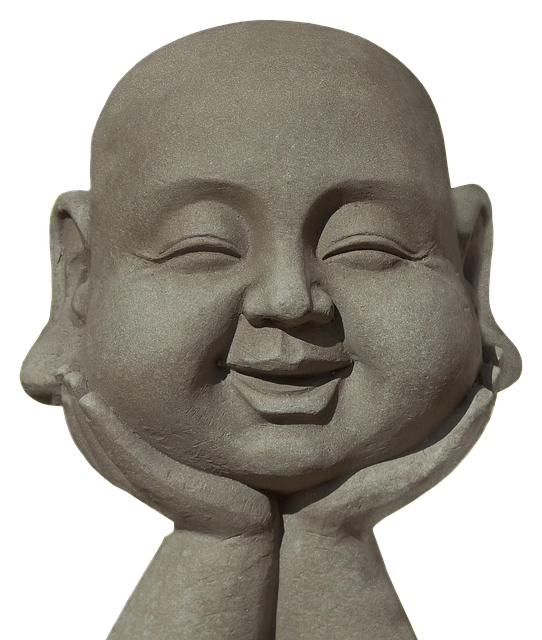

By emptychair
@innertalks (23739)
Australia

August 26, 2021 12:28am CST
The renowned Zen master Ma, short for Mazu, or sometimes this is spelt as Ma Tsu, was on his deathbed.
He had been given only another short twenty-four hours of life to live.
A passing journalist, or court reporter, as they were more likely to be referred to in those days, called in to interview him, and to obtain perhaps a last few words of wisdom from his venerable lips, for the local circular, or maybe it was just for his own edification, and interest.
This journalist had worked as the temple groundskeeper, or caretaker, under the temple superintendent, or its abbot, of a nearby temple, for a short while previously, and so he still had a keen interest in Zen Buddhism, himself.
Coming into his room, he approached the great master, and he asked him how was he feeling.
It is reported that the words that the master replied with were these ones:
"Sun face Buddha, moon face Buddha."
The next day found the master sitting cross-legged in the courtyard. He had just taken a bath. On closer inspection, he was found to be dead.
The master had given this same answer once before to another monk in the temple, and he had also given to him the further reply, or this other similar koan,
"No mind, no Buddha."
The meaning of this first koan, and perhaps also the second one too, is reflected in the fact that the sun is older than the moon, or oneness is older than duality. God is older than his creation, but only mind gives consciousness to any of this.
All else forever remains just an illusion.
Consciousness is but a mirror that can be used to see into this oneness from.
The master knew he was going to die. He wanted to go out of this world still alive in the journalist's mind. He created a koan for him to ponder the meaning of.
Mazu Daoyi (709–788) was an abbot in the Chinese Ch'an School of Buddhism during the Tang Dynasty.
The Sun faced Buddha is thought to last for a period of 1800 years, where as the Moon faced Buddha only lasts for a short period of twenty-four hours, that is for only one day, and one night. One lives for a very long time, the other only for a very short time. This apparently is part of a legend from an old sutra, or from an old ancient text, the origins of which have been lost in time.
The life of the old master was over.
His years of basking in the sun were finished. He knew he would be alive but for one more day, and that by then his full moon would have waned. Ma was not sick in the moment of now, or within eternity, but he was sick in the terms of time, or his Earth life. Ma remained unperturbed, undisturbed by it all. Death, life, it was all the same too him.
Everything is passing, but everything is also changeless.
This is the great mystery for everyone to ponder upon. This is what the master wanted the journalist to think over too.
Nothing is permanent and nothing lasts forever, but the Buddha, or God in other words, does last forever, and so in the moment of answering this question about his health, Master Ma is saying that he is alive to the moment, but will be dead tomorrow.
The Zen master was announcing the time of his death to the journalist, who if he understood the master's real meaning was being given the opportunity to witness this tomorrow, and so to be the first to announce the master's passing to the world.
This koan is taken from a great Zen classic, the Hekiganroku (also known variously as the blue cliff record, or the Nephrite Rock writings ) compiled around the 11th century. There are a few different versions of this story floating around.
The above version has been padded out a bit to liven up the story a bit.
Koans are usually rather short and pithy. This writing is a collection of 100 koans.
The koans were gathered together by Setcho Juken, (980 to 1052) who added some explanatory words of his own to each koan. It was a later monk, Yuan-wu who further annotated each koan in the year 1112, and it was his rendition of Setcho's writings that was referred to thereafter as the blue cliff record.
This koan is also referring to the two faces of oneness, or to duality.
Oneness is love, and duality is its splitting into fear, or sin, and love.
When a person despises himself within God, and wants to go it alone, he creates duality by doing this. This then separates them from oneness, and so this leads the person into sinning, or into losing their way.
This perhaps is the only real sickness that is possible, but even this too remains illusion. This is what the great master was really pointing out. The Buddha really only ever really has one face, his face of today.
Photo Credit: The photo used in this article was sourced from the free media site, pixabay.com
Which side of the Buddha's face shines the brightest to you?
His outer face, or his inner face?
4 people like this
2 responses

@DocAndersen (54399)
• United States
26 Aug 21
life is more than the human mind.
while I do not believe that all life has a consciousness I would argue that all life has value. The buddha does not seek those with thoughts only.
2 people like this
@innertalks (23739)
• Australia
26 Aug 21
Value is a funny thing; we say that gold, a rock in the ground has immense value to us too.
So, who is to value value, and decide what is really valuable, or not?
Is value relative then, or is there an intrinsic philosophical value to all life too?
Does the blowfly that lands on my nose, have any value to me, or to life then?
Even those with thoughts only, still would have their value then, and those with no thoughts, would have another value, as well.
To some people, even the Buddha might have no value to them....
@DocAndersen (54399)
• United States
27 Aug 21
@innertalks gold has value for many reasons - the biggest is that it is strong but malleable.
thoughts are the same as gold, if they can be shaped they have more value than those that are set in a harder stone.
2 people like this
@innertalks (23739)
• Australia
28 Aug 21
@DocAndersen Yes, that's a good allegory.
We should remain flexible in our thinking, whilst keeping them shining with a shine of love in them too. Love behind the thought makes it more valuable to all, both the receiver, and the giver.


@divalounger (6182)
• United States
29 Aug 21
Interesting question. I would have to answer both, depending on the circumstances and day--I koans are fascinating--I have often wondered if haiku grow from koans--
2 people like this
@divalounger (6182)
• United States
29 Aug 21
@innertalks Senryu and Haiku are similar--senryu deal with peoples' everyday lives--haiku deal with nature--although these days those lines blur
2 people like this
@innertalks (23739)
• Australia
29 Aug 21
@divalounger Yes, l prefer to write Senryu; Haiku seem harder for me to write.
@innertalks (23739)
• Australia
29 Aug 21
Thanks, That's a good answer. We shouldn't always necessarily allow one part of life to outshine another part of life for us. If we do so, we can miss out on some hidden lights shining brightly too, behind our immediate sight.
Senryu, another type of Japanese poetry, similar to Haiku, also seem to contain koan-like ideas, in them too.
Senryu: The koan of life
Koans are like Senryu's
They connect together points.
Sharper points reveal.
