

Jersey War Tunnels

By Fleur
@Fleura (34989)
United Kingdom

April 26, 2023 11:19am CST
Jersey has a long history, but its most recent traumatic event was the Nazi invasion of 1940. Jersey and Guernsey were the only parts of Britain to be invaded (although it was a frighteningly close shave) and they had a terrible time. The War Tunnels date from that period and now serve as a museum of the occupation.
As the Nazis got closer and eventually took over France, people from the Channel islands were given the option to evacuate to the British mainland. Some did, but most stayed, reluctant to leave their ancestral homes and risk being bombed in the blitz! The population in 1939 was about 50,000 and by 1940 it was about 40,000, with the rest having been evacuated or else travelled to the mainland and enlisted to fight with British troops. The islands were demilitarized but the Germans were not aware of this.
The attack started when the Germans bombed the harbour of St Helier, mistaking barrels of potatoes for ammunition. They then threatened to destroy all key areas unless the island surrendered, which they were then ordered to do by the British Government, who had to make a strategic decision about how best to use resources. They decided they simply couldn’t afford to defend the Channel Islands when the country was literally fighting for its life. The governor of the island was allowed to stay in post and given some leeway.
At first the invasion seemed very friendly. German troops thought they were on holiday, with no fighting to do they just relaxed and enjoyed the sunshine and the abundant produce. The local people faced a dilemma as to how to act towards their invaders. But gradually conditions got worse and worse. More and more restrictions were introduced, and more and more people were deported to concentration camps or forced labour. Work was hard to find, and food and other supplies became scarce. People were encouraged to inform on their neighbours.
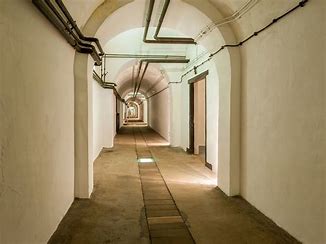
At the same time various other groups of captives were brought in from Spain, Poland, Russia, north Africa and the Middle East and forced to work building defences and other military buildings. The war tunnels were first created as storage but later converted for use as a hospital. They were dug into the solid rock by gangs of labourers with hand tools. They also built huge coastal defences, watchtowers, command bunkers… apparently one twelfth of all the concrete the Germans used during the war was used in Jersey!
By 1944 the war had turned against the Nazis. They were too busy fighting elsewhere to supply Jersey. Meanwhile Jersey also couldn’t receive any supplies from elsewhere, and the winter of 1944-5 was very hard. Finally the people were saved by the arrival of Red Cross parcels of food, while the occupiers, who were not allowed any, looked on hungrily.
When liberation day finally came (May 9th 1945) of course there was a huge celebration. But then some people never came back – more than 2,000 were deported and some died in concentration camps. And some people were condemned as collaborators or informers.
Jersey now has several museums recording events from that time. I knew a visit would be a depressing experience (especially given that current events in Ukraine are not that dissimilar) but at the same time I kind of felt that we ought to visit and acknowledge the islanders’ experience. There are also a lot of wartime buildings still standing all over the place. Some serve as museums, another makes a very useful bird-watching hide!
4 people like this
3 responses

@rsa101 (40976)
• Philippines
27 Apr 23
Whoa, you covered the entire island's history. I imagine the invasion had caused them a lot of harm. It's terrible what occurred, but it's all in the past now, and we need to move on from it. But happy that you were able to witness and experience their past to better understand your present.
1 person likes this


@JudyEv (382036)
• Rockingham, Australia
26 Apr 23
I knew some of this. Those must indeed have been terrible times. I'm a bit like you. I am sometimes quite uncomfortable and distressed visiting some of these places but feel my discomfort is nothing compared to what the inhabitants went through. I too see it as a kind of acknowledgement and thanks for their efforts on behalf of those generations still to come.
1 person likes this

@Laurakemunto (13787)
• Kenya
26 Apr 23
This is so exciting and interesting to read. You have outlined the history so well and clearly am happy thanks for the share!
1 person likes this
