

What is the importance of dancing in your country?

By neelianoscet
@neelianoscet (9615)
Philippines

July 15, 2009 5:48am CST
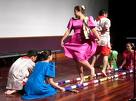
Dancing is important part of ever cultures. In my country their are national dance called Tinikling in which the dancers dance while a two poles of bamboo is being hit together. The dancer step over the poles with their bare feet and avoid being hit by bamboo poles. It requires fast movement while retaining graceful movements and alertness. The dances originates from the movement of a local bird. In your country, what are your national dances and it symbolizes? What is the significance of dance in your country?
2 people like this
7 responses

@diamania (7011)
• Netherlands
15 Jul 09
Dancing is not important here. Of course there are people who are member of some kind of dance school but you won't see us on the street with our gettoblaster dancing on some national music. There are people, mostly youth, who do 'jumpstyle' or 'hakken' but that's a bit waggish.
1 person likes this
@neelianoscet (9615)
• Philippines
24 Jul 09
Oh, Hakken is a very quick dance that dancer must move in every beat of the music. I consider that kind of a modern dance in your country the gabber style. In our country we got traditional dance that is playful and it is done when their is a festivities or national holiday. Many teenagers are now into hip hop and other modern dancing. The most exciting about dancing, the dancer can express their emotions and at the same time it conveys some messages to the audience. I do love to watch dancing especially if the dancer is male. The formation and the body movement is quick and body sway in tempo. Dancing is also a form of body exercises, making our body becomes more flexible.

@jaiho2009 (39140)
• Philippines
24 Jul 09
If i may not be mistaken my friend,our national dance is CARINOSA(KARINYOSA).I don't want to be sounded rude.
Have a good day
@neelianoscet (9615)
• Philippines
24 Jul 09
Tinikling is our national dance and I do my own research. Carinosa is originated from Spanish. While Tinikling gracefully show the filipino roots from local bird Tikling and it show the Filipino identity. That is why it is our national dance. For information visit the website of the Philippine information Agency at http://www.pia.gov.ph/?m=12&fi=p060828.htm&no=17 or http://en.wikipedia.org/wiki/Tinikling or www.giancruz.com/portfolio/imd110/city/history.html . I think all dances is good whether it is a national or modern dance. It shows the beauty of dancer movements, grace, express emotion, ideas or tell a story.

@neelianoscet (9615)
• Philippines
24 Jul 09
will just leave it to our government their are more important issues that need to be tackled than dancingJust enjoy dancing whatever..
Just enjoy dancing whatever..@jaiho2009 (39140)
• Philippines
24 Jul 09
Yes i know about this my friend...it is being taught from school,but recently it is changed to CARINOSA.You can check the textbooks of our elementary grade schoolers.


@GardenGerty (169590)
• United States
15 Jul 09
I am not sure we have any national dances. We have always adopted those dances from other countries. I have, for instance, done Tinikling, as we were taught it in physical education class. It is very good for fitness and coordination. In early early history of the US, we had square dancing, and round dancing. I am sure we got those from Europe. Some people like line dancing, which goes along with a lot of country and western music. I put my daughter in Highland Dance when she was a child. That is what they call dances from Scotland and Ireland. I enjoy dances.
@neelianoscet (9615)
• Philippines
24 Jul 09
I learn to dance too in schools and in a dance subjects. It started with the basic dance steps and then progress to explore different dances around the globe. I am glad to know that our national dance or ethnic dances like tinikling were taught in your schools. In our country we have a group called the Bayanihan dance troup and they perform all over the world as part of tourism program of the Philippines. They dance ethnic dance from our local folklore such as tinikling, singkil-a maranao dance, pandanggo sa ilaw, itik-itik, maglalatik and many more. Most of the dances were originated from Spanish and also from European like carinosa, kuracha, rigodon and la jota manilena. The first parts od dances i mention are our original local dance by our earlier ancestors. This our way to pay tribute to our roots. The square dance in your country I also know it and study it in schools, such as facing a partner and moves counterclockwise until you meet your partner again. They are a variety of dances which I loved to watch, both are classical and up to the latest dance craze in town.

@MsTickle (25180)
• Australia
17 Jul 09
In Australia the aboriginals dance whenever there is a group...no matter if it's a gathering for a ceremony or a family or tribal gathering around the fire at night. The dance is a story about animals or birds and the dancers use movements to simulate whichever animal they are portraying. It's quite fascinating to watch but even more interesting if someone explains to us white folks just what is going on.
@neelianoscet (9615)
• Philippines
24 Jul 09
Dances really have different interpretation according to the groups of peoples such as in your country the ethnic people or aborigines have their own dances. They dance to appeal for their pagan God for a good harvest or for fertility, or simply to imitate the movements of animals. This is a happy occasion which commemorate the joy of gathering and showing the cultural heritages which one way to respect the earliest settlers and the changes or development they do to their respective countries.

@stephcjh (38473)
• United States
17 Jul 09
I am not sure how important dancing is in our country but I do know they like to hold talented competitions for dancing. Alot of people do not know how to dance but they are taught to almost become professionals.
@neelianoscet (9615)
• Philippines
24 Jul 09
Dancing is very important to every country as in dancing we learn to express our emotions or know the history of the past. Our earliest or your countries ancestors for sure have their own legacy that it passes from the new generation. Your national dance groups may perform it especially in national occasion. National dances makes us proud of your cultures and of your country.

@checkmail (2039)
• India
17 Jul 09
Hello neelianoscet this is checkmail and dancing is very important in our cultures.Dancing to my country is like the traditional culture, that began from the ancient times till now also in this modern world.There various types of dance in cultures according to different traditions in our country.For more specific dancing stated from the period of the god and demons, then continued with kings age and now even in this modern age as well as will get to future time.All the dances are most of the prestigiuos dances in our country, the national dance of our country can be called as Bharatnatyam/kathakali.It is based on the national bird peacock who dances beautifully in rainy season.This dances are still the main and core source of knowledge about dancing.Nearly all dances are derived from it.
Dancing is even a great passion for other peoples who are not the actual performers.I also love to dance sometimes and also gets relaxed as weel as free myself.
@neelianoscet (9615)
• Philippines
24 Jul 09
I think your national dances is for religious or spiritual ceremony in praising your deities and it involves the showing of deep emotion, in tune with the music and rhythm. I already watch it and the dancers are very graceful in their movements. It is known as fire dance where dancers shows agility, with graceful movements also with singing ability. While your other dances wear make up, with elaborate costumes, singing, which really depicted your ancient period. They are really fascinating to watch and your people, as well as women have pretty face. happy dancing

@neelianoscet (9615)
• Philippines
24 Jul 09
Dancing is a symbol of country heritage and culture. Early ancestors create dance in performing rituals to the God and such as in earlier times even pagans have their own dancing. To dance reflect the emotion of the dancer and may imitate an object both living and non living things. The dance may be perform to thank God for life, good harvest, fertility, and even a good weather. Also dances beliefs are interpreted by various groups in different countries as represent of their early settlers in their country and brought every occasion to serve as a memory to the past years and reflect the way of life.
