

They soaked their coins in Vinegar and Left it on The Boundary Wall.

By AmberLynn
@ScribbledAdNauseum (104615)
United States

March 23, 2016 2:50am CST
This is a sad piece to read but I think that everyone should. The little town of Eyam decided to quarantine themselves, for better or worse, against the deadly bite of the Black Death.
To survive as well they could, they bore holes in the stone wall they erected and laid coins soaked in vinegar for the merchants to take. They received grains, meats and trinkets this way.
You can read more about it here :
or this one :
http://www.beautifulbritain.co.uk/htm/outandabout/eyam.htm
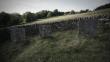
Today, tourists amble through the pretty village of Eyam. But 350 years ago, during the plague, the town’s terrible sacrifice meant its streets were filled with the wails of the dying.
11 people like this
9 responses

@garymarsh6 (24051)
• United Kingdom
23 Mar 16
You may not believe this but this article is not available to people in the UK which is ridiculous considering we the tax payers fund the BBC. It is infuriating to us.
1 person likes this
@ScribbledAdNauseum (104615)
• United States
23 Mar 16
That is REALLY ridiculous. BBC is British Broadcasting Company afterall!
1 person likes this
@ScribbledAdNauseum (104615)
• United States
23 Mar 16
This link has more about it and should work for you :

It's hard to imagine that the quiet village of Eyam, off the A623 in Derbyshire, could have such a fascinating, yet tragic story to tell. But .... at the end of August 1665 bubonic plague arrived at the house of the village tailor George Viccars, via a par
@garymarsh6 (24051)
• United Kingdom
23 Mar 16
@ScribbledAdNauseum Tell me about it! You know often there are some brilliant articles I would love to read but can not because it is not available to UK residents. I wonder why! I think it has something to do with revenue they get from publishing it abroad. Even so we fund the BBC of around £5 billion pounds.($7.5billion) £325 million spent on the overseas service alone.
1 person likes this


@marguicha (230365)
• Chile
23 Mar 16
I read Boccacio´s Decameron and the prologue, about the plague in Florence, was heartbreaking. I think that that was the best part of the book. The great writer (1313-1375) did a masterpiece there.
1 person likes this
@marguicha (230365)
• Chile
24 Mar 16
@ScribbledAdNauseum Funny thing, the writing looks fairly modern in spite of ots age.
@ScribbledAdNauseum (104615)
• United States
23 Mar 16
It's hard for me to read those types of things. I know there are some really great writers out there, that give chilling and gripping accounts of the struggles, but it's not an easy thing for me to read.
1 person likes this


@celticeagle (189988)
• Boise, Idaho
23 Mar 16
The History Channel has a doc on about this every other month or so. What a time in history. Not long ago either really. Can you imagine the wailing and filth of this horrid disease?
@celticeagle (189988)
• Boise, Idaho
23 Mar 16
@ScribbledAdNauseum ...It seems so.
1 person likes this
@ScribbledAdNauseum (104615)
• United States
23 Mar 16
I couldn't imagine seeing a family member sujugated to such pain and then also knowing you may very well be next. I think what this small village did is amazing!
2 people like this

@MarshaMusselman (38865)
• Midland, Michigan
23 Mar 16
Amazing, history lesson there, Scribbled. I've never heard of this before. In actuality those residents were of the same quality as martyrs throughout the ages.
However did you come across this news, out of curiosity?
Btw, saw this on Barry's wall.
@ScribbledAdNauseum (104615)
• United States
23 Mar 16
I'm a member of several different pages in facebook about history. Most are centered around Tudor history but I have one or two pages that center around British History. That's where I get most of these things from.
1 person likes this

@JESSY3236 (22265)
• United States
23 Mar 16
That's so sad. But I think that was clever way to trade with the other villages.
@ScribbledAdNauseum (104615)
• United States
23 Mar 16
I read another article that said something about them cleansing the coins in a well nearby and leaving them there for the merchants to collect? It wasn't exactly clear how they received the wares as it seems the holes would have only been big enough to hold the coins. Or so I'd think.
1 person likes this

@GardenGerty (169585)
• United States
24 Mar 16
Vinegar has some purifying power. There were interesting treatments for many diseases like small pox in the history of America as well. Some of the things that our forebears did was at least marginally effective.