

Rightness or wrongness of body posture in meditation. Read this story to know.
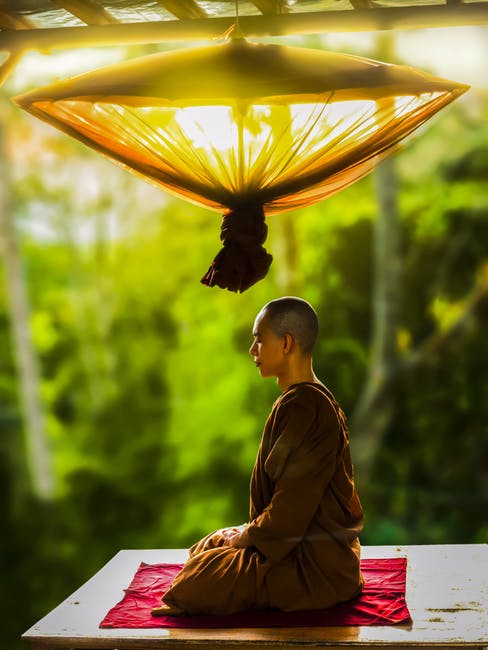

By emptychair
@innertalks (23745)
Australia

November 1, 2017 10:50pm CST
Master Zu Fen Ho, had two students who were very different from each other.
One was a tall strapping man of around twenty-two, with a good physique, and good posture. He would meditate always in the recommended way, of his sitting with a straight back, and his head upright too.
The other student, a few years older, had a rounded back, and because of this, he always slouched as he sat, with his head hanging down towards his chest. At times, it looked like that he was asleep.
When they both came out of their respective meditation sessions though, the student who had not sat in the right posture, always looked to have such bright eyes, which seemed even brighter now, after his meditation.
The master had told the student with the humpback to just sit in as relaxed a way as possible, for himself. Formal posture was not the first rule of meditation. A sharp mind was not even the second rule, he had told him too.
No, there were no rules at all really.
The master then had said, quoting his own master,
"Love is the only requirement of any session of meditation for it to be beneficial. Not love of the form, nor of its rewards, just love for the process of truth finding, which comes about unforcedly so, only when you relax deeply into your own heart of love."
We should not look for rewards from the process of meditation.
"Its rewards" means here then, our expected, or wanted rewards, or results of our meditation session.
4 people like this
3 responses


@innertalks (23745)
• Australia
2 Nov 17
That's a great response. I am sure the master in my story would have liked it!
We should be zero about all of these things then, including rules in meditation.
It means our being detached from our being attached to the form, rather than to the essence of the practice of meditation, or of anything else besides too.
The old saying, about not seeing the wood for the trees, is relevant here then too, I think.
We should not be too involved in the process, or the results, or in our expectations of either of these either.
What comes, comes.

@Shiva49 (28397)
• Singapore
3 Nov 17
@innertalks Yes Steve, we are in for surprises all the time.
Our effort, by itself, is the reward - siva
1 person likes this
@innertalks (23745)
• Australia
4 Nov 17
@Shiva49 As long as the effort is a right effort, as the Buddha would have said, we will get right rewards from that.
1 person likes this
@innertalks (23745)
• Australia
4 Nov 17
It takes great faith to ask for nothing and to request nothing, knowing that God supplies all of your needs whatever they might be.
We all have this in our hearts, but our mind doubts it at times.
1 person likes this
@innertalks (23745)
• Australia
4 Nov 17
@Shiva49 We think that we know better than God what we need, and we do not want to miss out on what we think that we want, and need. The strong attraction of this selfishness takes us away from the altruistic love that we should allow to live selflessly within us, as God, for God is love, and love supplies us with all we ever need, at all times, that is, if we allow it to do so, and are satisfied, and trusting of this great truth.
1 person likes this
@Shiva49 (28397)
• Singapore
4 Nov 17
@innertalks I know some who put in unreasonable requests that even god has to refuse like wealth beyond our needs.
Frankly, what we seek may not be what is desired for us, so leave it to god (pass the buck!) siva
1 person likes this


@dgobucks226 (37621)
•
3 Nov 17
Just do the best you can and the process will take care of itself.
1 person likes this
@innertalks (23745)
• Australia
4 Nov 17
Yes, that's good advice.
If we try too hard to get results too quickly, we often then stab ourselves in our foot, so to speak, as, as you said, the process runs by itself at its own pace without our needing to push it to do so.
1 person likes this