

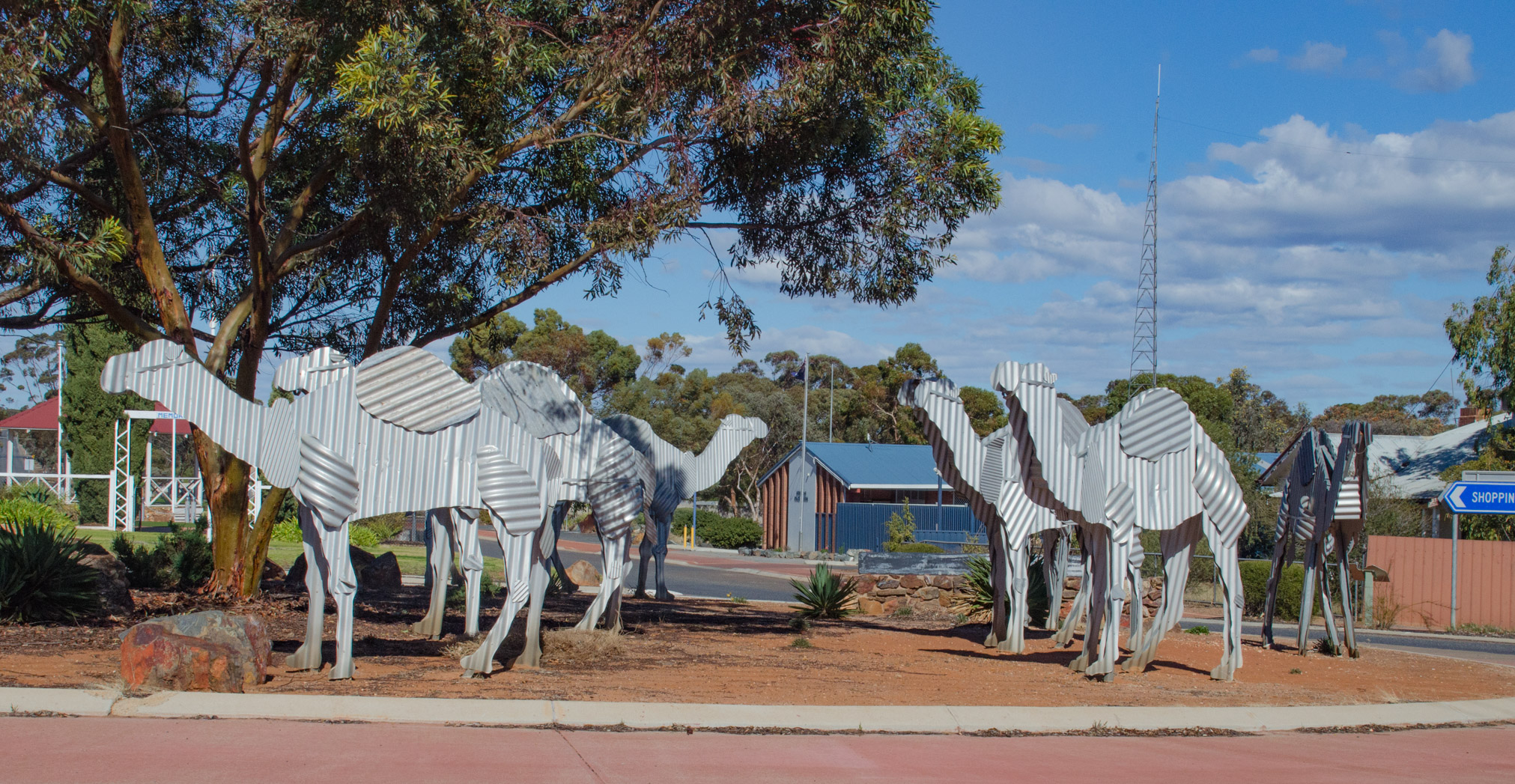
A tribute in Norseman, Western Australia, to the 'ship of the desert' - the camel

By Judy Evans
@JudyEv (382853)
Rockingham, Australia

August 9, 2018 7:26pm CST
Although the camel is now considered ‘feral’ and a pest in outback Australia, settlement would have been much slower without the efforts of these great ‘ships of the desert’. In the opening up of Australia’s outback, camel teams and their mostly Afghan masters were responsible for the transportation of all sorts of goods. In particular wool was packed out on camels. The long trek from the sheep stations to the ports on the south coast could take up to a month.
Incidentally a camel’s hump doesn’t store water as is often imagined but consists of fatty deposits which the camel can draw on in times of stress. It’s good to see the town of Norseman in Western Australia paying tribute to the humble dromedary. The material used so effectively is the ubiquitous corrugated iron which forms the roof of so many Australian homes.
In the more arid areas of Australia, there are no big trees so timber for building is at a premium. Fences around backyards in those areas were often made of sheets of corrugated iron and in the cemetery at Menzies, even the tombstones are made of tin, made decorative with cut outs and twisted pieces.
13 people like this
14 responses

@andriaperry (118793)
• Anniston, Alabama
10 Aug 18
Using tin art is in right now in the USA
2 people like this
@JudyEv (382853)
• Rockingham, Australia
10 Aug 18
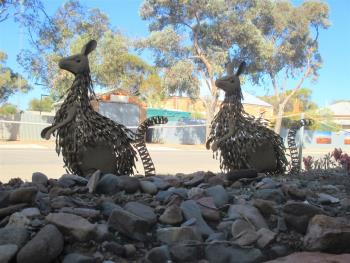
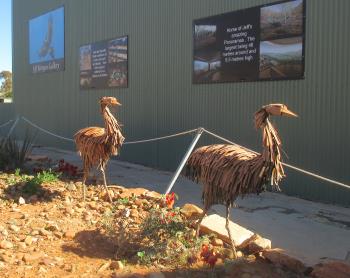
@andriaperry These were in the same garden.
2 people like this


@ptrikha_2 (49779)
• India
12 Aug 18
@LadyDuck or trees can be cut and used sustainably. Cut a few, plant more ancient use some in one year, others in second year and so on.
2 people like this


@JamesHxstatic (29410)
• Eugene, Oregon
10 Aug 18
I had no idea that camels and Afghans played such a large part in Australian history. Did many Afghans stay?
Incidentally, we started watching an interesting multi-part documentary last night called Outback.

2 people like this


@Deepizzaguy (122443)
• Lake Charles, Louisiana
10 Aug 18
A nice tribute to the camels.
2 people like this
@JudyEv (382853)
• Rockingham, Australia
15 Aug 18
@Deepizzaguy It seems dogs are capable of doing a multitude of tasks.
1 person likes this
@Deepizzaguy (122443)
• Lake Charles, Louisiana
15 Aug 18
@JudyEv That is true since rescue dogs are not given their just due.
1 person likes this

@snowy22315 (209335)
• United States
10 Aug 18
They are hardy animals..they have some wild ones in OZ right? We have wild horses and ponies here in the US, and wild burros too.
1 person likes this
@ptrikha_2 (49779)
• India
12 Aug 18
This is a great thing and yes camels are indispensable in deserts.
1 person likes this

@marguicha (230365)
• Chile
10 Aug 18
As usual, your post was very interesting. I had no idea that camels had been taken to Australia, much less that there were too many now. The use of corrugated iron is another thing I did not know. We use it too in my country.
2 people like this


@JohnRoberts (109841)
• Los Angeles, California
10 Aug 18
Tin tombstones? Not stone. That's different.
1 person likes this
@JudyEv (382853)
• Rockingham, Australia
10 Aug 18
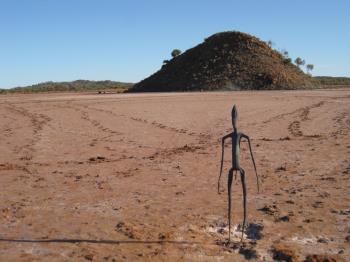
There is virtually nothing out there to make tombstones of. No trees and no large stones - and it's miles from anywhere so in the olden days they made do with tin. I wish I had some photos of them but I haven't. We camped there one night on our way to Lake Ballard and the installation that I've written about before. There are some traditional tombstones but they would have been very expensive. Here is one of the installations. I've written about it before. Just search for Lake Ballard if you'd like to read it. Actually I've just looked and you wrote a response on it. 
1 person likes this


