

How my parents survived the Great Depression

By Judy Evans
@JudyEv (381928)
Rockingham, Australia

December 17, 2018 7:13am CST
If you are strongly into animal welfare, you might prefer not to read this although I’ll be writing about the 1930s.
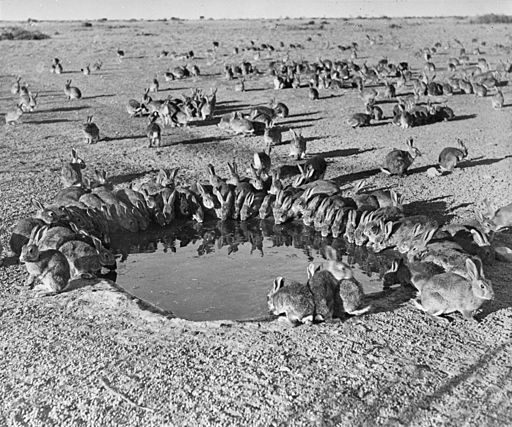
Rabbits have always been a problem for Australian farmers and graziers almost since the first dozen or so were introduced to give the aristocracy something to hunt. Rabbits found Australian conditions very much to their liking and it wasn’t long before they reached plague proportions. It’s too long a story to document here but I thought I’d share what I remember about my parents’ involvement with rabbits.
During the Great Depression of the 1930s my parents were just starting out on their own farm. A very handy source of income during this period came from selling rabbit skins. Most were made into gentlemen’s hats.
For several nights a trail of oats would be laid through a paddock. The ‘poison cart’ would be pulled by a horse. On the third or fourth night the oats would be poisoned. The following morning Mum and Dad would go out early and pick up all the dead rabbits. These would be skun and the hides stretched out on home-made wire frames to dry. The pelts fetched a shilling each and it wasn’t unusual for them to skin 100 rabbits each day.
Farmers were expected to keep the rabbits on their farm under control. A rabbit inspector would visit each farm and want to know what was being done to keep the rabbit population at a minimum. Rabbit warrens might be ploughed in. Rock piles might be fumigated. A small area of water or a soak might be fenced to keep stock out but let rabbits in and the water then poisoned. Those who could afford it fenced their boundaries with ‘rabbit netting’, the holes of which were too small to let rabbits through. At the time it really was a matter of ‘them or us’.
Later a virus called myxomatosis was introduced and at last numbers were brought back to something near manageable. However the rabbits developed an immunity to myxomatosis and now new viruses are being used. The battle continues.
The photo is from 1938 and in the public domain. You can see just how thick the rabbit population was.
20 people like this
19 responses

@JohnRoberts (109841)
• Los Angeles, California
17 Dec 18
A classic example of humans disturbing the environment by introducing non-native species and Australia has really suffered from this.
3 people like this

@MarymargII (12422)
• Toronto, Ontario
17 Dec 18
Yes I heard of that - the same was true in Ireland and as my husband is from the North he experienced this 'plague' of rabbits as well.
2 people like this
@JudyEv (381928)
• Rockingham, Australia
18 Dec 18
@MarymargII I did see a hare or two in Ireland. We don't have them in the west, just in the eastern states. And their population remains small for some reason.
1 person likes this
@MarymargII (12422)
• Toronto, Ontario
18 Dec 18
@JudyEv At a certain time yes. Also Scotland.
1 person likes this


@JudyEv (381928)
• Rockingham, Australia
18 Dec 18
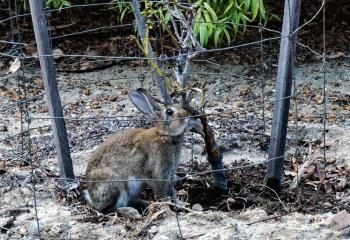
I suppose they will always be a problem. We have a lot here at the moment. It is a good thing we are too fussed about the garden as we see at least half a dozen every day right up around the house. This one is eating my rose bush outside the office window.
1 person likes this


@JudyEv (381928)
• Rockingham, Australia
18 Dec 18
I'm sure they were very tough times for everyone. Living on a farm at least we had plenty of food.

@wolfgirl569 (135664)
• Marion, Ohio
17 Dec 18
They found a way to survive. That is what counts. I dont like using poison for anything. But more is known about it now too.
1 person likes this
@wolfgirl569 (135664)
• Marion, Ohio
18 Dec 18
@JudyEv Except for killing all of them it will continue to be. You could send some here. I am lucky to see 2 a year running wild.
1 person likes this
@JudyEv (381928)
• Rockingham, Australia
18 Dec 18
They are surviving much too well and numbers are climbing all the time. It is an ongoing problem.
@JudyEv (381928)
• Rockingham, Australia
18 Dec 18
@wolfgirl569 Then you are very lucky indeed. Be careful what you wish for. They are a real pest.


@shaggin (74988)
• United States
17 Dec 18
I assumed before reading this that your parents survived off the rabbit meat. Poisoning then they would not have been able to use the meat so they were wasted which is sad. It sounds like they would have way more then they could eat though and even if they didn't want to kill them with farms being inspected they would have had to. Bullets for that many rabbits would have been costly so I understand why they poisoned then it would have killed many faster.
1 person likes this
@JudyEv (381928)
• Rockingham, Australia
18 Dec 18
They trapped rabbits for food but being on a farm, having enough food wasn't such an issue. In later years we would go out spot-shooting at night but in the 30s there were just so many poisoning was the only answer. Just last year we visited Government House in South Australia and at one time the poison was made there in some outhouses.
1 person likes this

@snowy22315 (208801)
• United States
18 Dec 18
I remember an Australian movie that was made called Rabbit Proof Fence.
1 person likes this
@snowy22315 (208801)
• United States
19 Dec 18
@JudyEv We kind of have the opposite problem in this area you rarely seebrabbits because there are just too many predators. One that was living in the bushes here got hit by a car. I don't think any of them live to adulthood.
1 person likes this
@JudyEv (381928)
• Rockingham, Australia
19 Dec 18
@snowy22315 I wish I could say the same. I might seem heartless but they are an absolute menace here. It's lucky I don't like gardening as I'd never be able to have a decent garden here because of the rabbits. They were burrowing in under the shed unless we buried mesh around the bottom.
1 person likes this


@Tampa_girl7 (54715)
• United States
18 Dec 18
My grandparents did whatever they needed to survive during the depression. My daddy and his sister mostly went barefoot, even to school. I know it must have been hard times for your parents too.
1 person likes this
@Tampa_girl7 (54715)
• United States
18 Dec 18
@JudyEv hardships definitely build character and appreciation for when life is better.
1 person likes this


@responsiveme (22923)
• India
17 Dec 18
Knew about the abundance of rabbits in Australia but this is an interesting first hand account.
In mathematics there is a sequence called Fibonacci sequence and rabbit reproduction is given as an example of the sequence in reallife
1 person likes this
@JudyEv (381928)
• Rockingham, Australia
18 Dec 18
@responsiveme When I matriculated, music was considered a maths subject. I wasn't so good with all the other maths but I got through with my music.
1 person likes this

@JudyEv (381928)
• Rockingham, Australia
18 Dec 18
Many 'modern' people have no idea how some animals can almost bring a country to its knees as the rabbit did to Australia. They even built a rabbit-proof fence - several in fact - right across Western Australia to try to stop them coming in from the Eastern States.
2 people like this

@allknowing (153544)
• India
17 Dec 18
Good you warned. I did not read your discussion I will never be able to face it if it has anything to do with animal torture.
1 person likes this


@Svidrigaylov (389)
• Guadeloupe
17 Dec 18
@judyev Thank goodness for resourceful parents.
1 person likes this
@JudyEv (381928)
• Rockingham, Australia
18 Dec 18
Most people in those days were very resourceful. They needed to be to survive I think.

@andriaperry (118793)
• Anniston, Alabama
18 Dec 18
That is a lot of rabbits, did they every eat the rabbits?
I have a small problem with them myself, the cat helps but I still see them in my garden.
1 person likes this
@JudyEv (381928)
• Rockingham, Australia
18 Dec 18
A lot of people lived on them. They would trap/snare/shoot them for food. Not everyone poisoned rabbits atlhough a lot of farmers did.

@acelawrites (19272)
• Philippines
18 Dec 18
Animal lovers will not go into it; but in times of necessity during those years, one had no choice but to sacrifice the animals for survival.
1 person likes this
@JudyEv (381928)
• Rockingham, Australia
18 Dec 18
That is very true. Sometimes the animal lovers need to think a bit more about how things might have been in a different era.

@teamfreak16 (43579)
• Denver, Colorado
18 Dec 18
On their Hail to the Thief album, Radiohead actually did a song called "Myxomatosis." Weird what people come up with!
1 person likes this