

The coco de mer – in a nutshell, a very large nutshell!

By Judy Evans
@JudyEv (381739)
Rockingham, Australia

April 3, 2026 1:24am CST
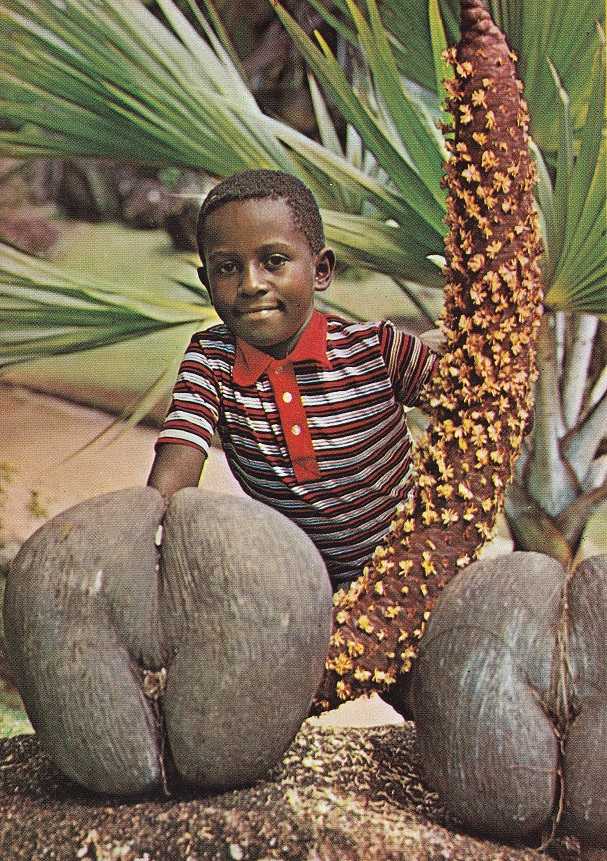
The largest seed in the plant kingdom is the nut of the coco de mer (Lodoicea maldivica), a giant palm tree which is found only on two islands of the Seychelles. These nuts weigh 15-30 kgs (33 – 66 lbs).
Largely because of its shape which resembles the dismembered lower part of a woman's body, including the buttocks, the plant was originally given the botanical name of Lodoicea callipyge, with ‘callipyge’ from from the Greek meaning ‘beautiful rump’.
The name is French for ‘coconut of the sea’. There are separate male and female trees. Only the female trees produce the nuts. If they fall into the sea (the nuts, not the trees), they sink. Once the husk drops off and the internal parts decay, the nut then floats to the surface.
In ancient times, people believed the nuts came from an underground forest and they became very valuable (the nuts, not the people). In the Maldives, any nuts found were to be given to the king. Keeping or selling one could result in the death penalty. A very few were given out as gifts.
In 1769, Jean Duchemin took a cargo of nuts from the Seychelles island of Praslin and later sold them in Indian markets. They lost some of their value after that. Today, the tree is classed as endangered and there are strict regulations governing the sale and export of the nuts.
The photo is in the public domain and shows two female nuts with a male catkin between them.
6 people like this
5 responses

@JudyEv (381739)
• Rockingham, Australia
3 Apr
Are we talking about the same thing? I don't think there are very many around although there might be more now. I don't know if it is edible. I think they were sold as curiosities but I don't know that for sure. Once they floated, there were no insides left.
1 person likes this


@LindaOHio (222222)
• United States
4 Apr
Wow! They are huge. Cousin #2 is disappointed because her palm trees don't have coconuts. I told her to plant one.
1 person likes this
@LindaOHio (222222)
• United States
6 Apr
@JudyEv I don't know. She'll have to do some research.
1 person likes this


@wolfgirl569 (135583)
• Marion, Ohio
3 Apr
That is huge. It does look like a rump. 
1 person likes this


