Explore
Top Rated Discussions
Most Recent Discussions
Most Recent Activity
Hot Discussions
New User Discussions
Discussions w/ No Response
Help
FAQ
Earnings Program
Community Guidelines
Contact
Sign Up!
Log In
Search
Tagged Discussions
Tagged Responses
Tagged Comments
Tagged All Activity
Users
Full Text Discussions
Full Text Responses
Full Text Comments
Full Text All Activity
X
venice
Tagged Discussions
Travel in Venice
Always smiling
@allknowing
(153529)
•
India
17 Jul
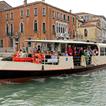
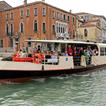
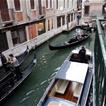
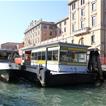
There are no land taxis or buses in Venice except water buses, water taxis and gondolas There is a network of canals - connecting small islands and over 400 bridges One can call these canals as trasnportation routes. The only...
venice
travel
water buses
water taxis
4 responses
•
5 people
Water buses in Venice
Always smiling
@allknowing
(153529)
•
India
30 Jul 23
Known as Vaporetto the only transport in Venice for tourists are water buses. When we landed from Switzerland we had to take the water bus to reach our hotel. Nowhere in the world will you see over hundred islands, 150 plus...
italy
venice
water buses
vaporetto
5 responses
•
6 people
Canal boat rides
Always smiling
@allknowing
(153529)
•
India
20 Jul 23
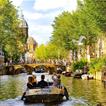
Both in Venice and Amsterdam the tourists could take boat rides in canals that gave them an opportunity to see around the city and at the same time enjoy the rides. The sad part is the canal water is dirty as the sewage is...
canal boat rides
amsterdam
venice
sewage water
5 responses
•
4 people
Gondolas in trouble in Venice
Judy Evans
@JudyEv
(382412)
•
Rockingham, Australia
23 Feb 23
I heard about the gondolas in Venice having trouble navigating the famous canals due to very low water levels. There are several factors causing the problem. Low tides seem to be the main cause but lack of rain, a high-pressure...
italy
venice
canal
gondola
17 responses
•
16 people
Venice, Italy - a memory
Always smiling
@allknowing
(153529)
•
India
26 Oct 21
We got to experience some amazing sights while in Italy. Apart from spending time on the beach which was attached to the hotel in Venice, we had the opportunity to visit a glass factory that produced exquisite glass items. The...
venice
italy
7 responses
•
7 people
How's this for café decoration?
Judy Evans
@JudyEv
(382412)
•
Rockingham, Australia
20 Aug 20
I wrote about going into a café and being confronted with dozens of accordions – on the walls, hanging from the ceiling, etc. Another café that had rather unique décor was in Venice. Here, however, it was bras of all shapes and...
venice
cafe
decorations
bras
38 responses
•
32 people
The flood in Venice
youless
@youless
(114117)
•
Guangzhou, China
25 Nov 19
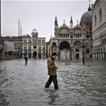
Venice suffers the terrible flood. Probably it is the worse one in 50 years. Venice is a beautiful and ancient city. I hope the flood won't damage more.
venice
14 responses
•
13 people
Aqua alta: now Venice is in danger.
marguicha
@marguicha
(230365)
•
Chile
15 Nov 19
After a huge fire this year in April that destroyed a great part of Notre Dame de Paris, we are again watching in shock how another pieces of beauty created by mankind could be about to succumb. Now it is water and wind. And...
venice
water
danger
6 responses
•
6 people
Traveling to Europe during weekends
chaitu33
@chaitu33
(814)
•
India
15 May 19
I am traveling to London for two months in June and during weekdays, I will be busy with office stuff and visiting London. I am planning to visit 4-5 countries in schengen region during weekends over two month period and any...
europe
traveling
venice
backpacking
places to visit
6 responses
•
4 people
Buildings in Venice standing in canals
Always smiling
@allknowing
(153529)
•
India
27 Jul 17
I have been to Venice but never for a moment did it strike me to find out how these buildings that stand on water survive. I spent some time on the Net this morning and got some information on this. They I understand stand on...
venice
italy
4 responses
•
4 people
The backwater breeze in Alleppey is amazing.
Dr Souvik Chatterji
@sathviksouvik
(23252)
7 Apr 17
Alleppey in Kerala is called the Venice of the East. Due to backwaters, the breeze blow in opposite direction of the sea. Travellers stay in house-boats and enjoy the beautiful breeze. The place is fringed with coconut trees and...
alleppey
kerala
backwaters
breeze
venice
1 response
•
2 people
A piece of Italy
MysD
@mysdianait
(66005)
•
Italy
26 Mar 17
About a month ago I promised a friend here that I would share some Italian music - and this is proving more difficult than I expected. The problem is that I don't have a favorite Italian artist. My taste in music is totally...
italy
music
venice
mysd
allegro
14 responses
•
13 people
Hello Venice
Bojel
@jobelbojel
(36796)
•
Philippines
19 Nov 16
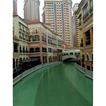
Finally! I got to see Venice. It is a lovely place. I was able to see the Grand Canal and the Gondola, the traditional boat. I am talking about the Venice Piazza located in the heart of Bonifacio Global City, Taguig,...
venice
venice piazza
bgc taguig
gondola
7 responses
•
7 people
Gifts come in strange packaging!
Inlemay
@Inlemay
(17712)
•
South Africa
8 Sep 16
The new additions to my postcard collection are magnificent, and I love receiving lovely gift gestures that might be simple to some people, but that mean the world to me. Malu has outdone herself and her kind gestures are much...
gifts
postcards
stamps
venice
gestures
7 responses
•
8 people
My Flavours of Venice
Inlemay
@Inlemay
(17712)
•
South Africa
28 Sep 15
I have decided to give everyone a glimpse of my day in Venice before boarding our cruise ship to sail the Aegean and Mediterranean sea - This was my second visit to Venice, and it was indeed a wonderful visit in the Summer time....
venice
italy
gelato
aegean
mediterranean
19 responses
•
20 people
If I could live anywhere in the world for three months, it would be...
Mohd Afaque
@mohdafaq55
(2)
•
New Delhi, India
9 Jul 15
Every person have his own favorite place to stay when he(she) need some relax feeling.. But I heard a lot of Venice, capital of northern Italy’s Veneto region. I was never there for even once. Truly Venice is a place of dream, the...
venice
tourist place
beautiful
nature
Venice- a wonderful city
roshigo58
@roshigo58
(4856)
•
Pune, India
30 Apr 13
hi, Venice is the world's only pedestrian city. As there are no cars here, walking becomes a pleasant experience. Venice consists of 118 bodies of land. these islands have more than 177 canals. These canals are connected by more...
venice
13 responses
•
3 people
Venice is the most one of the beautiful city in world.
rasinda
@rasinda
(18)
•
Italy
27 Jan 13
Now i am living in venice.i think venice is the most beautiful city in the world you have to see.There is differnt traveling sistem,buiding,shops,festival,Gondola(little boat)....etc so i like venice.
beautiful
boat
city
in
most
the
travel
venice
world
4 responses
•
1 person
Do you thinks it's worth it?
ddaguno
@ddaguno
(3107)
•
Philippines
16 Dec 12
I used to earn around $20 online every month from different sites but I have been inactive lately because of responsibilities that I have to do in real life. but I have been watching this web series 'Venice' and the first 2...
online earnings
spending
3 responses
•
1 person
Would you like to go to venice?
abundant1
@abundant1
(28)
2 May 12
When I was young, I have a dream to visit the city of water. I love water because it is pretty.I'd like to know what it would be like to live there.I hope I am there.I believe I will achieve my dream.Would you like to go there?Is...
beauty
pure
venice
7 responses
•
1 person