

Words aren't always necessary

By Judy Evans
@JudyEv (382068)
Rockingham, Australia

May 18, 2017 1:33am CST
Firstly I’m getting no kickbacks from Duolingo but I thought it was very interesting that back in November, the company was invited to meet with the President of Ireland at Áras an Uachtaráin (The President's House).
The invitation was to recognise the language site’s efforts in keeping the Gaelic language alive and thriving. Although there are less than 100,000 native Gaelic speakers in Ireland, over 3 million have studied it on Duolingo.
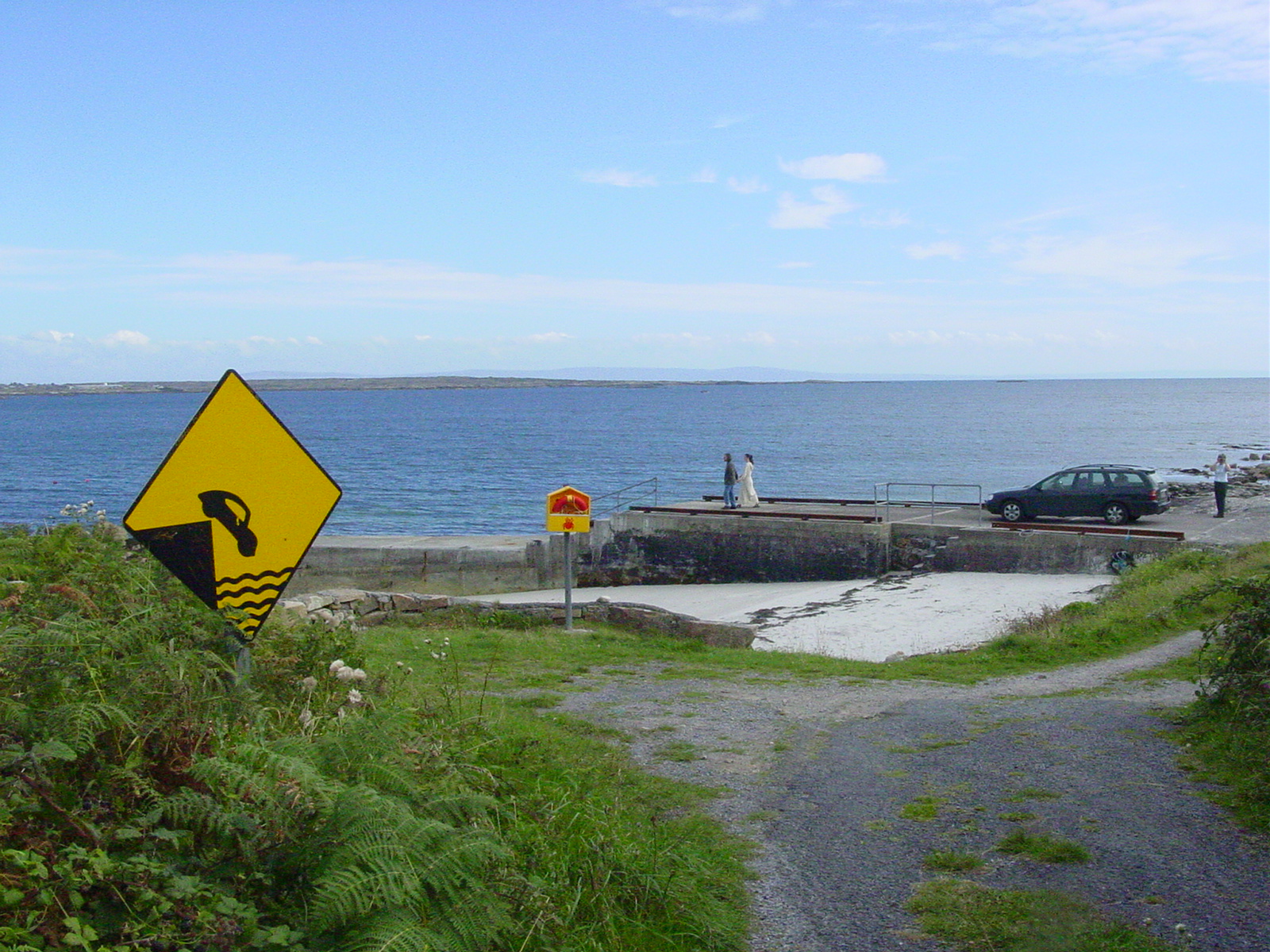
When we were in Ireland, particularly in the south-west regions, we saw many road signs and information panels which were in both English and Gaelic. And some signs, like the one shown here, didn’t need any words at all!
17 people like this
16 responses

@topffer (42155)
• France
18 May 17
It is interesting. My mother was natively speaking Occitan, which is a Latin language not far from Catalan, and as she voluntarily was speaking it to me, I am also a native speaker, bilingual at birth. In the 19th C it was spoken by about 20 millions people in Southern France, but we are between 200 and 300 000 now, and quite all of us are more than 50 years old. The reason is that the Republic made a war against local languages since the 1880's, and pupils speaking anything else than French at school were punished if they were found speaking something else in a courtyard until the 1960's. The Occitan spoken by native speakers has several local variants, but basically it is like US/UK English, the grammar and vocabulary are the same, and we all understand each other whatever our area.
Since the 1980's, it is taught again in some schools, and there are also some information panels with both languages in a few areas. The problem is that the language taught in schools is the Occitan of the 12th C minstrels, and each time I hear it, I have the feeling that I am in front of an alien coming from an exo-planet, and the alien thinks that he is in front of a redneck without education. The true language will have completely disappeared in1 or 2 generations.
As you write that there are only 100 000 native Gaelic speakers actually, the question is : are the native speakers speaking the same language than the language taught in schools to non native ?
4 people like this

@topffer (42155)
• France
18 May 17
@Fleura I did not knew that, but it is exactly the same. It is because parents made an effort to not speak Occitan to their children, that it quite disappeared in 2 or 3 generations. They were thinking that they were doing the right thing for them...
4 people like this

@Fleura (35020)
• United Kingdom
18 May 17
The same situation existed in Wales and also in Scotland in the 19th century and early 20th century, Children were punished if they were caught speaking their native language in school. In many cases parents also discouraged their children and persuaded them to speak English instead so as to better their prospects.
4 people like this

@JudyEv (382068)
• Rockingham, Australia
18 May 17
The only time I got really anxious last time we were travelling in Europe was going into the Czech Republic and not being able to make head or tail of the Cyrllic signs (I think that's what they were). I'm all for countries keeping and promoting their own tongue but if they are trying to attract tourists some signs need to be easily understood. We might find more signs just in Gaelic on this visit.
3 people like this
@JudyEv (382068)
• Rockingham, Australia
18 May 17
@MALUSE I thought it was the Czech Republic but I couldn't even guess at the signs. They looked like hieroglyphics to me. We had no Czech money and needed petrol so had to pay by card. I found it really stressful for that short period. But then we found a lovely camping ground near a lake and half the people wanted to practise their English and the whole world became wonderful again. 
5 people like this

@snowy22315 (208906)
• United States
18 May 17
As the saying goes, a picture is worth a 1,000 words.
3 people like this

@JamesHxstatic (29410)
• Eugene, Oregon
18 May 17
It is good that there are efforts to keep dying languages alive. Here in the US, many (real) Native-American tribes are struggling to save their languages.
3 people like this

@shivamani10 (11035)
• Hyderabad, India
18 May 17
Why is the language not developed yet?
3 people like this

@JohnRoberts (109841)
• Los Angeles, California
18 May 17
I find that sign hilarious. It has a cartoon feel. I am bad!
3 people like this


@changjiangzhibin89 (17239)
• China
18 May 17
I have not known of Gaelic language before.Sometimes a pattern on a road sign is enough to let people know what is banned
3 people like this

@prashu228 (37518)
• India
18 May 17
Well I heard about the app on mylot , I checked it, I am trying cto learn something new . I agree actions speak larger than words so do signs.
3 people like this


@DaddyEvil (174430)
• United States
21 May 17
Yes, I am sure that road sign means something important, Judy!
Hmmm .... 1. Your car can go swimming here? 2. Diving is permitted?
Maybe I should ask @pgntwo if he has ever let his car go diving or swimming around a sign like this?
.... 1. Your car can go swimming here? 2. Diving is permitted?
Maybe I should ask @pgntwo if he has ever let his car go diving or swimming around a sign like this? 


.... 1. Your car can go swimming here? 2. Diving is permitted?
Maybe I should ask @pgntwo if he has ever let his car go diving or swimming around a sign like this? 2 people like this

@pgntwo (22405)
• Derry, Northern Ireland
21 May 17
@DaddyEvil Yes, because someone did not realise how slippery it is on an algae-covered slipway, and how deep it is in the water at the end of the slipway.
2 people like this

@acelawrites (19272)
• Philippines
18 May 17
It's a funny road sign! Don't you think it should be placed some meters ahead so the driver can see the warning sign earlier while driving?
3 people like this


@sueznewz2 (10409)
• Alicante, Spain
19 May 17
I love it... it doesn't need any explanation... I'm a great believer in the saying .. A picture paints a thousand words lol
2 people like this