
Creating rock slabs with heat and water
@JudyEv (381942)
Rockingham, Australia
October 26, 2020 6:51pm CST
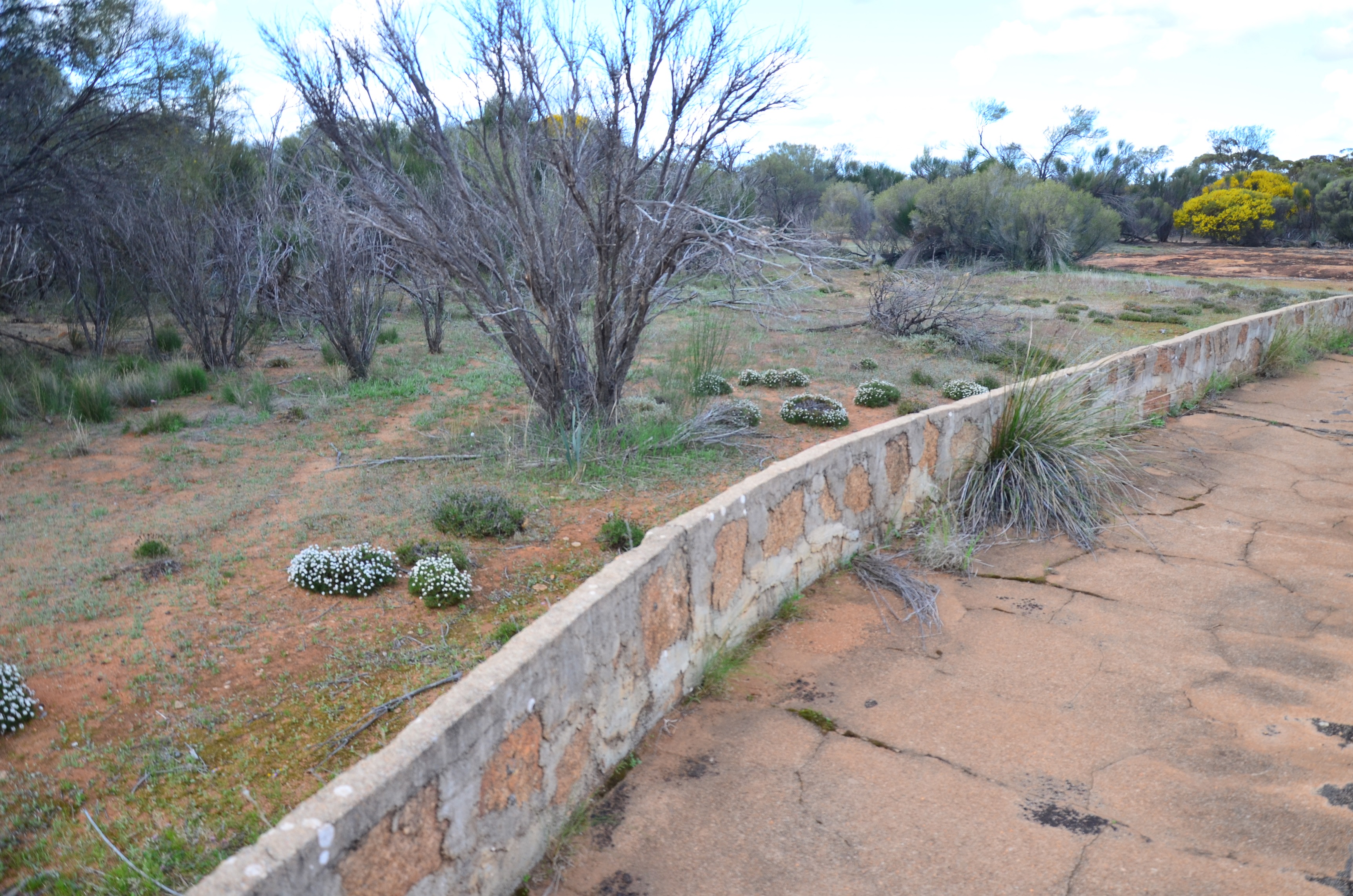
MyLotter nawala (@nawala123) recently wrote about cooking on stone. You can catch up here: https://www.mylot.com/post/3408521/cooking-on-stone. Her post reminded me of how early Australian settlers used to create their own stone slabs. Whatever the settlers needed had to come from the natural surroundings. Granite slabs were gleaned from rocky outcrops by lighting a big fire on the surface of the rock. This was allowed to burn all night. When water was poured on the rock next morning the granite exploded in big layers. This process was used to create the wall shown in the photo. This low rock wall built during 1937-38 on Beringbooding Rock near Beacon in Western Australia. The rock walls channelled the water into a huge tank. The project provided ‘sustenance labour’ for about 100 men. They were given a week’s work for each dependent child. The tank holds two and a quarter million gallons and is the largest rock water catchment tank in Australia. Using rock walls on granite outcrops as a means of trapping water was quite common in Western Australia in days gone by.
19 people like this
20 responses
@rsa101 (40966)
• Philippines
27 Oct 20
I guess humans are really resilient in many ways. They find their ways and means to use what is available to their surroundings for their survival.
2 people like this
@JudyEv (381942)
• Rockingham, Australia
27 Oct 20
That's very true. They learnt to put all sorts of things to good use, like building houses out of bricks cut from compressed shells that I wrote about recently.
2 people like this
@rsa101 (40966)
• Philippines
27 Oct 20
@JudyEv That is why we are the only species that really take advantage of our resources that sometimes are detriment to other species. Sad but true.
1 person likes this
@Namelesss (3364)
• United States
27 Oct 20
Brilliant. I love learning about old-school low-tech ways of getting the job done.
2 people like this
@JudyEv (381942)
• Rockingham, Australia
27 Oct 20
I do too. I think maybe I was born a generation too late although as I get older I appreciate my home comforts more and more.
1 person likes this
@id_peace (17036)
• Singapore
27 Oct 20
The stone wall is beautiful. A little pity that it is not maintained.
1 person likes this
@JudyEv (381942)
• Rockingham, Australia
27 Oct 20
I guess it looks a bit untidy but the wall still catches water and directs it to a tank.
1 person likes this
@id_peace (17036)
• Singapore
27 Oct 20
Still I can still imagine how beautiful it was when it was first built.
1 person likes this
@JudyEv (381942)
• Rockingham, Australia
27 Oct 20
@id_peace It has stood the test of time, hasn't it?
1 person likes this
• United States
28 Oct 20
don't'cha jest love the ingenuity 'f our ancestors? livin' off the lands, usin' what'd be 't hand. i do wonder if'n they learnt that fire 'trick' from the aboriginal peoples? dang, that'd be a whole lot'ta water! they couldn't've chosen a better rock to build such.
1 person likes this
• United States
28 Oct 20
@JudyEv wholy flyin' cow patties! yes ma'am, quite a large catchment area fer certain. wonder if'n such'd be 'llowed these days? dunno what'cher laws'd be there'n such regards. i know there'd be many places here'n the u.s. where ya aint e'en 'llowed to catch water comin' off yer house.
1 person likes this
@JudyEv (381942)
• Rockingham, Australia
30 Oct 20
@crazyhorseladycx They brought in similar laws in Queensland. Rain water has to fall 'naturally' and go to replenishing the water-table and not be captured for diversion into rainwater tanks, etc.
1 person likes this
@JudyEv (381942)
• Rockingham, Australia
28 Oct 20
There are a lot of these rock walls so it must have been pretty common knowledge. This particular rock covers 18 acres so that's a big catchment area.
1 person likes this
@just4him (323168)
• Green Bay, Wisconsin
27 Oct 20
That's very interesting how they did that. It never ceases to amaze me what people can do when they put their minds to it.
1 person likes this
@JudyEv (381942)
• Rockingham, Australia
27 Oct 20
Some of these physics and geometry truths and rules can be put to very good use.
1 person likes this
@just4him (323168)
• Green Bay, Wisconsin
27 Oct 20
@JudyEv Yes, they can.
1 person likes this
@CarolDM (203396)
• Nashville, Tennessee
27 Oct 20
Amazing to learn how they used to get by.
1 person likes this
@JudyEv (381942)
• Rockingham, Australia
28 Oct 20
It must have been quite commonly known as there are many examples of these sorts of walls. Some are used as fencing too for, say, sheep yards.
1 person likes this
@JudyEv (381942)
• Rockingham, Australia
30 Oct 20
@CarolDM They have no idea really. And I think some would find such stories hard to believe.
1 person likes this
@CarolDM (203396)
• Nashville, Tennessee
28 Oct 20
@JudyEv And many complain today about having it hard.
1 person likes this
@jaboUK (64346)
• United Kingdom
27 Oct 20
I wonder who thought of the idea of lighting the fires. Amazing what can be done when need arises. I found this very interesting.
1 person likes this
@JudyEv (381942)
• Rockingham, Australia
27 Oct 20
Thanks. I guess it's pretty much basic physics - contraction and expansion - but of course, someone had to think of using such a method.
1 person likes this
@simone10 (54180)
• Louisville, Kentucky
27 Oct 20
That's amazing as I never would have thought that was how it was made.
1 person likes this
@simone10 (54180)
• Louisville, Kentucky
27 Oct 20
@JudyEv It had to be deafening.
1 person likes this
@rakski (156294)
• Philippines
27 Oct 20
so that was the process before all these technologies came out work of hard physical labor
1 person likes this
@rakski (156294)
• Philippines
27 Oct 20
@JudyEv that is true. pure hard labor
1 person likes this
@JudyEv (381942)
• Rockingham, Australia
27 Oct 20
Yes, everything was difficult in the early days, whatever country you lived in.
1 person likes this
@RasmaSandra (97991)
• Daytona Beach, Florida
27 Oct 20
Very clever and thank you for the information,
1 person likes this
@JudyEv (381942)
• Rockingham, Australia
27 Oct 20
You're welcome. It's amazing how resourceful people were.
1 person likes this
@sallypup (69171)
• Centralia, Washington
27 Oct 20
Clever! I shared this fascinating post with my husband,
1 person likes this
@JudyEv (381942)
• Rockingham, Australia
27 Oct 20
That's nice. People were very resourceful back then. And many still are of course.
@Fleura (34962)
• United Kingdom
29 Oct 24
That's very inventive. In my part of the world there is plenty of limestone which is a bit easier to work with, I always thought granite was exceptionally hard!
1 person likes this
@JudyEv (381942)
• Rockingham, Australia
29 Oct 24
Of course, in Ireland and parts (most?) of Britain there is a surfeit of stone but that isn't always the case in Australia. Making rock walls would have been a good way of getting some of the stones off the ground. Our paddocks need to be much bigger too. South Australia has remnants of stone fencing from early settler days but not WA.
1 person likes this
@thelme55 (79308)
• Germany
27 Oct 20
That is very interesting information. I have seen that cooking on a stone on youtube.
@nawala123 (20871)
• Indonesia
27 Oct 20
it must be hard for those day, but still useful until today, isnt it?
1 person likes this
@JudyEv (381942)
• Rockingham, Australia
27 Oct 20
Yes, things were built to last in those days.
1 person likes this
@nawala123 (20871)
• Indonesia
28 Oct 20
@JudyEv that is good legacy
@snowy22315 (208841)
• United States
27 Oct 20
Human ingenuity never ceases to amaze me.
@LadyDuck (502316)
• Italy
27 Oct 20
I remember the old "furnaces" in Italy to create bricks with red clay. The clay was heated at very high temperature and the bricks formed.
@xFiacre (14805)
• Ireland
27 Oct 20
@judyev Human ingenuity never fails to amaze me. Wish I had some!
@Ronrybs (21499)
• London, England
27 Oct 20
That is quite an engineering feat! Guess we'd use machines and very few labourers today
@LindaOHio (222310)
• United States
27 Oct 20
What an interesting process to get the granite slabs.
• India
27 Oct 20
Wonderful technique
